Traditional Thanksgiving Stuffing: A Classic Homemade Recipe for the Holidays
Ask ten people what they remember most about Thanksgiving dinner, and at least half will mention stuffing before turkey even comes up. This traditional Thanksgiving stuffing holds a special place at the holiday table—it’s the dish that sparks debates, carries family secrets passed down through generations, and somehow tastes even better as a leftover sandwich the next day.
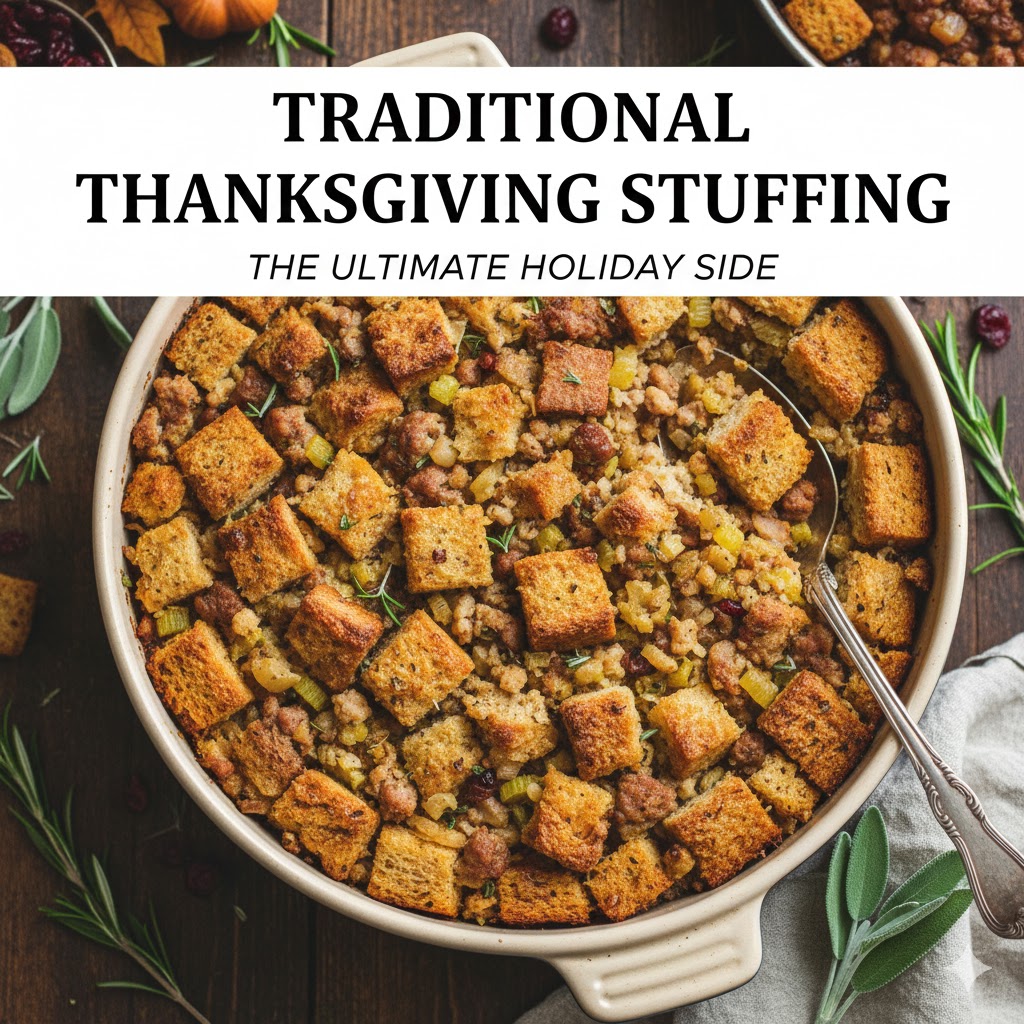
Making classic Thanksgiving stuffing from scratch might seem like one more thing to juggle during holiday chaos, but here’s the truth: this homemade stuffing recipe actually simplifies your day. Most of the work happens before guests arrive, and unlike that temperamental turkey, stuffing forgives minor timing issues. This traditional holiday stuffing delivers everything you want—crusty golden peaks, soft herb-scented middles, and enough savory richness to make everyone forget their diet resolutions.
Understanding What Makes Stuffing Exceptional
The difference between mediocre and memorable old-fashioned stuffing comes down to three factors working in harmony. First, your bread needs proper dryness—think of it as creating a sponge that soaks up flavor without dissolving. Second, your aromatics require real cooking time, not just a quick sauté, to develop sweetness and complexity. Third, moisture levels need calibrating to your specific bread and preferences, because every loaf absorbs liquid differently.
This bread stuffing recipe respects these principles while staying accessible. You won’t need professional knife skills, expensive ingredients, or equipment beyond what’s already in your kitchen.
What You’ll Gather
Foundation:
- 1½ pounds bread—go for sturdy varieties like sourdough, French, or Italian (about one large loaf)
- ½ cup butter (one stick)
- 2 medium yellow onions, cut into small dice
- 4 celery stalks, diced
- 4 garlic cloves, minced
Flavor Builders:
- 2 tablespoons chopped fresh sage
- 1 tablespoon fresh thyme leaves stripped from stems
- 1 tablespoon minced fresh rosemary
- 2 teaspoons kosher salt
- 1 teaspoon freshly ground black pepper
- ½ teaspoon nutmeg (transforms the dish—don’t skip it)
Binding Elements:
- 2½-3 cups warm chicken or turkey broth
- 2 eggs, beaten until uniform
Optional Enhancements:
- Fresh parsley, chopped (½ cup)
- Toasted nuts—pecans or walnuts (1 cup)
- Dried cranberries for sweet-tart contrast (1 cup)
Crafting Your Thanksgiving Dressing Recipe
Getting Bread Ready
Slice your loaf into cubes measuring roughly ¾ inch on each side. Consistent sizing ensures even drying and cooking. Arrange these cubes across two rimmed baking sheets without overcrowding—they need air circulation.
Two paths forward here: the patient route involves leaving these sheets on your counter overnight, uncovered, letting natural air circulation do its work. The express version means sliding them into a 300°F oven for 35-40 minutes, stirring every ten minutes or so, until they feel completely dried out but haven’t taken on color. Either way, you’re creating bread that can absorb significant liquid without turning to paste.
Dump your dried cubes into the biggest bowl you own.
Developing Aromatics
Set a large skillet over medium flame and add your butter. Once it melts and stops foaming, add the diced onions and celery. Here’s where patience pays off: cook these vegetables for a solid 10-12 minutes, stirring occasionally. They should shrink considerably, turn translucent, and pick up golden touches at the edges. This extended cooking caramelizes their natural sugars and eliminates any harsh bite.
Toss in the minced garlic and cook just until your nose catches its fragrance—maybe one minute. Garlic crosses from perfect to burnt in seconds, so stay alert.
Bringing in Herbs
Add your sage, thyme, and rosemary directly to the skillet along with salt, pepper, and that crucial nutmeg. Stir continuously for about a minute while the herbs bloom in the hot butter, releasing essential oils. Your kitchen should smell like Thanksgiving incarnate at this point.
Scrape this entire fragrant mixture over your bread cubes. Use your hands or a big spoon to toss everything together thoroughly. You’re coating each cube with butter and distributing those vegetables and herbs evenly throughout. Don’t rush this step—uneven distribution means some bites burst with flavor while others taste bland.
Achieving Proper Moisture
Whisk your eggs together with 2½ cups of warmed broth in a separate container. Drizzle this liquid over the bread mixture while tossing continuously, similar to tossing a salad. You’re looking for bread that appears moistened throughout but isn’t swimming in liquid. If everything still looks quite dry after incorporating that initial amount, add more broth incrementally—a quarter cup at a time—until it reaches the right consistency.
Here’s a test: grab a handful and squeeze gently. It should clump together without liquid running between your fingers. Different breads have different absorption rates, so trust what you’re seeing and feeling over precise measurements.
Now comes a crucial waiting period that many people skip: let this herb stuffing recipe sit for 15-20 minutes before baking. This rest allows the bread to fully absorb liquid and prevents dry pockets in your finished dish.
Baking Process
Heat your oven to 350°F. Coat a 9×13-inch baking dish generously with butter—don’t be shy here. Spoon your stuffing mixture into the prepared dish, spreading it to roughly even depth but avoid packing it down hard. You want some loose texture and air pockets for variation.
Seal the top completely with aluminum foil and bake for 30 minutes. This covered phase lets everything heat through evenly and allows flavors to meld. After half an hour, strip off the foil and continue baking for another 20-25 minutes uncovered. This exposed baking creates those coveted crispy, golden peaks on top while keeping the interior tender.
Done means deeply golden brown on top with slightly crisped edges. If you’re using a thermometer, the center should hit at least 165°F.
Before Serving
Pull your easy stuffing for Thanksgiving from the oven and resist the urge to serve immediately. A 10-minute rest allows it to set up slightly, making portions easier to serve and ensuring each scoop holds together instead of collapsing on the plate.
Personalizing This Easy Stuffing for Thanksgiving
This base formula welcomes endless variation based on your family’s preferences:
Meat Addition: Brown a pound of Italian sausage (removed from casings) and fold it into the vegetable mixture.
Mushroom Enhancement: Slice 8 ounces of mushrooms and cook them with the onions and celery for earthy complexity.
Fruit Integration: Dice 2 apples and add them to the vegetables for a sweet-savory dimension.
Southern Style: Swap half your bread cubes for crumbled cornbread to create a regional variation.
Seafood Twist: Fold in a pint of drained oysters for a coastal interpretation.
Plant-Based Version: Use vegetable broth instead of poultry stock for vegetarian guests.
Advance Preparation Tactics
Holiday cooking demands strategic planning. Prepare this savory stuffing recipe completely through the mixing stage, cover tightly, and refrigerate up to 24 hours ahead. When baking time arrives, let it sit at room temperature for 30 minutes, then proceed with baking as written—you may need an extra 5-10 minutes since it’s starting cold.
Alternatively, bake it completely ahead, cool it down, wrap securely, and refrigerate for up to two days. Reheat covered at 350°F for approximately 30 minutes until heated through.
Keeping and Reheating
Store leftovers in sealed containers in your refrigerator for 3-4 days maximum. For reheating, spread stuffing in a baking dish, splash a few tablespoons of broth over the top to restore moisture, cover with foil, and warm at 350°F for 20-25 minutes.
Freezing works excellently—portion into freezer containers and freeze up to one month. Thaw overnight in the refrigerator before reheating.
Frequently Asked Questions
Does it actually go inside the turkey? Despite its name, baking separately in a dish proves safer, cooks more evenly, and produces better texture with those crispy edges everyone fights over. Your turkey also roasts faster without stuffing slowing things down.
Can packaged bread cubes work? Certainly. Pre-cubed stuffing bread or seasoned croutons save time, though watch for pre-added seasonings and adjust your salt accordingly.
Which bread varieties work best? Sturdy breads with good structure—sourdough, French, Italian—hold up better than soft sandwich varieties. Mixing two or three types creates interesting textural complexity.
How can I tell if I’ve added sufficient liquid? The mixture should look thoroughly moistened with no dry patches visible, but you shouldn’t see liquid pooling anywhere. A handful squeezed gently should compress and hold its shape without dripping.
What causes dry stuffing? Usually insufficient broth or excessive baking time. Begin with the suggested liquid amount and don’t hesitate to add more if your particular bread seems especially thirsty.
Can this become gluten-free? Absolutely—just substitute gluten-free bread cubes and confirm your broth contains no gluten.
Maximizing Success
Mix bread types: Combining breads with different textures creates more interesting contrast in the finished dish.
Butter matters significantly: It carries flavor compounds and provides richness that elevates stuffing from good to remarkable.
Fresh herbs transform the dish: Dried herbs work when necessary (use one-third the amount), but fresh herbs provide the brightness that defines traditional holiday stuffing.
Check seasoning creatively: You can’t taste raw egg safely, but you can microwave a small piece of seasoned bread for 15 seconds to evaluate your salt levels.
Pan depth affects results: Deep dishes produce softer stuffing with minimal crust; shallow pans maximize that golden, crispy surface area.
Why This Dish Matters
Beyond mere deliciousness, traditional Thanksgiving stuffing serves as the meal’s foundation—it bridges and connects everything else. It catches turkey drippings, provides a vehicle for gravy, and offers textural contrast to smoother sides. Many families rank it above turkey itself, the one element they’d never consider eliminating.
This combination of bread, aromatics, and herbs represents more than sustenance—it embodies comfort, continuity, and the specific flavors we associate with gathering. Preparing it often becomes a multi-generational kitchen activity, with strongly held opinions about technique passed down like heirlooms. That passionate connection forms part of stuffing’s enduring appeal.
Moving Forward
Armed with this homemade stuffing recipe, you’re ready to produce one of those essential best Thanksgiving side dishes that guests remember months later. The method proves forgiving enough for nervous first-timers while yielding results that satisfy the pickiest traditionalists.
Preparing this classic signals more than just cooking—you’re connecting with countless cooks who’ve created this same dish across decades, marking seasons and bringing people together around abundant tables.
Gather those ingredients, cube that bread, and prepare to create something that elevates dinner into celebration. No Thanksgiving table stands complete without it.
What variation does your family swear by? Share your stuffing secrets and memories below!