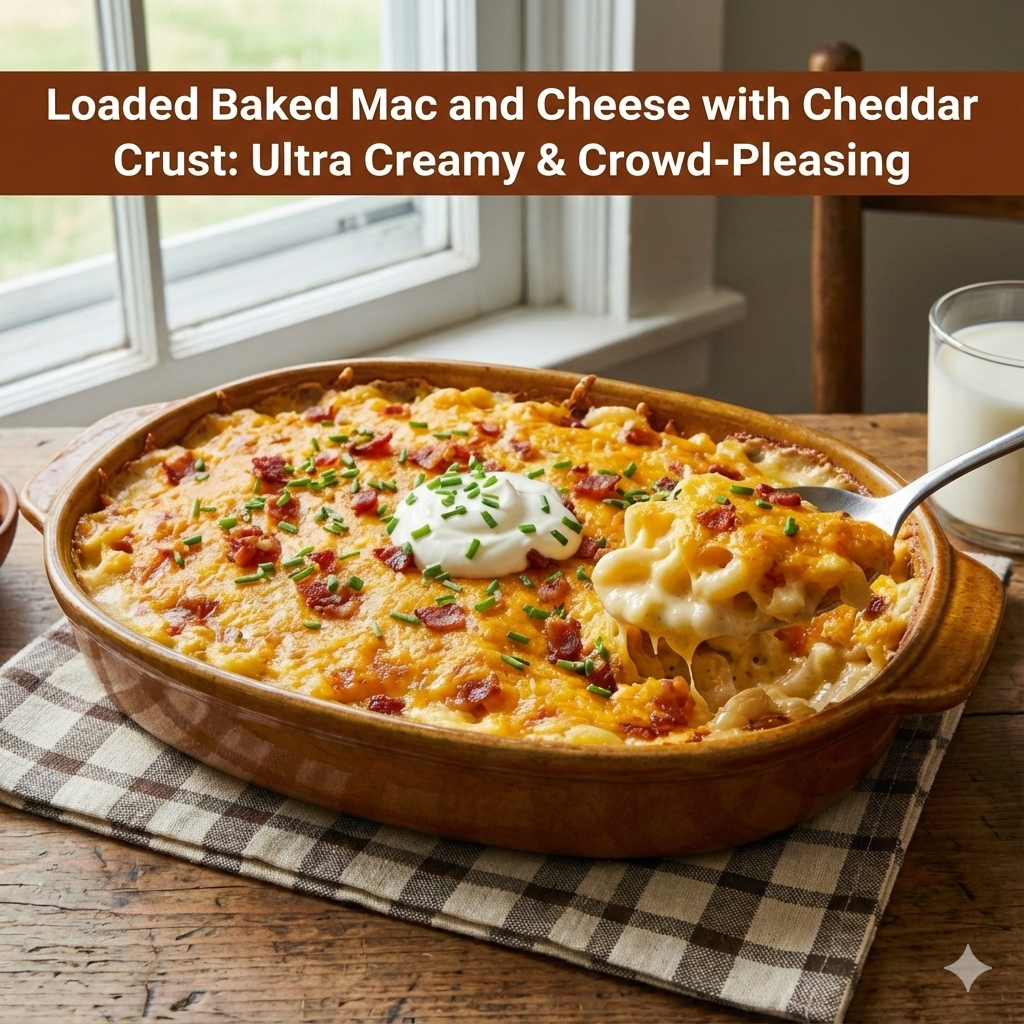
Loaded Baked Mac and Cheese with Cheddar Crust: Ultra Creamy & Crowd-Pleasing
Few dishes command universal love quite like a properly executed loaded baked mac and cheese emerging from the oven with its golden, crackling cheddar crust giving way to waves of creamy, cheese-laden pasta beneath. This isn’t boxed mac with powdered sauce—it’s the real deal comfort food mac and cheese that makes grown adults go back for thirds and converts anyone who claims they’re “not really a mac and cheese person.”
What Elevates This Beyond Basic Mac
The difference between acceptable and extraordinary baked mac and cheese recipe comes down to technique and ingredient quality. Most versions fail because they’re either gummy from too much flour, grainy from improperly melted cheese, or dry from overbaking. This loaded mac and cheese recipe solves all those problems through proper sauce construction, strategic cheese selection, and a two-stage baking method that guarantees creamy interior with crispy exterior.
The “loaded” designation means we’re going beyond plain noodles and cheese. Layers of flavor build through multiple cheese varieties, each contributing distinct characteristics. Sharp cheddar brings tangy punch, Gruyère adds nutty sophistication, cream cheese ensures silky texture, and that final crust layer creates textural drama that keeps every bite interesting.
Selecting Your Cheese Arsenal
Cheese selection makes or breaks this cheesy mac and cheese casserole. Resist the temptation to use pre-shredded varieties, which contain cellulose (wood pulp) to prevent clumping. This anti-caking agent interferes with smooth melting, creating grainy sauce instead of velvety perfection. Buy blocks and grate them yourself—yes, it’s extra work, but the texture improvement justifies the effort completely.
The dream team combination:
Sharp or extra-sharp cheddar forms the backbone, providing that classic mac and cheese flavor everyone expects. White cheddar works beautifully, as does orange—choose based on visual preference since flavor differs minimally. You’ll need approximately four cups grated for the sauce plus two cups for the crust.
Gruyère or fontina adds complexity that makes people ask what makes your mac taste so special. Their nutty, slightly sweet characteristics elevate the dish beyond one-dimensional cheese flavor. One to two cups suffices—more than that and you’re spending unnecessarily since cheddar does the heavy lifting.
Cream cheese or mascarpone contributes luxurious creaminess impossible to achieve through milk alone. Four ounces (half a standard package) disappears into the sauce, creating body and richness. Some cooks substitute sour cream or Greek yogurt, which work but taste tangier.
Parmesan brings salty depth and helps the crust develop extra crispness. Freshly grated from a wedge beats the shaker can version both in flavor and melting quality.
Building the Perfect Creamy Sauce
The foundation of any great homemade baked mac and cheese starts with proper béchamel—a French mother sauce that combines butter, flour, and milk into silky base for cheese. Skip this step and you’ll never achieve restaurant-quality results.
Creating your base:
Melt six tablespoons of butter in a large, heavy-bottomed saucepan over medium heat. Once foaming subsides, whisk in six tablespoons of all-purpose flour. Cook this roux for two full minutes, stirring constantly. This critical step cooks out the raw flour taste while creating the thickening power you’ll need later. The mixture should smell nutty and turn slightly golden—don’t rush this.
Gradually add four cups of whole milk, whisking constantly to prevent lumps. Start with a half cup, whisking vigorously until smooth before adding more liquid. Once all milk is incorporated, increase heat to medium-high and bring to a gentle boil. The sauce will thicken noticeably—keep whisking occasionally to prevent scorching on the bottom.
Reduce heat to low and stir in one tablespoon of Dijon mustard, one teaspoon of garlic powder, half teaspoon of onion powder, one teaspoon of salt, half teaspoon of black pepper, and a pinch of cayenne. These seasonings wake up the cheese flavors rather than competing with them. Taste and adjust—under-seasoned sauce leads to bland mac regardless of how much cheese you add.
Remove the pan from heat entirely before adding cheese—this prevents proteins from seizing and turning grainy. Add your grated cheddar, Gruyère, and cream cheese in handfuls, stirring after each addition until melted completely. The sauce should become glossy, thick enough to coat a spoon heavily, and taste aggressively cheesy—remember that pasta will dilute flavors significantly.
Pasta Selection and Cooking
Shape matters more than you might think for mac and cheese with cheddar crust success. Elbow macaroni remains classic for good reason—its curves trap sauce perfectly. Cavatappi (corkscrew shape) provides even more sauce-holding capacity. Shells cradle cheese in their concave centers. Avoid long pasta like spaghetti or delicate shapes like orzo, which don’t provide the textural experience proper mac demands.
Cook one pound of pasta in heavily salted boiling water, but pull it two minutes before the package directions indicate. This seems wrong, but remember that pasta continues cooking during baking. Starting with slightly firm noodles prevents the mushy disaster that plagues many baked versions.
Drain pasta thoroughly—excess water dilutes your carefully crafted sauce. Don’t rinse it though, since residual starch helps sauce cling better. Immediately transfer hot pasta to your cheese sauce, folding gently until every piece is thoroughly coated.
Assembly and the Legendary Crust
Butter a 9×13-inch baking dish generously. Pour in your sauced pasta, spreading it evenly. At this point, you could bake immediately for perfectly acceptable results. But the crust layer transforms good into glorious.
Mix two cups of shredded sharp cheddar with half cup of Parmesan and half cup of panko breadcrumbs. The breadcrumbs add crunch while absorbing butter, creating those coveted crispy bits everyone fights over. Distribute this mixture evenly across the pasta surface.
Drizzle three tablespoons of melted butter over the topping, ensuring coverage across the entire surface. This butter browns during baking, creating golden color and nutty flavor while helping cheese crisp rather than just melt.
Baking to Golden Perfection
Set your oven to 350°F and position a rack in the center. Bake your assembled casserole uncovered for thirty to thirty-five minutes. You’re looking for sauce bubbling enthusiastically around the edges and the top turning deeply golden with darker brown spots throughout.
If the top browns too quickly before the interior heats through—common with enthusiastic ovens—tent loosely with aluminum foil for the first twenty minutes, then remove it to allow crisping during the final phase.
Let the finished casserole rest for ten minutes before serving. This cooling period allows sauce to thicken slightly, making portions neater and preventing mouth-burning temperature that masks flavor.
Loaded Variations Worth Trying
The base recipe handles countless additions without losing its creamy baked pasta dish soul. Crumbled bacon scattered between layers brings smoky saltiness. Caramelized onions add sweet depth. Roasted jalapeños or green chiles contribute heat. Lobster or crab transform this into luxury fare for special occasions.
Pulled pork or shredded rotisserie chicken make it heartier and suitable as a complete meal. Roasted broccoli or cauliflower florets add nutrition and textural contrast. Sun-dried tomatoes bring tangy brightness. Truffle oil drizzled before serving elevates it to sophisticated dinner party status.
Buffalo chicken mac combines shredded cooked chicken with buffalo sauce mixed into the cheese sauce, topped with crumbled blue cheese. Bacon cheeseburger version includes ground beef, bacon, pickles, and mustard. BBQ pulled pork mac needs no explanation—just fold in leftover pulled pork before baking.
Scaling for Different Occasions
This mac and cheese for a crowd formula adapts beautifully. The standard 9×13-inch pan serves eight to ten people as a side dish or six to eight as a main course. Double it for large gatherings, using two pans or one massive roasting pan.
Individual portions baked in ramekins create elegant presentations for dinner parties. Reduce baking time to twenty minutes since smaller volumes heat faster. Mini muffin tins produce adorable mac and cheese “bites” perfect for appetizers or kids’ parties—bake just fifteen minutes.
Halve the recipe for smaller households, using an 8×8-inch pan. The proportions remain identical, just reduced quantities across the board.
Make-Ahead Strategies
This oven baked macaroni and cheese accommodates advance preparation beautifully. Assemble completely up to twenty-four hours before baking, cover tightly, and refrigerate. When ready to cook, let it sit at room temperature for thirty minutes while the oven preheats, then bake as directed, adding five to ten extra minutes to account for starting cold.
Freeze unbaked casseroles for up to three months. Wrap thoroughly in plastic wrap followed by aluminum foil, or use disposable pans with fitted lids. Thaw overnight in the refrigerator before baking. The texture remains remarkably similar to fresh, though the sauce may appear slightly separated initially—it comes together perfectly during baking.
Already-baked mac reheats acceptably but never matches fresh-from-the-oven glory. If you must reheat, cover with foil and warm at 325°F for about twenty-five minutes, removing foil for the final five minutes to re-crisp the top.
Troubleshooting Common Problems
Dry, crumbly mac usually results from insufficient sauce or overbaking. The pasta-to-sauce ratio should seem almost soupy before baking since noodles absorb liquid. If your finished dish seems dry, you didn’t make enough sauce relative to pasta quantity. Next time, increase milk by a cup and add another cup of cheese.
Grainy sauce indicates cheese added to liquid that’s too hot. Always remove the pan from heat before adding cheese, stirring patiently until each addition melts completely. Using pre-shredded cheese also causes graininess—switch to block cheese you grate yourself.
Bland flavor means under-seasoning the sauce. Cheese alone doesn’t provide enough complexity—you need salt, mustard, garlic powder, and pepper working together. Season boldly and taste repeatedly during sauce-making, adjusting before combining with pasta.
Soggy crust happens when you forget the breadcrumb layer or skip drizzling butter on top. The panko-cheese-butter combination creates crispness, while cheese alone just melts flat. Don’t skip any element of the topping if you want that signature crunch.
Perfect Pairings and Occasions
This comfort food mac and cheese suits countless serving scenarios. As a side dish, it pairs classically with barbecue—ribs, pulled pork, or brisket. Fried chicken and mac make soul food heaven. Simple grilled or roasted proteins let the mac shine without competing.
For potlucks and gatherings, this classic mac and cheese upgrade travels well and holds its temperature admirably. It’s the dish people remember and request for future events. Kids and adults both gravitate toward it, making it ideal when feeding mixed-age crowds.
Serve it as a vegetarian main course with a bright, acidic salad to cut through richness. Add roasted vegetables directly into the mac for a complete one-dish dinner. Crusty bread for soaking up extra sauce rounds out the meal perfectly.
The Science Behind Creaminess
Understanding why this loaded baked mac and cheese works helps you troubleshoot and improvise confidently. The flour-thickened béchamel creates structure that holds cheese in suspension rather than separating into greasy pools. Cooking the roux properly eliminates raw flour taste while activating starches’ thickening power.
Multiple cheese types provide different melting characteristics—cheddar for sharp flavor, Gruyère for smooth melting, cream cheese for emulsification. This combination creates sauce that’s both flavorful and stable.
The two-stage baking—covered initially then uncovered—allows gentle heating that prevents sauce from breaking while the final uncovered phase develops crust. High heat from the start causes surface cheese to brown before interior heats through.
Building Your Confidence
Your first attempt might not achieve Instagram perfection—perhaps the sauce seems too thin initially, or you under-season slightly. These minor issues resolve quickly as you learn your oven’s tendencies and personal taste preferences. The forgiving nature of baked mac means even imperfect execution still yields delicious results that disappear quickly.
Take mental notes about what worked and what you’d adjust. Did the crust need more butter? Would you prefer sharper cheddar? Should you have added bacon? These observations build intuition that transforms you from recipe-follower into confident cook who adapts based on circumstances and preferences.
Why This Recipe Endures
In a food world obsessed with novelty and trends, macaroni and cheese remains eternally beloved because it delivers pure comfort without pretension. This homemade baked mac and cheese version respects that tradition while elevating execution through proper technique and quality ingredients.
It’s the dish that brings people together—kids devour it without complaint, adults appreciate the craftsmanship, and everyone bonds over shared love of creamy, cheesy pasta. Making it from scratch demonstrates care and effort that boxed versions simply can’t match, turning an ordinary meal into something memorable.
Your Path to Mac and Cheese Mastery
Start with this base recipe exactly as written to understand how everything works together. Notice the sauce’s texture before and after adding cheese. Observe how the crust develops during baking. Taste at various stages to comprehend how flavors build and change.
Once you’ve succeeded with the original, experiment with the loaded variations mentioned earlier or invent your own. Keep notes on what you changed and results. Did extra garlic powder improve it? Did your household prefer more crust? These discoveries personalize the recipe while maintaining its essential character.
Welcome to making the kind of cheesy mac and cheese casserole that becomes your signature dish—the one people specifically request, the one that makes you famous in your social circle, the one that proves homemade always beats convenience when done right. Your journey to mac and cheese excellence starts now.