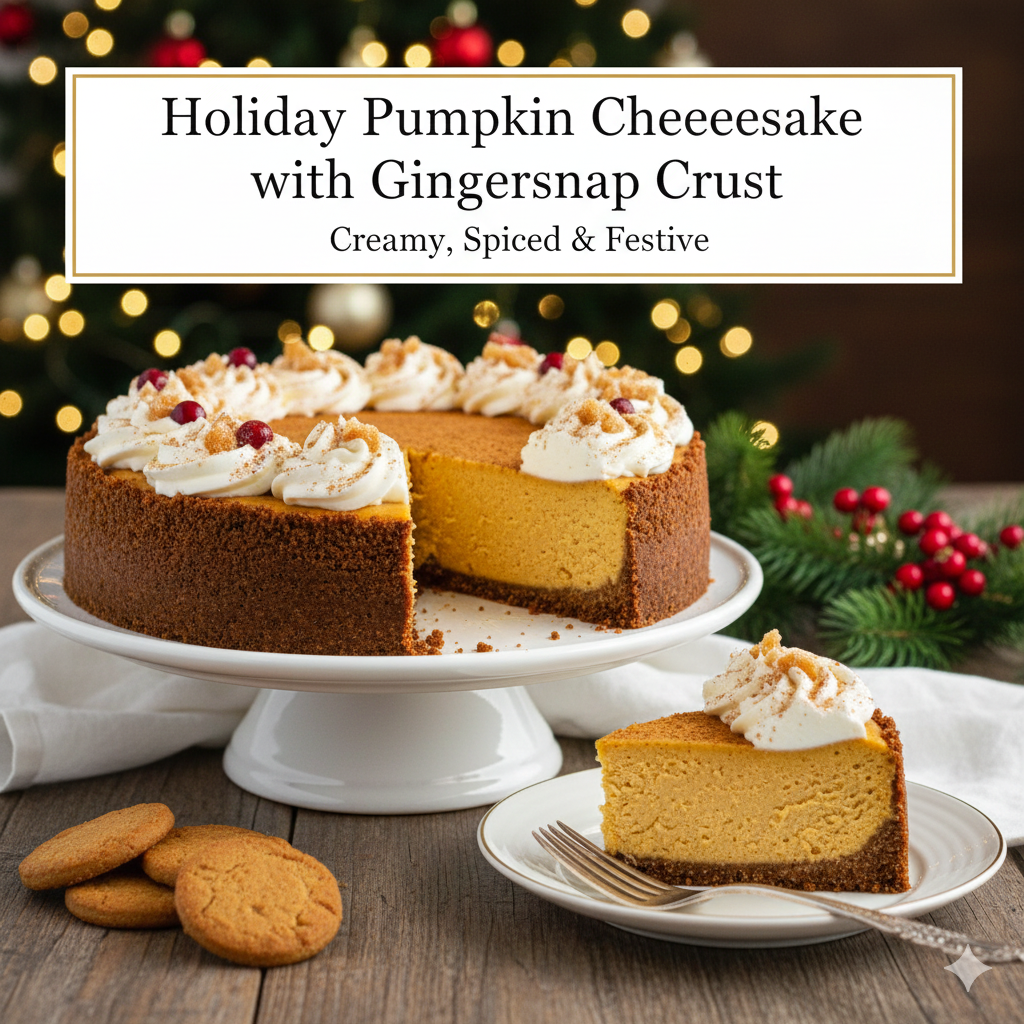
Holiday Pumpkin Cheesecake with Gingersnap Crust: Creamy, Spiced & Festive
When traditional pumpkin pie starts feeling predictable and you need something that commands attention at the holiday dessert table, holiday pumpkin cheesecake delivers exactly that wow factor. This isn’t just another seasonal dessert—it’s a creamy, luxurious showstopper that marries autumn’s favorite flavor with the sophisticated elegance of New York-style cheesecake. The gingersnap crust adds spicy crunch that perfectly complements the velvety filling, creating textural contrast that keeps every bite interesting.
Why This Thanksgiving Cheesecake Recipe Outshines Ordinary Pies
Standard pumpkin pie certainly has its place, but let’s be honest—the custard sometimes weeps, the crust occasionally turns soggy, and the flavor can lean one-dimensional. This pumpkin cheesecake with gingersnap crust solves all those issues while elevating the entire concept. The cream cheese base provides rich, tangy foundation that balances pumpkin’s sweetness. Warming spices thread throughout without overwhelming. The gingersnap crust stays crisp and flavorful, never becoming the sad, limp bottom layer that plagues lesser desserts.
Perhaps most importantly, this holiday pumpkin dessert can be made entirely ahead—in fact, it must be made in advance since cheesecake requires overnight chilling. This frees you from last-minute baking chaos when a dozen other dishes demand attention. Pull a perfect dessert from your refrigerator while everyone else scrambles with oven timers and temperature checks.
Understanding Cheesecake Fundamentals
Success with any creamy pumpkin cheesecake starts with grasping basic principles. Cheesecakes are custards—eggs provide structure while dairy creates richness. They bake gently at moderate temperature in a water bath that prevents rapid temperature changes causing cracks. Everything needs to be at room temperature before mixing so ingredients incorporate smoothly without overmixing.
The key difference between this spiced pumpkin cheesecake and plain versions lies in moisture management. Pumpkin puree adds significant liquid that must be balanced carefully. Too much causes the filling to never fully set, while too little makes it dense and heavy. This recipe’s proportions have been tested extensively to achieve that perfect just-set texture—firm enough to slice cleanly yet creamy enough to melt on your tongue.
Crafting the Perfect Gingersnap Foundation
While graham cracker crusts work fine, gingersnaps transform this into something special. Their spicy warmth echoes the pumpkin filling’s seasonings while adding aromatic complexity graham crackers simply can’t provide. The molasses and ginger create flavor depth that elevates every component.
For the gingersnap crust cheesecake base:
- Two cups gingersnap cookie crumbs (about thirty cookies)
- Quarter cup granulated sugar
- Six tablespoons unsalted butter, melted
- Quarter teaspoon ground cinnamon
- Pinch of salt
Pulse gingersnaps in a food processor until finely ground—you want consistency similar to sand, not powder. A few slightly larger pieces add pleasant texture, but giant chunks prevent proper packing. If you lack a food processor, place cookies in a sturdy zip-top bag and crush them thoroughly with a rolling pin or heavy can.
Transfer crumbs to a medium bowl and stir in sugar, cinnamon, and salt. Pour melted butter over the mixture and stir with a fork until everything clumps together when squeezed—it should resemble wet sand. Dump this into a nine-inch springform pan and press firmly across the bottom and one inch up the sides. Use a flat-bottomed measuring cup or glass to compact it thoroughly, eliminating air pockets that create weak spots.
Bake the crust at 350°F for ten minutes to set it. This pre-baking step might seem skippish, but it creates structural integrity that prevents the crust from becoming soggy when the filling’s moisture hits it. Let it cool while you prepare the filling—the crust should be room temperature when you add the pumpkin mixture.
Creating Luxurious Pumpkin Filling
The filling balances several goals simultaneously—rich creaminess from cheese, autumn warmth from spices, and pumpkin flavor that’s present but not overwhelming. Many recipes err by adding too much pumpkin, creating loose texture and vegetal taste. This formula treats pumpkin as an important player rather than the only star.
For the ultra-creamy filling:
- Twenty-four ounces cream cheese (three standard packages), completely softened
- One cup granulated sugar
- Three large eggs, room temperature
- One cup pumpkin puree (not pumpkin pie filling)
- One teaspoon vanilla extract
- One and a half teaspoons ground cinnamon
- Half teaspoon ground ginger
- Quarter teaspoon ground nutmeg
- Quarter teaspoon ground cloves
- Quarter teaspoon salt
The room temperature requirement isn’t negotiable—cold cream cheese refuses to blend smoothly, creating lumpy batter no amount of mixing fixes. Remove packages from refrigeration at least two hours before starting, or microwave them at twenty percent power in ten-second bursts until soft but not melted.
Beat cream cheese in a large bowl using an electric mixer on medium speed for three full minutes. This extended beating incorporates air that creates light texture despite the density. Scrape down bowl sides midway through to ensure even mixing. The cream cheese should become noticeably fluffy and pale.
Add sugar and beat another two minutes until completely smooth. Again, scrape the bowl—unmixed sugar crystals create grainy texture. Add eggs one at a time, beating just until each disappears before adding the next. Overmixing after eggs arrive creates too much air that expands during baking then deflates, causing cracks or sunken centers.
In a separate small bowl, whisk together pumpkin puree, vanilla, and all spices. This pre-mixing distributes spices evenly, preventing clumps of intense cinnamon or ginger in your final cheesecake. Pour this mixture into the cream cheese base and fold gently with a spatula just until uniform color appears throughout. Some recipes call for extended beating here, but gentle folding prevents incorporating excess air.
The Water Bath Method Explained
Water baths—called bain-marie in French cooking—surround your cheesecake pan with gently simmering water during baking. This creates humid, even heat that prevents the rapid temperature changes causing cracks, curdling, or uneven cooking. While you can skip this step, results suffer noticeably.
Wrap your springform pan’s exterior thoroughly in heavy-duty aluminum foil, covering the bottom and extending up the sides. Use two or three layers if your foil seems thin. This waterproofing prevents seepage into your cheesecake—a disaster that creates soggy crust and compromises texture.
Place the wrapped pan inside a larger roasting pan. Pour the pumpkin filling into the prepared crust, smoothing the top. Place both pans in your preheated oven, then carefully pour hot water into the outer pan until it reaches halfway up the cheesecake pan’s sides. This last-minute water addition prevents awkward maneuvering with a heavy, sloshing roasting pan.
Baking to Silky Perfection
Set your oven to 325°F—cheesecakes need gentle, steady heat rather than aggressive temperature. Bake for fifty-five to sixty-five minutes. The timing seems vague because ovens vary significantly, making visual and tactile cues more reliable than clocks.
You’re looking for specific signs of doneness. The edges should be set and slightly puffed, pulling away from the pan just slightly. The center should still jiggle noticeably when you gently shake the pan—think of thick gelatin’s movement. It should not ripple like liquid or remain completely firm. Many bakers panic seeing that jiggle and overbake, but remember that carryover cooking continues as the cheesecake cools.
Turn off the oven and crack the door about four inches. Let the cheesecake rest in this gradually cooling environment for one hour. This gentle temperature reduction prevents the thermal shock that causes cracking. After an hour, remove the pan from the water bath and place it on a cooling rack. Run a thin knife around the edges to release any stuck spots—this prevents the cheesecake from pulling and cracking as it contracts during cooling.
Let it cool completely at room temperature, roughly two more hours, then refrigerate for at least eight hours or preferably overnight. This chilling period allows the filling to fully set while flavors meld and mellow. Resist the urge to slice it early—patience rewards you with clean cuts and proper texture.
Troubleshooting Common Challenges
Cracks across the surface frustrate many bakers, but they’re usually preventable. The most common cause is overbaking—remember that jiggly center is correct. Rapid temperature changes also cause cracks, which the water bath and gradual cooling prevent. Overmixing incorporates too much air that expands then contracts. Finally, cheesecakes naturally contract as they cool; running a knife around edges gives them freedom to shrink without pulling and cracking.
If cracks appear despite your best efforts, don’t despair. Top the finished cheesecake with whipped cream, a layer of sour cream sweetened with sugar, or a drizzle of caramel sauce. These camouflage imperfections beautifully while adding flavor dimensions.
Soggy crust indicates insufficient pre-baking or water seeping through inadequate foil wrapping. Ensure your springform pan doesn’t leak by filling it with water before wrapping—if water drips out, that same path lets moisture in during baking. Use extra foil layers or switch to a more reliable pan.
Grainy texture results from cold cream cheese that didn’t fully incorporate, or from overbaking that curdled the eggs. Room temperature ingredients and proper doneness cues prevent this.
Elegant Serving and Presentation
This festive holiday desserts centerpiece deserves thoughtful presentation. Let it come to nearly room temperature before serving—about thirty minutes on the counter takes the chill off without softening it excessively. Cold cheesecake mutes flavors, while room temperature allows the pumpkin spices and cream cheese tang to shine fully.
Release the springform pan’s sides carefully. Wipe your knife blade clean between each slice for neat cuts—dipping the blade in hot water helps too. A long, thin knife works better than a wide chef’s knife for precise portions.
Garnish simply with a dollop of real whipped cream and a light dusting of cinnamon or a few candied pecans. Caramel sauce drizzled over individual slices adds decadent touch. Fresh cranberries provide tart contrast and festive color. Avoid overdecorating—this classic holiday cheesecake beauty speaks for itself without excessive embellishment.
Make-Ahead Advantages
This baked pumpkin cheesecake actually improves when made ahead, making it ideal for holiday stress reduction. Bake it two to three days before serving, keeping it tightly wrapped in the refrigerator. The flavors deepen and mellow as components rest together.
Freeze unfrosted cheesecake for up to one month for even longer advance preparation. Wrap it thoroughly in plastic wrap followed by aluminum foil, or place the whole springform pan in a large freezer bag. Thaw overnight in the refrigerator before serving—never at room temperature, which causes condensation and texture issues.
The crust can be pressed and pre-baked several days ahead, wrapped tightly and refrigerated until you’re ready to add filling. This breaks the project into manageable stages rather than one marathon baking session.
Variations on the Theme
Once comfortable with the base fall cheesecake recipe, creative variations keep things interesting. Swirl caramel sauce through the filling before baking for salted caramel pumpkin cheesecake. Add a layer of chocolate ganache beneath the pumpkin filling for chocolate-pumpkin decadence. Fold in white chocolate chips for subtle sweetness and visual interest.
Create a marbled effect by reserving one cup of plain cream cheese filling, then spooning it over the pumpkin mixture and swirling with a knife. Bourbon or rum added to the filling (two tablespoons) provides sophisticated adult edge. Maple syrup substituting for some of the sugar deepens autumn associations.
Mini cheesecakes baked in muffin tins with proportionally reduced gingersnap crusts create individual servings perfect for buffets or parties. Reduce baking time to twenty-five to thirty minutes for these smaller versions.
Why This Recipe Works Reliably
The success of this creamy pumpkin cheesecake comes from carefully balanced ratios tested extensively. The cream cheese quantity provides enough richness to support the pumpkin without letting it dominate. The egg count offers sufficient structure without making it dense or heavy. The spice blend creates warmth without any single flavor overwhelming.
The water bath and gradual cooling manage temperature changes that cause the structural failures plaguing many cheesecakes. The pre-baked crust maintains its integrity despite extended exposure to moist filling. Every step serves a specific purpose, creating reliability that makes this suitable even for bakers who’ve never attempted cheesecake before.
Building Your Confidence
Your first attempt might not achieve Instagram perfection—perhaps the top cracks slightly or you pull it from the oven a few minutes too late. These minor issues resolve quickly as you learn your oven’s quirks and develop feel for proper doneness. The forgiving nature of this Thanksgiving cheesecake recipe means even imperfect execution still yields delicious results that disappear quickly.
Take mental notes about what worked and what you’d adjust. Did the gingersnap crust need more butter? Would you prefer additional spice? Should you have let it chill longer? These observations build intuition that transforms you from recipe-follower into confident baker who adapts based on circumstances.
The Holiday Tradition Angle
This spiced pumpkin cheesecake works beautifully as a new tradition when families tire of the same pies every year. It’s familiar enough to feel appropriate—still autumn-spiced and pumpkin-forward—yet different enough to generate conversation and compliments. Guests who claim they’re “too full for dessert” mysteriously find room when you present this elegant alternative to standard offerings.
Consider making it your signature contribution to gatherings, the dessert people specifically request you bring. Having a reliable spectacular dessert in your repertoire gives you confidence and a reputation worth maintaining.
Your Path to Cheesecake Mastery
Start with this recipe exactly as written to understand how everything works together. Notice the batter’s texture before baking. Observe that critical jiggle indicating doneness. Experience how the water bath moderates heat. Taste how overnight chilling improves flavor.
Once you’ve succeeded with the original, explore the variations mentioned or invent your own while respecting the fundamental proportions and techniques. The template handles creativity within structure—exactly what good baking recipes provide.
Welcome to creating holiday pumpkin desserts that become anticipated traditions rather than obligatory afterthoughts. This holiday pumpkin cheesecake proves that classics can be reimagined without losing their essential appeal, that elegance doesn’t require complexity, and that sometimes the best new traditions build on flavors we’ve loved all along. Your seasonal masterpiece awaits.