Old-Fashioned Beans and Cornbread Dinner: Simple, Hearty & Comforting
Some meals transcend their humble ingredients to become something greater—memories embodied in food, comfort measured in full bellies and satisfied sighs. An old-fashioned beans and cornbread dinner represents exactly this kind of magic, transforming dried legumes and cornmeal into soul-warming nourishment that’s sustained families for generations. This isn’t trendy cuisine chasing Instagram likes—it’s honest food rooted in tradition, economy, and the wisdom of making much from little.
The Enduring Appeal of This Classic
Long before meal kits and restaurant delivery, this traditional beans and cornbread combination fed households through lean times and celebrations alike. The pairing makes nutritional sense—beans provide protein and fiber while cornbread delivers carbohydrates and satisfying texture. Together they create complete, filling meals from ingredients that cost pennies per serving and store indefinitely in any pantry.
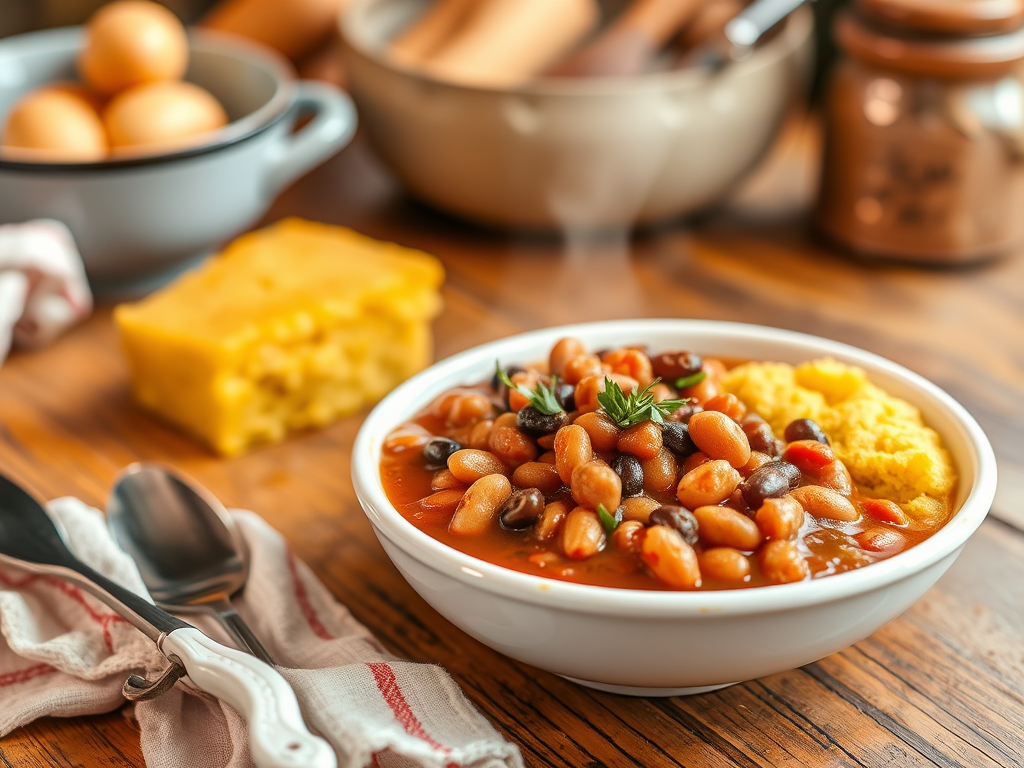
Beyond nutrition and economy, there’s genuine pleasure in this southern comfort food dinner. The creamy beans with their rich pot liquor, the slightly sweet cornbread with its crispy edges and tender center, perhaps some chopped onion and hot sauce for garnish—these simple components create satisfaction that elaborate dishes often fail to match. It’s proof that comfort doesn’t require complexity.
Choosing and Preparing Your Beans
While canned beans certainly work when time is short, dried beans cooked from scratch deliver superior flavor and texture worth the minimal extra effort. Pinto beans remain the traditional choice for this classic country dinner, though great northern, navy, or even black beans work beautifully. One pound of dried beans yields approximately six cups cooked—enough to feed six to eight people generously.
The soaking question:
Overnight soaking softens beans and reduces cooking time, though it’s not strictly necessary. Place dried beans in a large bowl, cover with several inches of water (they’ll expand significantly), and let sit eight to twelve hours. Drain and rinse before cooking. Quick-soak method involves bringing beans and water to a boil, letting them boil two minutes, then turning off heat and letting sit one hour before draining and proceeding.
Or skip soaking entirely—just add thirty to forty-five minutes to cooking time. Unsoaked beans sometimes cause more digestive distress for sensitive individuals, though rinsing them thoroughly before cooking helps regardless of soaking status.
Building flavor in the pot:
Place drained beans in your largest pot with enough water to cover them by two inches. This seems like excessive liquid initially, but beans absorb substantial amounts during cooking. Add aromatics that transform plain beans into something memorable—half an onion, three or four garlic cloves (smashed but left whole), a bay leaf or two, and a ham hock, piece of salt pork, or several strips of bacon for traditional meaty depth.
Vegetarian versions achieve richness through smoked paprika, liquid smoke, or a tablespoon of tomato paste. The goal is creating savory complexity that makes you want to drink the pot liquor with a spoon.
Bring everything to a boil, then reduce to a gentle simmer. Cook until beans are completely tender—this takes anywhere from one to three hours depending on bean age and whether you soaked them. Check periodically and add hot water if the level drops below the beans. Salt only during the final thirty minutes; adding it earlier toughens bean skins and extends cooking time.
Taste and adjust seasoning toward the end. The beans should be creamy inside with intact skins, sitting in flavorful broth that’s neither watery nor paste-thick. Some cooks mash a few beans against the pot side to thicken the liquid naturally.
Crafting Perfect Skillet Cornbread
Real cornbread—the kind grandmothers made—cooks in a screaming-hot cast iron skillet that creates that signature crispy bottom crust. This isn’t sweet cake-like cornbread loaded with sugar; it’s savory, slightly crumbly bread with pronounced corn flavor and just enough sugar to enhance rather than dominate.
Essential cornbread formula:
- One and a half cups cornmeal (preferably stone-ground for texture and flavor)
- Half cup all-purpose flour
- One tablespoon sugar (or up to quarter cup if you prefer sweeter versions)
- One tablespoon baking powder
- One teaspoon salt
- One and a quarter cups buttermilk
- Two large eggs
- Quarter cup melted butter or bacon fat
- Two tablespoons additional fat for the skillet
Preheat your oven to 425°F—cornbread needs aggressive heat. Place a nine or ten-inch cast iron skillet in the oven while it heats, letting it get scorching hot.
Whisk together cornmeal, flour, sugar, baking powder, and salt in a large bowl. In a separate bowl, beat together buttermilk, eggs, and melted butter. Pour wet ingredients into dry and stir just until combined—lumps are fine and overmixing creates tough, dense cornbread.
Carefully remove the blazing-hot skillet from your oven and add the two tablespoons of fat, swirling to coat the bottom and sides. The fat should sizzle immediately. Pour batter into the hot skillet—it will sizzle and start cooking on contact, creating that coveted crispy bottom.
Return to the oven and bake twenty to twenty-five minutes until the top turns golden brown and a toothpick inserted in the center emerges clean. Let it rest in the skillet for five minutes before slicing into wedges and serving hot.
Serving This Rustic Family Dinner
The beauty of this budget-friendly comfort meals combination lies in its simplicity. Ladle beans generously into wide, shallow bowls. Place cornbread wedges directly on top of the beans, letting them absorb some of that flavorful pot liquor. Or serve cornbread on the side for those who prefer keeping elements separate.
Traditional accompaniments include diced raw onion sprinkled over the beans, sliced pickled jalapeños for heat, hot sauce for those who want it, and a pat of butter melting into hot cornbread. Some folks crumble cornbread directly into their beans, creating a texture somewhere between soup and porridge that’s greater than either component alone.
Collard greens, coleslaw, or sliced tomatoes make classic side dishes when you want to expand the meal. Pickled beets or chow-chow provide tangy contrast. Honestly though, beans and cornbread together create such complete satisfaction that sides feel optional rather than necessary.
Why This Old-Time Homestyle Cooking Endures
Beyond economy and nutrition, this meal persists because it delivers genuine comfort that transcends its humble origins. There’s something psychologically satisfying about warm, soft beans and crusty cornbread on cold days or during difficult times. The simple flavors don’t challenge or surprise—they reassure and ground you in something reliable and good.
The meal also connects us to history and family traditions. Many people remember grandparents or parents serving beans and cornbread during lean times, transforming scarcity into abundance through careful cooking. Making it yourself creates living links to those who came before, honoring their resourcefulness while enjoying its delicious results.
Budget Analysis: Maximum Value
Calculate the economics and this cornbread with beans combination becomes even more impressive. One pound of dried beans costs perhaps two dollars and feeds eight people. Cornbread ingredients run another two to three dollars. For five dollars total, you’ve created a filling dinner for eight—roughly sixty cents per person.
Compare that to any alternative and the savings astound. Even basic fast food costs five to eight dollars per person. Frozen dinners run three to five dollars for single servings. This home-cooked meal provides superior nutrition, better flavor, and dramatic cost savings simultaneously.
The pantry-friendliness adds value too. Dried beans and cornmeal keep for years when stored properly, meaning you can make this meal anytime without special shopping trips. This flexibility proves invaluable during weeks when budgets run tight or schedules prevent regular grocery runs.
Variations on the Theme
Once comfortable with the basic simple old-fashioned meals formula, variations keep things interesting while maintaining the essential character. Black beans instead of pintos create darker pot liquor and earthier flavor. Great northern or navy beans provide milder, creamier texture. Red beans bring Louisiana flair.
Mexican-inspired versions add cumin, chili powder, and cilantro to beans while mixing jalapeños and corn kernels into cornbread batter. Italian interpretation uses cannellini beans with rosemary and garlic, serving with rosemary-studded cornbread. Southern-style includes ham hocks and finishes with hot pepper vinegar.
Sweet cornbread lovers can increase sugar to quarter cup, add honey or sorghum to the batter, or drizzle butter and honey over hot slices. Savory enthusiasts fold in shredded cheddar, crispy bacon bits, or fresh herbs like thyme or sage.
Make-Ahead and Storage Strategies
Both components store and reheat beautifully, making this ideal for meal prep or batch cooking. Cooked beans keep refrigerated for five days or freeze for six months. Cool them in their cooking liquid, then transfer to containers in portion sizes that match your household needs.
Reheat refrigerated beans gently on the stovetop, adding water or broth if they’ve thickened excessively. Frozen beans can thaw overnight in the refrigerator or defrost in the microwave. The flavor actually improves over the first day or two as seasonings permeate the beans more thoroughly.
Cornbread stays fresh at room temperature for two days wrapped tightly. Refrigeration extends this to five days though it dries the texture somewhat. Reheat individual slices in a toaster oven to restore crust crispness. Cornbread also freezes well for up to three months—wrap slices individually for easy portioning.
Teaching Food Heritage Through Cooking
Making this pantry staple dinner ideas meal with children teaches valuable lessons beyond cooking technique. Discussing how families historically relied on inexpensive, shelf-stable ingredients creates appreciation for food security and resourcefulness. Explaining how proper nutrition doesn’t require expensive ingredients challenges assumptions about healthy eating.
The hands-on nature engages kids of all ages. Young children can help measure cornmeal and stir batters. Older kids can monitor bean cooking and check for doneness. Teenagers might prepare the entire meal independently, building confidence and essential life skills.
Share family stories connected to this meal if you have them. Did a grandparent make this weekly? Did your parents serve it during tough economic times? These narratives give food emotional resonance that pure recipes can’t provide, creating living connections across generations.
Troubleshooting Common Issues
Beans that won’t soften despite hours of cooking indicate either extreme age or hard water. Old beans simply take longer—keep cooking and they’ll eventually surrender. Hard water’s minerals prevent proper softening; adding a pinch of baking soda to the cooking water helps, though it can affect flavor slightly.
Cornbread that’s dry or crumbly suggests too much cornmeal relative to liquid, or overbaking. Measure carefully and check doneness at the early end of the timing range. If it seems dry after baking, serve it with extra butter or dunk it in bean pot liquor to add moisture.
Bland beans need more seasoning—be generous with salt during the final cooking stage. Remember that beans and their liquid should taste quite well-seasoned since cornbread is relatively neutral and will dilute flavors. Add depth through aromatics, smoked meat, or vegetarian alternatives like smoked paprika.
Your Path to Comfort Food Mastery
Start with the basic traditional beans and cornbread formula to understand how components work together. Notice the beans’ transformation from hard pellets to creamy goodness. Observe cornbread’s texture—crispy bottom, tender center. Taste how simple ingredients create satisfying complexity.
Once you’ve mastered the foundation, explore variations that match your household preferences. Maybe you prefer black beans over pintos, or sweet cornbread over savory. Perhaps you want to add greens or different aromatics. These adjustments personalize the meal while maintaining its essential soul.
Welcome to cooking that honors the past while nourishing the present—where pantry staples transform into comfort, where economy doesn’t mean sacrifice, and where simple preparation delivers profound satisfaction. This old-fashioned beans and cornbread dinner proves that the best meals don’t always require the most ingredients, just the right ones treated with care and respect. Your journey into timeless comfort food begins now.