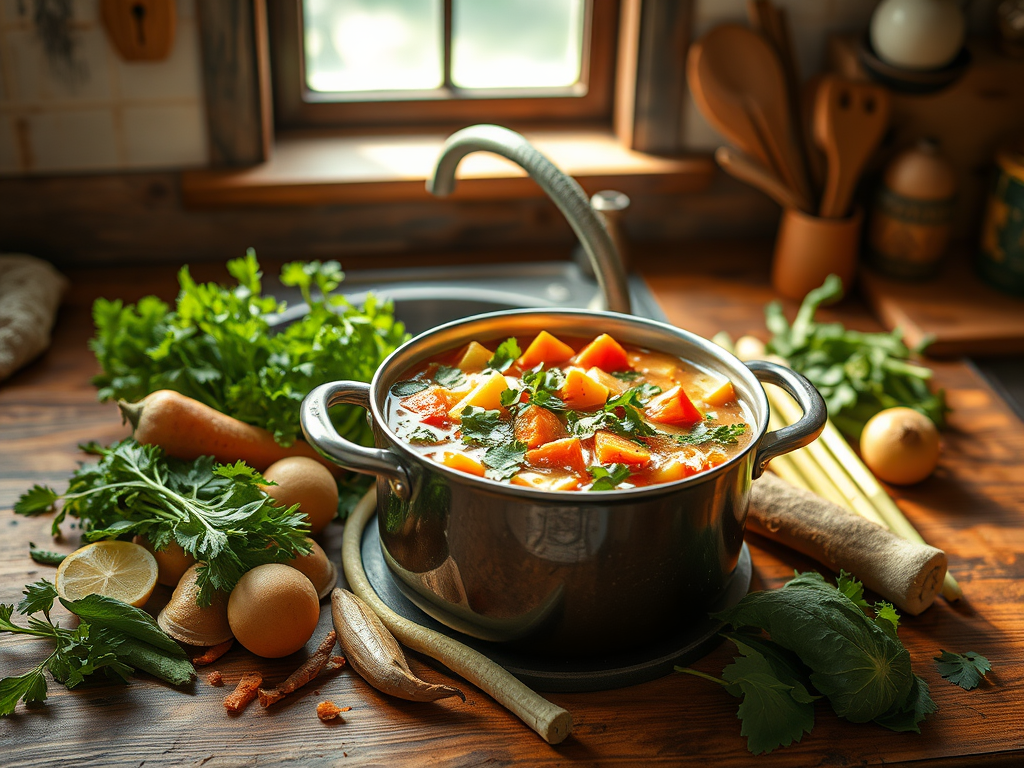
Soup from Leftover Ingredients: A Zero-Waste Recipe That Saves Money
Opening your refrigerator to discover an odd collection of vegetables past their prime, bits of cooked meat from earlier meals, and half-used containers of broth might seem like the ingredients for disaster. Instead, you’re looking at the perfect components for soup from leftover ingredients—a practice that transforms potential waste into nourishing meals while teaching valuable lessons about resourcefulness and creativity. This isn’t following a rigid recipe; it’s understanding principles that let you create delicious soup from whatever needs using.
The Philosophy Behind Zero-Waste Cooking
Every year, American households discard roughly thirty percent of purchased food—an economic loss averaging fifteen hundred dollars per family while contributing massively to landfill waste. Learning to make zero waste soup recipe meals directly combats this problem, turning would-be garbage into dinner. The environmental impact matters, but so does the financial one. That forgotten half-onion represents money literally rotting in your crisper drawer.
Beyond economics and ecology, there’s genuine satisfaction in this leftover soup ideas approach. You’re solving puzzles—what flavors complement each other? How do you balance textures? What transforms disparate odds and ends into cohesive meals? This creative problem-solving makes cooking engaging rather than following someone else’s instructions mindlessly.
Understanding Soup’s Flexible Framework
Great soup requires only a few essential elements that you can fill in countless ways. Once you grasp this structure, you’ll never need specific recipes again. Think of it as a formula accepting infinite variables while maintaining mathematical integrity.
The essential components:
Aromatic base creates foundational flavor. Onions, garlic, celery, carrots, leeks, shallots, or ginger all work here. Even if you only have half an onion and two sad celery stalks, that’s sufficient. Sauté these until softened to develop sweetness and depth.
Liquid forms soup’s body—stock, broth, water, vegetable cooking liquid, leftover wine, even pasta water all qualify. Homemade stock from saved bones and vegetable scraps represents the ultimate zero-waste move, but store-bought works fine. Even plain water becomes flavorful soup when other ingredients contribute properly.
Main ingredients provide substance—vegetables, proteins, grains, pasta, or beans. This is where cooking with leftovers shines. That quarter bag of baby spinach wilting in the back? Perfect. Three lonely mushrooms? Great. Cup of cooked chicken from Tuesday’s dinner? Excellent. Nothing needs to be pristine or abundant.
Seasonings tie everything together—salt, pepper, herbs, spices, acid from lemon or vinegar. Taste constantly and adjust as you cook. Soup forgives seasoning errors better than most dishes since you can keep tweaking until it tastes right.
Optional enrichments elevate simple to special—a swirl of cream, drizzle of good olive oil, dollop of pesto, sprinkling of cheese, or splash of soy sauce. These finishing touches aren’t necessary but polish rough edges beautifully.
Starting Strong: Creating Flavorful Foundation
Heat oil or butter in your largest pot over medium heat. Add whatever aromatic vegetables you’ve got, chopped into roughly similar sizes. If all you have is half an onion, use it. Found some ginger root and a garlic clove? Perfect. Dried-out carrots and that sad celery bunch? Excellent.
Cook these aromatics for five to eight minutes, stirring occasionally, until they soften and smell fragrant. This step develops sweetness through caramelization while creating flavor compounds that permeate the entire soup. Resist rushing—patience here pays dividends later.
Add a pinch of salt at this stage. It helps vegetables release moisture and intensifies their flavor. Don’t worry about oversalting—you’ll adjust later.
Building Layers of Flavor
Once aromatics soften, add any heartier vegetables or proteins that need longer cooking. Root vegetables like potatoes, turnips, or sweet potatoes go in now. Tough greens like kale or collards benefit from extended simmering. Raw meat or firm tofu should be added early too.
Pour in your liquid—enough to cover everything by about two inches. Too much liquid creates thin, weak soup, while too little concentrates flavors excessively. You can always adjust later by adding more liquid or simmering longer to reduce.
Bring everything to a boil, then reduce heat to maintain a gentle simmer. This isn’t a rolling boil—just occasional bubbles breaking the surface. Aggressive boiling makes soup cloudy and can overcook delicate ingredients.
Now add foundational seasonings—bay leaves, dried herbs like thyme or oregano, whole peppercorns, or spices like cumin. These need time to infuse their flavors throughout the liquid.
Timing Additions Strategically
Not everything cooks at the same rate. Understanding timing prevents some ingredients turning to mush while others remain raw. This reduce food waste recipes approach requires paying attention rather than following rigid timelines.
Dense vegetables like potatoes, carrots, and squash need twenty to thirty minutes. Add these early so they cook thoroughly. Quick-cooking vegetables like zucchini, frozen peas, or corn need only five to ten minutes—add them near the end. Delicate greens like spinach or arugula wilt in seconds; stir them in during the last minute.
Pasta and rice soak up liquid as they cook. Add them with enough time to soften but not so early they become mushy. Small pasta shapes need ten to twelve minutes, while rice takes fifteen to twenty. If your soup will sit before serving, undercook these slightly since they continue softening in hot liquid.
Leftover cooked proteins—chicken, beef, pork, beans—just need heating through. Add them during the final five minutes. Overcooked, they turn rubbery or mushy.
Canned beans and tomatoes can go in anytime since they’re already cooked. Earlier addition allows flavors to meld, while later preserves their texture if you prefer firmer beans.
Tasting and Adjusting
This is where good cooks separate from great ones. Taste constantly throughout cooking, adjusting as you go. Soup that tastes perfect on the stove will taste perfect in bowls. Underseasoned soup disappoints no matter what you do afterward.
Add salt gradually, tasting after each addition. Soup should taste well-seasoned but not salty. Remember that serving with crusty bread or crackers introduces additional salt.
If soup tastes flat despite adequate salt, add acid—a squeeze of lemon juice, splash of vinegar, or spoonful of tomato paste. Acid brightens flavors dramatically, making everything taste more vibrant.
Too salty? Add liquid to dilute or a peeled potato that absorbs excess salt as it cooks. Too thin? Simmer uncovered to evaporate liquid, or mash some of the vegetables against the pot side to thicken naturally.
Lacking depth? A tablespoon of soy sauce, miso paste, or Worcestershire sauce adds savory complexity without tasting obviously Asian or British.
Finishing Touches That Elevate
Right before serving, consider additions that transform good soup into memorable soup. Fresh herbs stirred in at the end taste bright and lively compared to those cooked for hours. Parsley, cilantro, dill, or basil all work beautifully.
A drizzle of quality olive oil or a pat of butter swirled in adds richness and glossy appearance. Cream, coconut milk, or a dollop of yogurt creates luxurious texture for pureed soups.
Cheese grated over individual servings—Parmesan, aged cheddar, or crumbled feta—contributes salty, savory notes. Toasted nuts or seeds provide textural contrast. Crispy croutons or bacon bits add satisfying crunch.
A final grind of black pepper or pinch of red pepper flakes for heat brightens every spoonful.
Specific Leftover Combinations That Work
While the beauty lies in using whatever needs consuming, certain combinations consistently succeed. These budget-friendly soup examples provide inspiration when staring blankly into your refrigerator.
Kitchen sink minestrone: Any combination of vegetables, beans, pasta, and tomatoes creates this Italian classic. The Parmesan rind simmered with the broth adds incredible depth if you happen to have one saved.
Asian-inspired: Leftover chicken or pork with ginger, garlic, soy sauce, greens, mushrooms, and noodles. Finish with sesame oil and green onions.
Curried anything: Whatever vegetables or proteins you’ve got cooked with curry powder, coconut milk, and served over rice makes satisfying dinner.
Potato and leek using sad vegetables: Those bendy carrots, that lone potato, forgotten leek, all pureed with cream creates restaurant-worthy soup.
Taco soup: Leftover taco meat, beans, corn, tomatoes, and cumin. Top with cheese, sour cream, and crushed tortilla chips.
Making Stock from Scraps
The ultimate clean-out-the-fridge soup includes homemade stock from parts you’d otherwise discard. Keep a gallon bag in your freezer, adding vegetable peelings, ends, and wilted bits as they accumulate. Onion skins, carrot peels, celery leaves, herb stems, mushroom stems, and green onion roots all contribute flavor.
When the bag fills, dump contents into a large pot, cover with water, add a few peppercorns and bay leaf, and simmer two hours. Strain and you’ve got rich stock from literal garbage. This homemade soup from scraps approach represents peak efficiency.
Save bones from roasted chicken or beef roasts similarly. Simmer them with vegetable scraps for four to six hours, strain, and you’ve got liquid gold costing absolutely nothing.
Storage and Reheating
Most soups improve overnight as flavors meld and develop. Store cooled soup in the refrigerator for five to seven days, or freeze for up to three months. Leave headspace in containers since liquid expands when frozen.
Reheat gently on the stovetop or in the microwave, stirring occasionally. You may need to add water or broth since soups thicken during storage as starches absorb liquid and gelatin from proteins solidifies.
Noodles and rice get mushy after storage. If possible, cook these fresh when reheating rather than storing them in the soup. Alternatively, accept the texture change or embrace it as porridge-like comfort.
Teaching Sustainable Cooking Through Soup-Making
Involving children or teaching adults this sustainable cooking ideas approach builds valuable skills beyond mere recipes. You’re demonstrating problem-solving, creativity, and environmental responsibility simultaneously.
Show them how wilted vegetables revive in soup. Explain how proper seasoning transforms bland ingredients. Let them taste and suggest adjustments, developing their palates while empowering their opinions.
Discuss the money saved by using food that might otherwise be discarded. Calculate what a restaurant soup costs versus this homemade version using “free” ingredients. These lessons stick better than abstract lectures about waste.
The Mental Shift Required
Moving from recipe-dependent cooking to confident improvisation takes practice. Start by making this frugal meal recipes approach once weekly, deliberately using odds and ends. Notice what works and what doesn’t. Build a mental library of successful combinations.
Give yourself permission to create imperfect soup. Sometimes the flavor profiles clash slightly or texture isn’t ideal. That’s learning, not failure. Even mediocre homemade soup beats takeout for nutrition and economy.
Trust your taste buds. If it tastes good as you’re cooking, it will taste good in bowls. Don’t second-guess yourself constantly.
Your Path to Zero-Waste Mastery
Start with the framework provided, using it to transform next week’s leftovers into soup. Notice how the structure holds regardless of specific ingredients. Observe which combinations you prefer and which seasonings your household favors.
Expand gradually into stock-making from scraps once comfortable with basic soup. This multiplies your zero-waste impact while eliminating the need to buy broth.
Eventually, you’ll look at your refrigerator’s random contents and immediately envision the soup they’ll become. That shift from confusion to confidence represents genuine cooking skill developed through practice and attention.
Welcome to cooking that honors food by using it completely, that values resources by wasting nothing, and that proves excellent meals don’t require perfect ingredients—just thoughtful technique and willingness to embrace creativity. Your pantry leftover recipes journey toward sustainability and savings starts now, one pot of soup at a time.