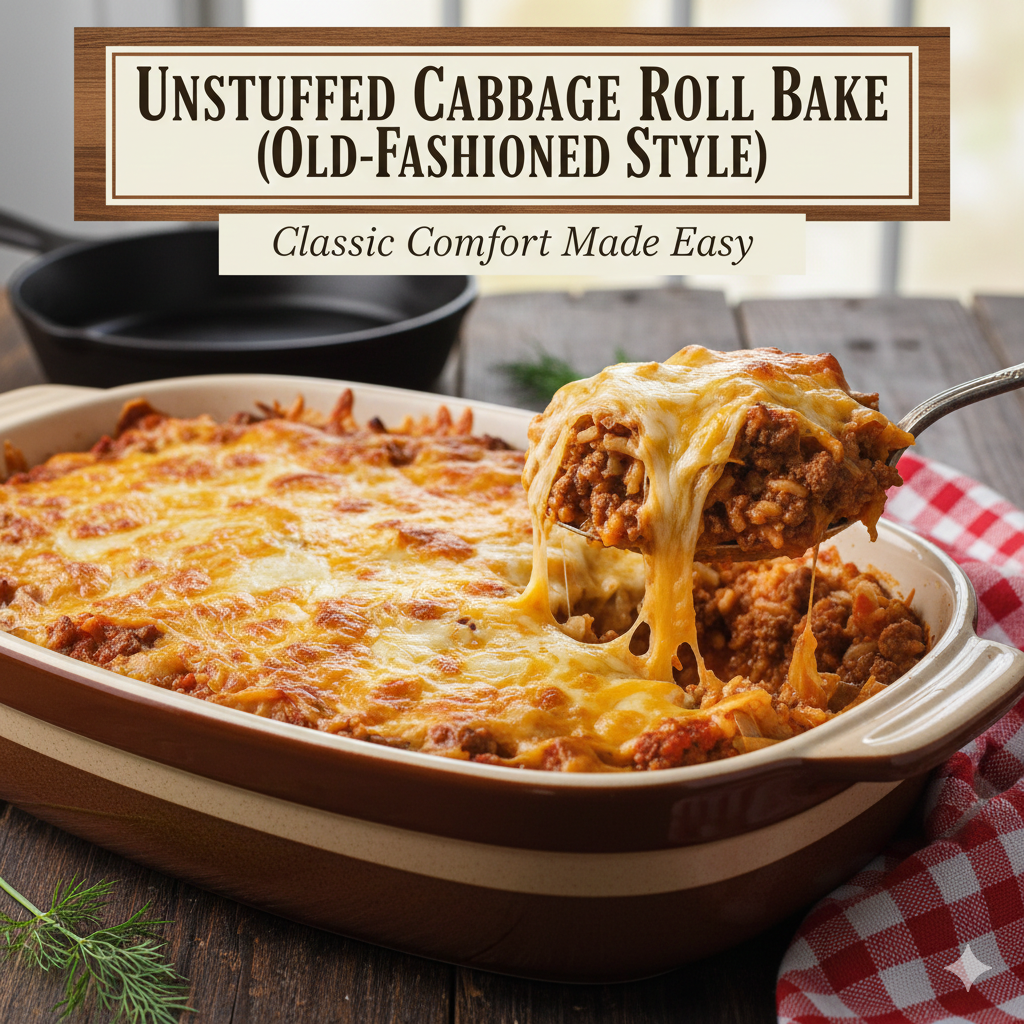
Unstuffed Cabbage Roll Bake (Old-Fashioned Style): Classic Comfort Made Easy
Traditional stuffed cabbage rolls deliver incredible comfort food satisfaction but demand patience most of us simply don’t have on busy weeknights. This unstuffed cabbage roll bake captures every bit of that old-fashioned flavor—tender cabbage, savory meat, fluffy rice, and rich tomato sauce—while eliminating the tedious blanching, rolling, and individual wrapping. It’s the kind of practical wisdom grandmothers would applaud: honoring tradition through flavor rather than slavish adherence to labor-intensive technique.
Why This Cabbage Roll Casserole Makes Sense
Anyone who’s made traditional cabbage rolls knows the frustration. Blanch whole cabbage heads to soften leaves without tearing them. Carefully remove individual leaves. Mix filling. Roll each leaf around filling, tucking ends precisely. Arrange in pan, seam-side down. The process demands an hour before anything even goes in the oven, and heaven forbid a leaf tears—you start over with a new one.
This lazy cabbage rolls approach (the affectionate nickname comes from efficiency, not laziness) delivers identical taste and satisfaction in a fraction of the time. Chop cabbage into bite-sized pieces. Brown meat. Mix everything together. Bake. Dinner’s ready in forty-five minutes versus the two-plus hours traditional rolls require. The flavors actually improve since ingredients mingle freely rather than remaining separated by cabbage walls.
Understanding Old-Fashioned Flavor Profiles
Authentic stuffed cabbage casserole flavor comes from specific ingredient combinations refined over generations. Sweet tomato sauce balanced with slight tang. Savory beef seasoned with paprika and sometimes a whisper of cinnamon. Rice that absorbs surrounding flavors while maintaining distinct texture. Cabbage that softens completely, becoming almost sweet.
The key lies in not rushing or over-complicating. Traditional recipes use simple ingredients—nothing exotic or hard to find. The magic emerges through proper layering and baking time that allows everything to meld into unified deliciousness.
Complete Ingredient List
This serves six to eight people generously as a main dish, or stretches to ten when paired with substantial sides.
For the filling base:
- One and a half pounds ground beef (or ground pork, or half-and-half combination)
- One large onion, diced
- Three garlic cloves, minced
- One cup long-grain white rice, uncooked
- One medium head green cabbage (about two pounds), chopped into bite-sized pieces
- One teaspoon salt
- One teaspoon black pepper
- One teaspoon paprika (sweet or smoked)
- Half teaspoon dried oregano
- Optional: quarter teaspoon cinnamon for authentic Eastern European flavor
For the sauce:
- One can (28 ounces) crushed tomatoes
- One can (15 ounces) tomato sauce
- Two tablespoons brown sugar
- Two tablespoons apple cider vinegar or lemon juice
- One tablespoon Worcestershire sauce
- One bay leaf
- Half teaspoon salt
For topping:
- One cup shredded mozzarella or cheddar cheese (optional but traditional)
The beauty of these budget-friendly cabbage recipes lies in their pantry-friendly nature. Most ingredients are staples you likely already own, requiring only fresh cabbage and ground meat from the store.
Building Your Casserole Layer by Layer
Preheat your oven to 375°F and lightly grease a 9×13-inch baking dish. This moderate temperature cooks everything through without drying out the cabbage or rice.
Preparing the meat mixture:
Heat a large skillet over medium-high heat. Add ground beef, breaking it into crumbles as it browns. Cook until no longer pink, about six to eight minutes. If your beef releases excessive fat, drain most of it, leaving about two tablespoons for flavor.
Add diced onion to the beef and continue cooking four to five minutes until the onion softens and becomes translucent. Stir in minced garlic and cook one more minute until fragrant. Season with salt, pepper, paprika, oregano, and cinnamon if using. Remove from heat.
Creating the sauce:
In a large bowl, combine crushed tomatoes, tomato sauce, brown sugar, vinegar, Worcestershire sauce, and salt. Stir until the sugar dissolves completely. The sauce should taste balanced—slightly sweet, gently tangy, with savory depth. Adjust sweetness or acidity to your preference now since these flavors don’t change dramatically during baking.
Assembly:
Scatter half the chopped cabbage across the bottom of your prepared baking dish. Sprinkle half the uncooked rice over the cabbage. Spoon half the seasoned meat mixture evenly across the rice layer. Pour half the tomato sauce over everything.
Repeat these layers—remaining cabbage, remaining rice, remaining meat, remaining sauce. Press down gently with a spoon to compress layers slightly, ensuring rice stays submerged in liquid. Rice cooked in sauce this way absorbs incredible flavor while the surrounding liquid prevents burning.
Tuck the bay leaf into the sauce somewhere near the center. Cover the dish tightly with aluminum foil—this trapped moisture steams the rice and cabbage to tenderness.
Baking to Tender Perfection
Slide your covered dish into the preheated oven and bake for sixty minutes. During this time, the rice cooks, the cabbage softens, and flavors meld into something greater than individual components. Resist the urge to peek—lifting foil releases essential steam that cooks the rice.
After sixty minutes, carefully remove the foil. The surface should be bubbling gently and the cabbage should appear very soft. If using cheese, sprinkle it evenly across the top now. Return uncovered to the oven for fifteen more minutes. The cheese will melt beautifully while the exposed surface develops slight caramelization that adds depth.
Remove from the oven and let the casserole rest for ten minutes before serving. This cooling period allows the sauce to thicken slightly and makes portioning much neater. The rice continues absorbing liquid during resting, creating perfect texture throughout.
Serving This Homestyle Baked Dinner
Scoop generous portions into wide, shallow bowls to showcase the layers. The dish is substantial enough to stand alone as a complete meal, needing only crusty bread on the side for soaking up extra sauce. A simple cucumber salad or coleslaw provides cooling crunch that contrasts nicely with the warm, savory casserole.
For heartier appetites or particularly cold nights, serve with boiled potatoes or buttered egg noodles, though this verges on carbohydrate overload. The casserole itself already contains rice, making additional starches unnecessary for most people.
Dollop sour cream on individual servings if desired—the tangy richness complements the sweet-savory sauce beautifully and adds luxurious creaminess.
Why This Comfort Food Casseroles Classic Endures
Beyond convenience, this dish persists because it delivers genuine satisfaction. The combination of meat, rice, and vegetables creates complete nutrition in a single pan. The flavors evoke nostalgia for many people, connecting them to family dinners and cultural heritage. It’s filling without being heavy, flavorful without being aggressive, and approachable for even picky eaters.
The one-dish nature appeals tremendously during busy seasons when juggling multiple pots and pans feels overwhelming. Cleanup involves one baking dish and one skillet—manageable even on exhausting evenings when the dish rack already overflows.
Make-Ahead and Storage Strategies
This unstuffed cabbage rolls recipe excels at advance preparation—crucial during holidays or when feeding crowds. Assemble the casserole completely up to twenty-four hours before baking, cover tightly, and refrigerate. When ready to cook, bring to room temperature for thirty minutes while the oven preheats, then bake as directed, adding ten extra minutes to account for starting cold.
Alternatively, bake completely, cool, and refrigerate for up to four days. Reheat covered at 350°F for about thirty minutes until heated through. Individual portions microwave beautifully, making this ideal for meal prep.
The fully assembled casserole freezes well for up to three months. Wrap thoroughly in plastic wrap then aluminum foil, or use disposable pans with fitted lids. Thaw overnight in the refrigerator before baking, or bake from frozen, adding forty-five minutes to one hour to the timing and keeping it covered with foil for the first ninety minutes.
Variations on Traditional Themes
Once comfortable with the base old-fashioned cabbage bake, variations accommodate different preferences and pantry situations. Ground turkey or chicken create lighter versions, though they may need extra seasoning since they’re milder than beef. Ground lamb makes a distinctive, rich variation common in some cultural interpretations.
Brown rice instead of white adds nuttier flavor and more fiber, though it needs longer cooking—increase total baking time to seventy-five to ninety minutes. Wild rice creates even earthier results with chewier texture.
Vegetarian versions replace meat with crumbled firm tofu, cooked lentils, or finely chopped mushrooms. Increase seasonings and consider adding a bit of liquid smoke to replace the savory depth meat provides.
Sauerkraut lovers can substitute half the fresh cabbage with drained sauerkraut for tangier results reminiscent of Polish variations. Italian-inspired versions use Italian seasoning instead of paprika and add mozzarella throughout rather than just on top.
Budget Analysis
At approximately twelve to fifteen dollars for ingredients serving eight people, this works out to less than two dollars per generous portion. Ground beef represents the largest expense, yet even that costs significantly less than pre-made convenience foods or restaurant meals.
The dish stretches ingredients remarkably far. A modest amount of meat distributes throughout, making a pound and a half feed a crowd. The cabbage provides bulk and nutrition for minimal cost—whole heads often run just two to three dollars. Rice adds filling carbohydrates for pennies per serving.
Compare this to individual frozen dinners at three to five dollars each, and the savings multiply dramatically. Even basic restaurant entrees cost eight to twelve dollars per person, making this home-cooked version roughly one-tenth the price of eating out.
Teaching Food Heritage Through Cooking
Making this easy family casseroles favorite provides opportunities to share food history with children. Discuss how immigrant communities brought cabbage roll traditions from Eastern Europe, adapting them with available American ingredients. Explain how recipes evolve to fit modern lifestyles while maintaining essential character.
Let kids help chop cabbage (with supervision), layer ingredients, and observe the transformation from raw components to finished dish. These hands-on experiences build cooking confidence and create memories linking food to family identity.
Share stories about relatives who made traditional cabbage rolls if you have them. These narratives give food emotional resonance that pure recipes cannot provide, creating living connections across generations.
Troubleshooting Common Issues
Crunchy rice indicates insufficient liquid or inadequate cooking time. Ensure rice stays submerged in sauce during assembly, and don’t be tempted to reduce liquid amounts. If this happens, add half a cup of water or broth, cover tightly, and bake another fifteen to twenty minutes.
Mushy rice suggests too much liquid or overcooking. Measure carefully and check at the sixty-minute mark rather than automatically extending time. Different rice brands absorb liquid at varying rates, so adjust based on your specific product.
Watery casserole means the cabbage released more moisture than expected, or you didn’t let it rest adequately before serving. Some cabbages contain more water than others depending on variety and freshness. Let the finished dish rest a full fifteen minutes, and consider cooking uncovered for the final twenty minutes rather than fifteen to evaporate excess moisture.
Bland flavor points to under-seasoning the meat mixture or insufficient salt in the sauce. Traditional cabbage roll flavors are robust, not timid. Season boldly, tasting the raw meat mixture (cook a small spoonful if concerned about raw meat tasting) to ensure proper seasoning before assembly.
Your Path to Casserole Comfort
Start with this recipe exactly as written to understand how components work together. Notice the cabbage’s transformation from crunchy to meltingly tender. Observe how rice absorbs surrounding flavors. Taste how simple ingredients create satisfying complexity when combined properly.
After mastering the foundation, explore variations that match your household preferences. Maybe you prefer more paprika, less sweetness in the sauce, or different meat altogether. These adjustments personalize the recipe while maintaining its essential soul.
Welcome to cooking that honors tradition while embracing practicality—where classic flavors don’t require classic labor, and where feeding your family well doesn’t demand sacrificing your entire evening. This unstuffed cabbage roll bake proves that shortcuts aren’t always compromises, sometimes they’re simply smart adaptations that preserve what matters most: flavor, comfort, and bringing people together around the table. Your simplified classic awaits.