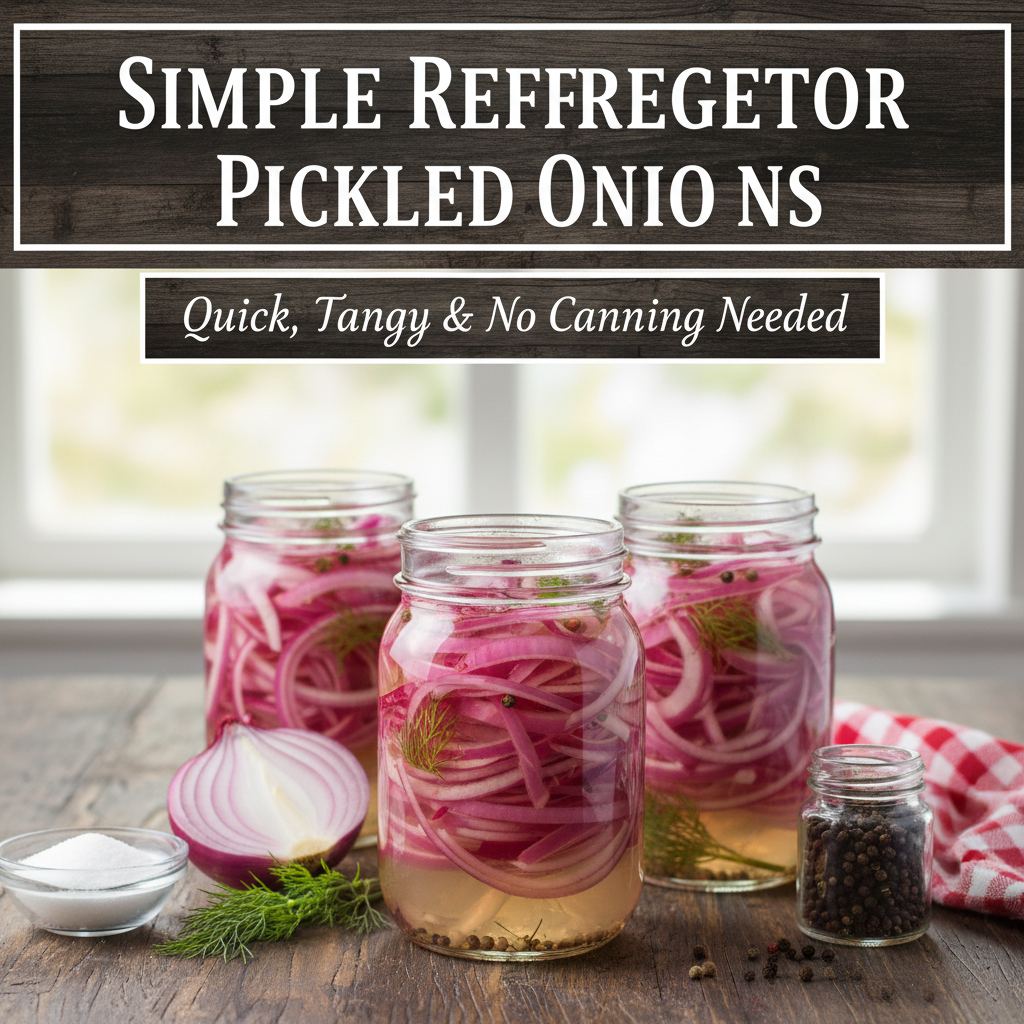
Simple Refrigerator Pickled Onions: Quick, Tangy & No Canning Needed
I started making pickled onions because I bought a three-pound bag at Costco and needed to use them before they went soft and sprouted in the back of my vegetable drawer. That’s the unglamorous truth behind most of my cooking discoveries—necessity mixed with a refusal to waste seven dollars.
The first batch sat in my fridge for two weeks before I remembered they existed. When I finally tried them on a taco, I was annoyed at how good they were. Annoyed because I’d been buying those sad little jars of pickled jalapeños at the store for years when I could’ve been making something infinitely better for the cost of half an onion and some vinegar I already owned.
Now I keep a jar in my fridge constantly. They last for weeks, take five minutes to make, and turn ordinary food into something that tastes like you tried. Which is the best kind of cooking—maximum result for minimum effort.
Why These Work Better Than Store-Bought
Grocery store pickled onions come in tiny expensive jars and taste like they were pickled sometime during the Reagan administration. They’re limp, overly sweet, and dyed that artificial pink that looks nothing like what actual pickled red onions look like.
Homemade refrigerator pickled onions are crisp, tangy, and taste like real food made by a real person. The brine is simple—vinegar, water, sugar, salt—which means you control exactly how sweet or sour they are. You can adjust the recipe to your preferences instead of accepting whatever some food scientist in New Jersey decided the average American palate wanted.
The texture stays crunchy for weeks because you’re not boiling them to death in a canning process. Quick pickling means the onions sit in hot brine just long enough to soften slightly while maintaining their snap. It’s the difference between a pickle with backbone and a pickle that’s given up on life.
What You Actually Need
Here’s the entire ingredient list:
- 1 large red onion (or 2 medium ones)
- 1 cup white vinegar (distilled white vinegar, nothing fancy)
- 1 cup water
- 2 tablespoons sugar
- 1½ teaspoons salt
- Optional additions: 1 teaspoon whole peppercorns, 2 cloves garlic, 1 bay leaf, ½ teaspoon red pepper flakes
That’s it. Six ingredients if you’re being generous with the count. You probably have everything already except maybe the red onion, and those cost ninety-nine cents.
I use red onions because they turn that gorgeous bright pink color when they hit the vinegar. Yellow onions work fine but stay pale and look less exciting. White onions are sharp and strong, good if you like aggressive onion flavor. Shallots work beautifully if you’re feeling fancy or happen to have extras.
The vinegar matters more than you’d think. White distilled vinegar is my default—it’s cheap, clear, and has a clean sharp taste that doesn’t compete with the onions. Apple cider vinegar adds a subtle fruity depth that’s nice on salads. Rice vinegar is milder and slightly sweet. Red wine vinegar tastes more complex but can muddy the color.
I’ve tried this with expensive aged balsamic once because someone told me it would be “elevated.” It was, in fact, a waste of expensive vinegar. Save the good stuff for actual vinaigrette.
The Method That Takes Five Minutes
Peel your onion and slice it as thin as you can manage. I use a mandoline because my knife skills are mediocre and I’d rather risk my knuckles than eat thick uneven slices. If you’re using a knife, aim for slices about one-eighth inch thick. Thicker and they won’t pickle evenly. Thinner and they’ll turn to mush.
Separate the slices into rings and pack them into a clean glass jar. I use a pint-sized mason jar, the kind that costs a dollar at the hardware store. You can use any jar that had a previous life holding pasta sauce or pickles or whatever, as long as it’s been washed thoroughly. Just make sure it has a lid that seals.
Combine your vinegar, water, sugar, and salt in a small saucepan. If you’re adding peppercorns, garlic, bay leaf, or red pepper flakes, throw them in now. Put the pan over medium-high heat and stir until the sugar and salt dissolve completely. This takes maybe two minutes. You don’t need to boil it, just get it hot enough that everything dissolves.
Pour the hot brine over the onions in the jar. They’ll sizzle slightly when the liquid hits them, which is satisfying in a small way. Make sure the onions are completely submerged. If they’re floating above the brine, push them down with a spoon or add more brine in the same ratio—equal parts vinegar and water with a bit of sugar and salt.
Let the jar sit on your counter until it cools to room temperature, maybe thirty minutes. Then put the lid on and stick it in the refrigerator. They’re technically ready to eat after an hour, but they’re better after sitting overnight. The flavor mellows and deepens, and the onions turn from raw and sharp to tangy and balanced.
How Long They Last and How to Tell When They’re Done
These will keep in your refrigerator for at least a month, probably longer. I’ve eaten them six weeks in and they were fine. The onions gradually soften over time but stay crisp enough to be useful for weeks.
You’ll know they’ve gone bad if they smell off or develop mold, which in my experience hasn’t happened. The vinegar is acidic enough to prevent most bacterial growth, which is why pickling worked as a preservation method before refrigeration existed.
The color will fade slightly over time. Bright pink becomes paler pink becomes almost beige after a few weeks. They still taste good, they just look less photogenic. If appearance matters—say you’re serving them at a dinner party—make a fresh batch the day before.
What to Do With a Jar of Pickled Onions
I eat these on almost everything. Tacos obviously—they cut through fatty meat and add brightness. Sandwiches, especially anything with rich ingredients like pulled pork or fried chicken. Salads where they add acid and crunch without needing separate dressing. Grain bowls. Rice bowls. Any bowl situation, really.
They’re excellent on hot dogs and burgers, where they provide the same function as relish but taste more interesting. I put them on scrambled eggs sometimes, which sounds weird but works. They’re good straight from the jar as a palate cleanser between bites of heavy food.
My husband eats them on pizza, which I thought was an abomination until I tried it. The acid cuts through cheese and grease in a way that actually makes sense. I still think it’s weird, but I can’t argue with results.
They’re also useful for making lazy cooking look intentional. Leftover rotisserie chicken becomes a composed salad with some greens, avocado, and pickled onions. Plain rice and beans becomes a meal with pickled onions and hot sauce. Toast with cream cheese and pickled onions is somehow an acceptable lunch.
Variations I’ve Tried
Sweet pickled onions: Double the sugar to ¼ cup. These are good on barbecue or anything smoky where sweetness complements the meat.
Spicy pickled onions: Add a sliced jalapeño or serrano pepper to the jar, or increase the red pepper flakes to a full tablespoon. Good on tacos, breakfast burritos, anything that needs heat.
Mexican-style pickled onions: Add the juice of one lime to the brine along with ½ teaspoon dried oregano. These are traditional with cochinita pibil but work on any Mexican or Latin American food.
Herb pickled onions: Add a few sprigs of fresh thyme, rosemary, or dill to the jar before pouring in the brine. The herbs infuse their flavor into the onions. Use these on sandwiches or anywhere you want extra aromatic complexity.
Pickled shallots: Substitute shallots for red onions. They’re milder, slightly sweeter, and feel fancier even though the process is identical. Good on steak or fancy salads.
I’ve also pickled other vegetables using this exact same method. Carrots, radishes, cucumbers, jalapeños, cauliflower—anything crunchy works. Slice them thin, pour hot brine over them, refrigerate. It’s hard to mess up.
The Economics of Homemade Condiments
A small jar of pickled onions at my grocery store costs four dollars and contains maybe half a cup of product. This recipe makes two cups for about a dollar’s worth of ingredients. The math is almost offensive.
I started tracking how much money I save making basic condiments at home and then stopped because it was depressing how much I’d been overpaying for years. Pickled onions, salad dressing, hummus, pesto—all of these are cheaper and better homemade, assuming you already own basic pantry ingredients.
The time investment is minimal. Five minutes for pickled onions. Maybe ten minutes for salad dressing if you’re being slow. The barrier is just knowing that it’s possible and easier than you think.
I’m not suggesting you make everything from scratch like some homesteading martyr. Buy your ketchup and your mayonnaise and your mustard. But the stuff that’s genuinely simple and saves genuine money? Start there.
Why This Recipe Matters Beyond Food
Learning to make pickled onions taught me that most “specialty” foods are just regular foods with marketing. Pickled vegetables aren’t exotic or complicated. They’re what people did with extra vegetables and vinegar before refrigerators existed. The process got mystified somewhere along the way, turned into something that required special equipment or knowledge or skills.
It doesn’t. You need a jar, some vinegar, and heat. That’s the barrier to entry. Everything else is just variations on that basic theme.
Once I figured out pickled onions, I started questioning what else I’d been buying unnecessarily. Turns out, quite a lot. Roasted red peppers are just peppers you roasted. Caramelized onions are just onions you cooked slowly. “Artisanal” usually means “made in small batches,” which is exactly what happens when you make something at home.
I’m not arguing against buying convenience foods. I buy plenty of them. But I’ve gotten better at distinguishing between “convenient because it’s genuinely complex” and “convenient because I didn’t know it was easy.”
Pickled onions fall firmly in the second category. They’re so simple that I felt slightly stupid the first time I made them, realizing I’d been buying inferior versions for years.
Start With One Jar
Make one jar of pickled onions this week. That’s it. Don’t commit to making them forever or swear off store-bought versions or turn this into some bigger project about self-sufficiency. Just make one jar.
Use them on whatever sounds good. Tacos, sandwiches, eggs, straight from the jar while standing at the refrigerator at eleven o’clock at night. Notice whether they make your food better, which they probably will.
If you finish the jar, make another one. If it sits in your fridge untouched for a month, you learned something about your actual condiment preferences versus your aspirational ones. Either outcome is fine.
The recipe will be here when you need it. The process won’t change. Pickled onions have been made basically the same way for centuries because the method works and doesn’t need improving.
That’s the beauty of simple food—it just quietly does its job without requiring praise or attention. It makes things better without announcing itself. It costs almost nothing and asks almost nothing in return.
Make the pickled onions. Your tacos will thank you.