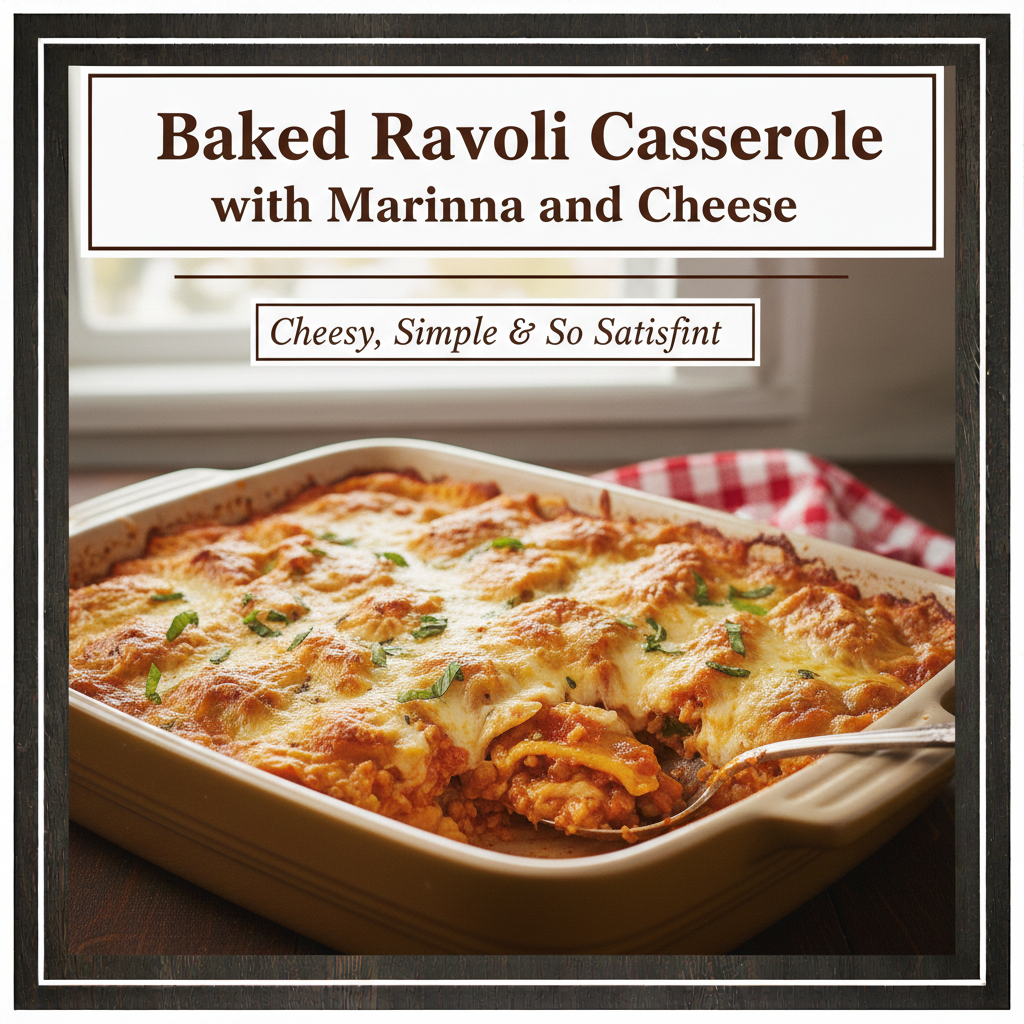
Baked Ravioli Casserole with Marinara and Cheese
Some meals exist for busy days, and others are made for comfort. Baked ravioli casserole sits right in the middle. It feels generous and familiar, yet it comes together with very little effort. It’s the kind of dish you make when you want something warm and satisfying but don’t want to stand over the stove all evening.
This casserole takes a few everyday ingredients and turns them into something that feels special. Soft pasta, rich marinara, and melted cheese come together in layers that bake into a bubbling, golden dish. It’s hearty without being heavy and simple without feeling plain.
Why This Dish Works So Well
Baked ravioli casserole succeeds because it doesn’t fight its ingredients. Ravioli already comes filled and seasoned, which means half the work is done before you even begin. The sauce adds moisture and flavor, while the cheese brings everything together.
Instead of boiling pasta, preparing fillings, and assembling a complicated bake, this dish relies on layering. Everything cooks together in the oven, allowing the flavors to blend slowly and evenly. The result is cohesive and comforting, not rushed or overly complex.
It’s also forgiving. Measurements don’t need to be exact, and substitutions rarely cause problems. That flexibility is what makes it a favorite in many kitchens.
Choosing the Right Ravioli
Almost any ravioli works here, which is part of the appeal.
Cheese-filled ravioli keeps the dish classic and mild. Meat-filled ravioli adds depth and richness. Spinach or vegetable ravioli brings a slightly lighter note without losing comfort.
Frozen ravioli are especially convenient. They go straight into the baking dish without thawing, making this casserole ideal for nights when planning ahead isn’t an option.
Marinara: The Backbone of the Dish
The sauce does more than add flavor—it ensures the ravioli bake properly.
A good marinara should be thick enough to cling to the pasta but loose enough to prevent dryness. Too little sauce leads to stiff edges and uneven texture, while too much can make the casserole soupy.
As it bakes, the sauce seeps into the ravioli, softening the pasta and blending with the filling. By the time it comes out of the oven, everything tastes unified rather than layered.
The Role of Cheese
Cheese is what turns this from pasta and sauce into a casserole.
Mozzarella provides that familiar stretch and melt. A firmer cheese adds structure and a deeper flavor. Used together, they create a top layer that browns lightly while staying tender underneath.
The cheese also helps hold the layers together once the casserole rests. Letting it sit for a few minutes after baking makes serving easier and keeps the layers intact.
Assembling Without Stress
Assembly is straightforward and intentionally uncomplicated.
Sauce lines the bottom of the dish first, protecting the ravioli from sticking. Ravioli are layered next, followed by more sauce and cheese. The process repeats until the dish is full, ending with a generous topping of cheese.
There’s no need to be precise or decorative. Once baked, everything settles into place on its own.
Baking for the Best Texture
Covered baking allows the ravioli to heat through gently and absorb moisture. Removing the cover near the end lets the cheese brown and the edges crisp slightly.
The casserole should bubble around the edges and feel hot all the way through before coming out of the oven. That bubbling is a good sign—it means the sauce and cheese have fully melded.
Letting It Rest
Resting the casserole matters more than people think.
Straight from the oven, everything is loose and molten. A short rest allows the layers to set slightly, making it easier to slice and serve. The flavors also settle during this time, becoming more balanced.
It’s still warm and comforting, just more composed.
Serving Ideas
Baked ravioli casserole doesn’t need much on the side.
A simple salad or some roasted vegetables add contrast. Bread works well for scooping sauce and melted cheese. On its own, though, this dish is filling enough to stand as a complete meal.
It’s equally at home on a family dinner table or served casually when friends come over.
Leftovers That Reheat Well
This casserole holds up beautifully the next day.
The ravioli continue to absorb sauce, making leftovers even more cohesive. Reheated gently, it retains its texture without drying out. It’s one of those meals that feels just as comforting the second time around.
Why This Casserole Stays in Rotation
Baked ravioli casserole lasts because it understands what people need on busy days: warmth, simplicity, and reliability.
It doesn’t ask for advanced skills or special ingredients. It doesn’t demand constant attention. It simply delivers a comforting, familiar meal that feels like more effort than it actually is.
That balance—easy but satisfying—is what keeps this dish coming back to the oven again and again.