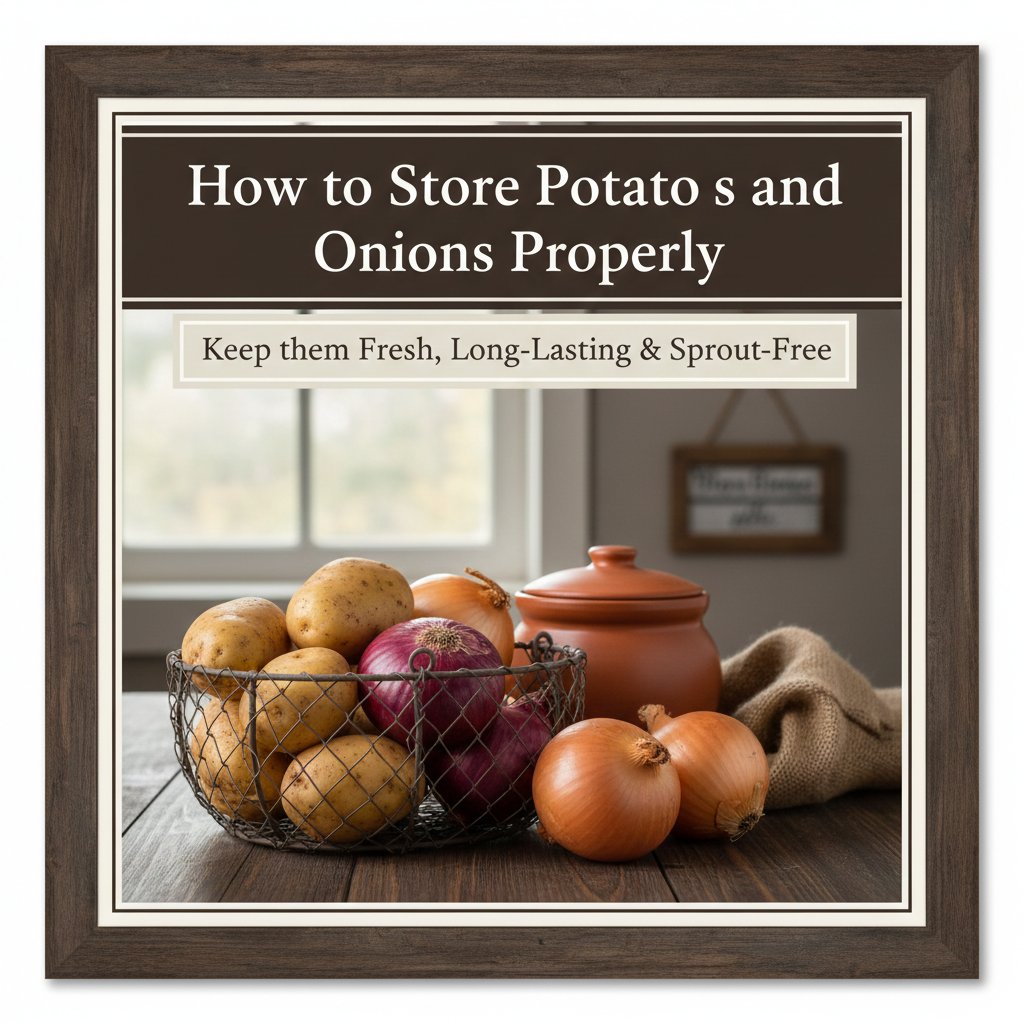
How to Store Potatoes and Onions Properly
Potatoes and onions are the kind of staples people buy without thinking twice. They’re inexpensive, versatile, and almost always part of everyday cooking. But they’re also two of the most commonly wasted foods in the kitchen—not because they go bad quickly, but because they’re stored the wrong way.
Many people make the same mistake: tossing them together in a basket, leaving them under the sink, or storing them in plastic bags where moisture builds up. The result is sprouting potatoes, soft onions, and food that ends up in the trash long before it should.
Storing potatoes and onions properly doesn’t require special equipment or a pantry makeover. It just requires understanding what each one needs—and what they absolutely should not share.
Why Potatoes and Onions Don’t Belong Together
It’s common to see potatoes and onions stored side by side, but they don’t get along as well as they seem.
Onions release natural gases as they age. These gases speed up sprouting in potatoes, causing them to grow eyes faster and soften sooner. At the same time, potatoes release moisture, which onions hate. Excess moisture leads to mold, soft spots, and rot.
When stored together, both vegetables spoil faster than they should.
Keeping them apart is the single most important storage rule.
Understanding What Potatoes Need
Potatoes are living tubers, even after harvest. They respond to light, heat, and humidity.
Ideal Conditions for Potatoes
- Cool temperature (but not refrigerator cold)
- Darkness
- Moderate airflow
- Low moisture
Light causes potatoes to turn green and develop bitterness. Heat encourages sprouting. Too much moisture leads to rot.
That’s why potatoes last longest when they’re stored in a dark, cool place with some ventilation.
The Best Place to Store Potatoes at Home
A pantry, cellar, or cupboard away from appliances works best.
Good options include:
- A ventilated bin or basket
- A paper bag with holes punched in it
- A cardboard box lined with newspaper
Avoid:
- Plastic bags
- Clear containers
- Areas near ovens, dishwashers, or windows
Potatoes don’t need to be refrigerated. Cold temperatures can turn their starches into sugar, which affects flavor and texture when cooked.
How to Store Onions the Right Way
Onions are more delicate than they appear. They need dryness above all else.
Ideal Conditions for Onions
- Cool but dry environment
- Good airflow
- No trapped moisture
- Separation from potatoes
Whole onions keep best when they can breathe. Air circulation prevents mold and soft spots from forming around the neck and base.
Best Storage Options for Onions
- Open baskets
- Mesh bags
- Hanging storage
- Paper bags left open at the top
Avoid:
- Plastic bags
- Sealed containers
- Damp or humid spaces
Unlike potatoes, onions can tolerate slightly warmer temperatures, as long as they stay dry.
What About Refrigeration?
Potatoes
Whole raw potatoes should not be refrigerated. Once cut or cooked, refrigeration is fine, but whole potatoes belong in a cool pantry.
Onions
Whole onions don’t need refrigeration. Once cut, they must be stored in an airtight container in the refrigerator and used within a few days.
Green onions are the exception—they keep best refrigerated.
Keep Them Away from Each Other
Even if space is limited, potatoes and onions should never share the same container.
If your pantry is small:
- Store potatoes low and onions higher
- Use different cabinets
- Separate them by walls or shelves
Distance matters more than size.
Checking Them Regularly
Even when stored correctly, potatoes and onions should be checked weekly.
Look for:
- Soft spots
- Mold
- Sprouting
- Strong odors
Remove any spoiled pieces immediately. One bad onion or potato can cause others nearby to deteriorate faster.
What to Do with Sprouting Potatoes
Small sprouts don’t mean the potato is ruined. If the potato is still firm, the sprouts can be removed and the potato used.
However, if the potato is:
- Very soft
- Wrinkled
- Green
- Bitter-smelling
It’s best to discard it.
Storing Different Types Separately
Not all onions behave the same.
- Yellow onions store the longest
- Red onions are slightly more sensitive
- Sweet onions have higher moisture and shorter shelf life
Sweet onions are best used sooner and stored carefully, as they spoil faster than storage onions.
Common Storage Mistakes
- Washing potatoes or onions before storing (adds moisture)
- Keeping them in plastic
- Storing near heat sources
- Mixing damaged pieces with healthy ones
- Forgetting to check them regularly
Simple habits make a big difference over time.
How Long They Should Last
When stored properly:
- Potatoes can last several weeks to a few months
- Onions can last several weeks, sometimes longer depending on variety
If yours are spoiling quickly, storage conditions—not the produce—are usually the problem.
A Practical Kitchen Habit Worth Keeping
Learning how to store potatoes and onions properly saves money, reduces waste, and makes everyday cooking easier. There’s nothing worse than planning a meal only to find your ingredients have gone soft or moldy too soon.
These vegetables don’t need special treatment—just a little understanding and separation.
Once you store them the way they prefer, you’ll notice the difference almost immediately.