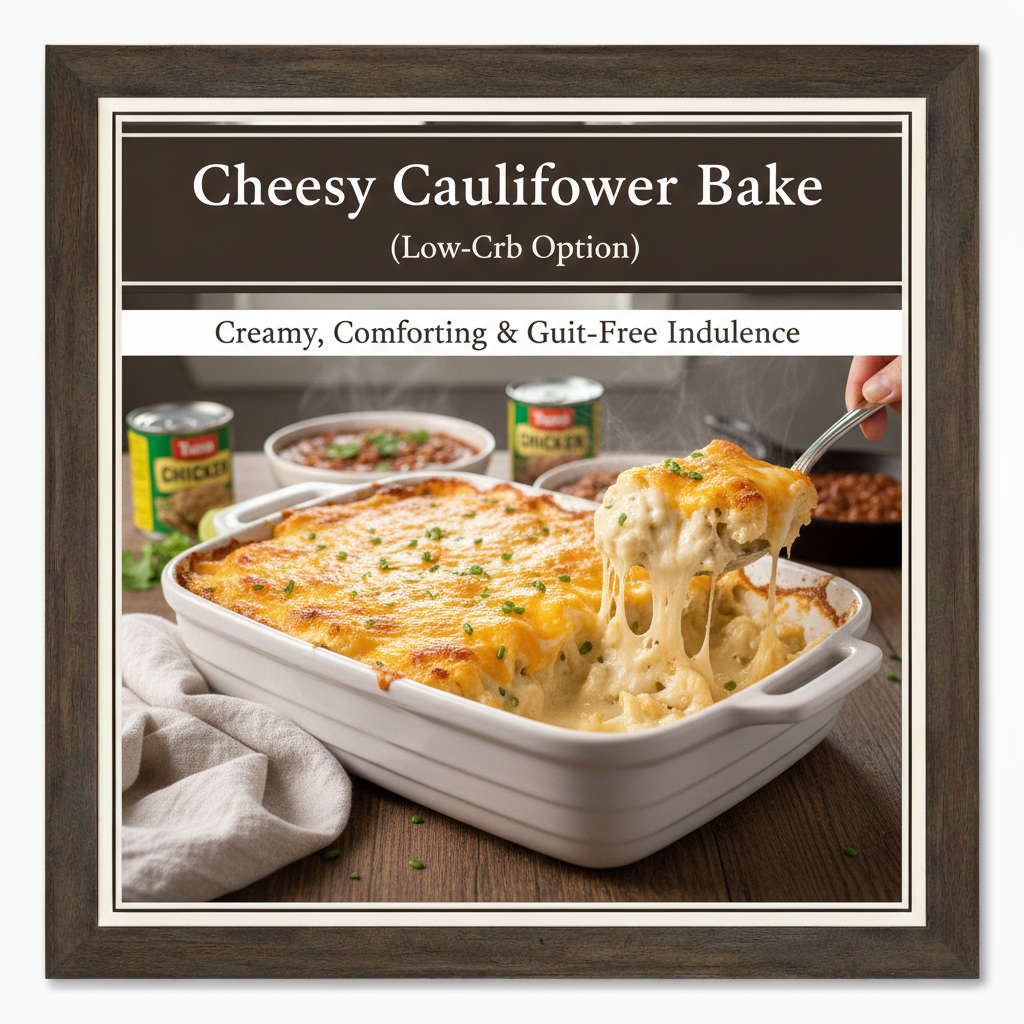
Cheesy Cauliflower Bake (Low-Carb Option)
Some dishes earn their place on the table not by pretending to be something else, but by being good in their own right. Cheesy cauliflower bake is one of those recipes. It doesn’t try to replace pasta or fool anyone into thinking it’s potatoes. Instead, it leans into what cauliflower already does well—soaking up flavor, turning tender without falling apart, and carrying rich, comforting sauces beautifully.
For anyone looking to cut back on carbs without giving up warmth and satisfaction, this dish feels like a small victory. It’s familiar, filling, and generous, the kind of food that doesn’t leave you feeling like you’ve missed out.
Why Cauliflower Works So Well Here
Cauliflower has a mild flavor, which is often misunderstood as blandness. In reality, it’s what makes it such a good base. It absorbs cheese, butter, and seasoning without competing, letting the sauce take center stage.
When baked, cauliflower softens just enough while still holding its shape. That balance keeps the dish from turning watery or mushy, which is where many vegetable bakes go wrong.
Not Just a “Diet” Dish
It’s easy to label this kind of recipe as “healthy food,” but that misses the point. Cheesy cauliflower bake has more in common with classic casseroles than with diet plates. It’s rich, comforting, and meant to be eaten slowly.
Yes, it’s low in carbohydrates compared to pasta or potatoes—but more importantly, it’s satisfying. That’s why it works for people who aren’t counting anything at all.
Choosing the Right Cauliflower
Fresh cauliflower is best for this dish. Look for:
- Tight, white florets
- No brown spots
- Firm stems
Frozen cauliflower can work, but it needs to be fully thawed and drained very well. Excess moisture is the enemy of a creamy bake.
Preparing Cauliflower the Right Way
Before baking, cauliflower should be lightly cooked. This step is essential.
If you skip it, the bake may turn out crunchy or watery. Cooking the florets just until tender allows them to finish cooking in the oven without releasing too much liquid.
After cooking, let the cauliflower steam dry for a few minutes. That small pause makes a big difference.
Building the Cheese Sauce
The heart of this dish is the sauce. A good cheese sauce doesn’t need to be complicated—it just needs balance.
Butter and cream give richness. Cheese adds depth and salt. Gentle heat keeps everything smooth. When done right, the sauce coats the cauliflower instead of pooling at the bottom of the dish.
This is not a sauce you rush. Slow heat and patience are what keep it creamy instead of grainy.
Choosing the Cheese
Sharp cheeses work best because cauliflower is mild.
Good options include:
- Sharp cheddar
- Gruyère
- Monterey Jack
- A blend of cheeses for depth
Using at least one bold cheese keeps the dish from tasting flat, especially since there’s no starch to hide behind.
Seasoning Without Overdoing It
Because cheese already brings salt and richness, seasoning should be thoughtful, not heavy-handed.
A little:
- Garlic
- Black pepper
- Paprika or mustard powder
These add warmth without overwhelming the dish. Taste as you go—cauliflower is forgiving, but subtlety goes a long way.
Assembling the Bake
Once everything is ready, assembly is simple.
The cauliflower goes into a baking dish, the sauce is poured evenly over it, and everything is gently mixed to coat. The top can be finished with extra cheese for a golden crust.
There’s no need to pack it down or press it flat. Let the ingredients settle naturally.
Baking Until Just Right
The bake should go into the oven uncovered. You’re looking for:
- Bubbling edges
- A lightly browned top
- A sauce that thickens but doesn’t dry out
Overbaking can cause separation, so once the top is golden and the center is hot, it’s ready.
Let it rest briefly before serving. That short rest allows the sauce to set and makes serving easier.
How It’s Usually Served
Cheesy cauliflower bake works in many roles:
- As a main dish with a simple salad
- As a side alongside roasted meats
- As a comforting lunch reheated the next day
It doesn’t need embellishment. A spoon and a plate are enough.
Common Problems and Easy Fixes
Watery Bake
Usually caused by excess moisture in the cauliflower. Make sure it’s well-drained before adding sauce.
Grainy Sauce
This happens when cheese is overheated. Lower heat and patience prevent it.
Flat Flavor
A pinch of salt or a sharper cheese can bring everything into balance.
Leftovers and Reheating
This dish keeps well in the refrigerator.
When reheating:
- Use gentle heat
- Cover loosely to prevent drying
- Stir halfway if reheating a large portion
The texture may thicken slightly, but the flavor often improves after resting overnight.
Why This Dish Sticks Around
Cheesy cauliflower bake isn’t trendy—it’s practical. It fits into weeknight meals, holiday spreads, and quiet dinners alike. It doesn’t demand special ingredients or complicated steps.
It just works.
And that reliability is why people keep making it, whether they’re eating low-carb or simply want something warm and familiar on the table.
Final Thought
Cheesy cauliflower bake proves that comfort food doesn’t have to rely on pasta or potatoes to feel complete. With the right care, a simple vegetable and a good sauce can stand on their own.
It’s not about replacing something—it’s about enjoying what’s already there, baked gently, shared generously, and eaten without apology.