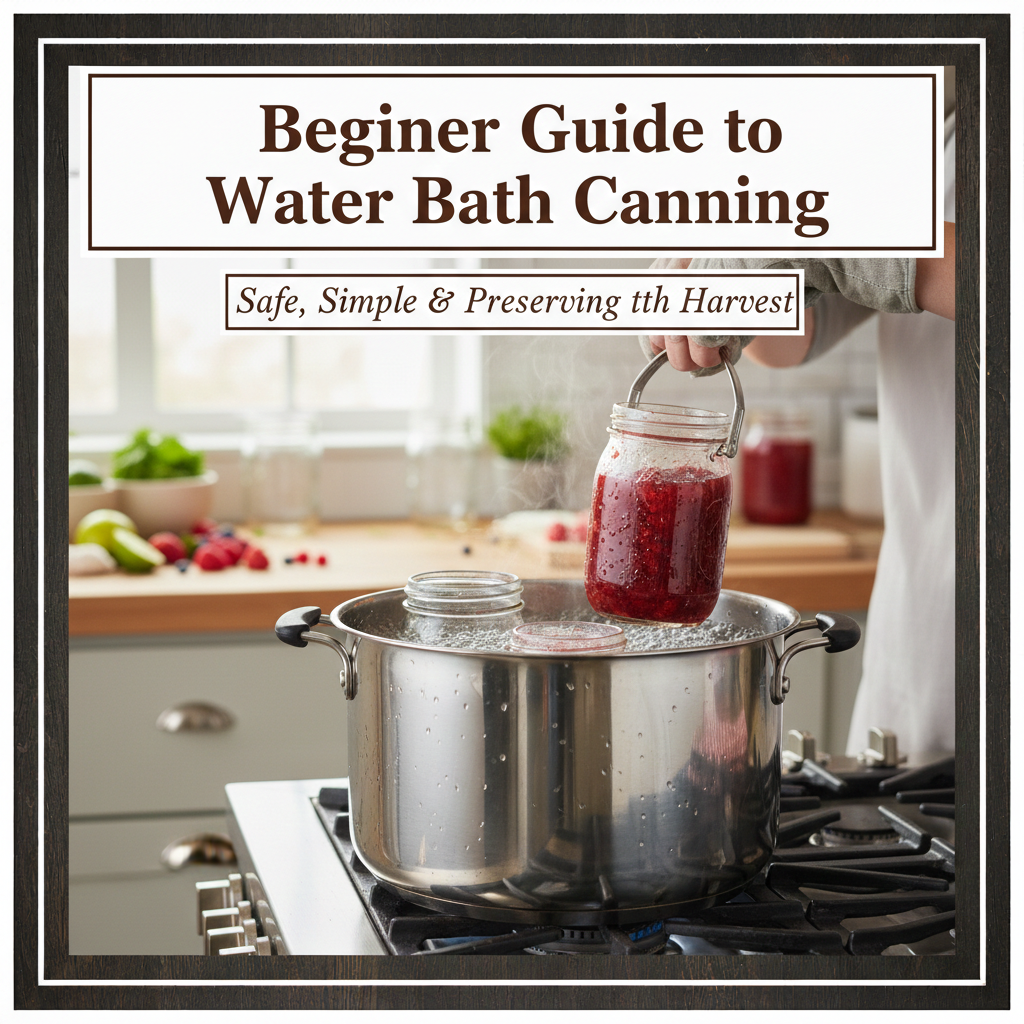
Beginner Guide to Water Bath Canning
Water bath canning often feels more intimidating than it actually is. For many people, the hesitation doesn’t come from the process itself, but from the fear of doing something wrong. Jars, lids, boiling water, timing — it sounds technical, even risky, until you understand what’s really happening.
At its heart, water bath canning is simply a method of preserving high-acid foods using heat. It’s how generations of home cooks saved fruit, tomatoes, jams, and pickles long before freezers were common. With the right ingredients and a clear understanding of the steps, it becomes a calm, almost meditative kitchen practice rather than a stressful one.
This guide is meant to take the mystery out of it and help you start with confidence.
What Water Bath Canning Is (and Isn’t)
Water bath canning uses boiling water to heat filled jars to a temperature that safely preserves food with enough natural or added acidity. The heat destroys spoilage organisms, and the cooling process creates a vacuum seal that keeps food shelf-stable.
What it is:
- A safe method for high-acid foods
- Accessible for beginners
- Simple equipment-wise
- Time-tested and reliable
What it is not:
- Suitable for low-acid foods like meats or plain vegetables
- Complicated or equipment-heavy
- Something that requires special training
Understanding this distinction is the most important first step.
Foods That Are Safe for Water Bath Canning
Water bath canning works only with foods that are naturally acidic or made acidic through added vinegar or citrus.
Safe examples include:
- Jams and jellies
- Fruit preserves and syrups
- Pickles and relishes
- Tomatoes (with added acid)
- Fruit juices
Foods that are not safe for this method include meats, beans, soups, and plain vegetables. Those require pressure canning and should never be substituted.
The Equipment You Actually Need
You don’t need a professional setup to begin. Many people start with what they already have.
Essentials:
- A large pot deep enough to fully submerge jars
- Glass canning jars designed for preservation
- New lids (bands can be reused)
- A rack or folded towel for the bottom of the pot
Helpful but optional:
- Jar lifter
- Funnel
- Bubble remover or small spatula
The most important thing is that the jars sit upright and are covered by at least an inch of boiling water.
Preparing Jars and Lids
Clean jars are essential, but sterilization depends on processing time.
If your jars will be processed for 10 minutes or more, washing them in hot, soapy water is sufficient. Keep them warm until filling to prevent cracking when hot food is added.
Lids should be clean and warm, but no longer need to be boiled. Modern lids seal best when gently heated rather than aggressively cooked.
Filling the Jars Properly
This step matters more than it seems.
Food should be packed evenly, leaving the correct amount of headspace — the empty space between the food and the lid. Too little space can cause leakage. Too much can prevent proper sealing.
After filling:
- Remove air bubbles by sliding a utensil along the inside
- Wipe jar rims clean
- Place lids gently, then screw bands on fingertip-tight
Over-tightening can prevent air from escaping during processing.
The Water Bath Process
Once jars are filled and placed in the pot, water is added until they are fully submerged.
Bring the water to a rolling boil before starting the timer. Processing time depends on the recipe and your altitude, and it must be followed exactly.
During processing:
- Keep the water boiling steadily
- Do not reduce heat
- Do not lift the lid
After the time is complete, turn off the heat and let jars rest in the water briefly before removing them.
Cooling and Checking Seals
Jars should cool undisturbed on a towel or rack for 12 to 24 hours.
As they cool, you may hear popping sounds — this is normal and indicates sealing. Once cool, check seals by pressing the center of each lid. A sealed lid will not flex.
Any jar that didn’t seal can be refrigerated and used soon.
Common Beginner Mistakes
Many first-time canners make the same errors, usually from rushing or overthinking.
Common issues include:
- Using the wrong method for low-acid foods
- Skipping added acid when required
- Guessing processing times
- Reusing old lids
- Overfilling jars
Following tested recipes eliminates most risk.
Storage and Shelf Life
Properly sealed jars should be stored in a cool, dark place. Labeling jars with the contents and date helps track freshness.
Most water bath canned foods maintain quality for about one year, though many remain safe beyond that if sealed properly. Always inspect jars before use.
If a jar shows signs of leakage, bulging, or off odors, it should be discarded without tasting.
Why So Many People Fall in Love with Canning
Once the basics are understood, water bath canning becomes deeply satisfying. It turns seasonal produce into pantry staples and creates a sense of self-reliance that’s hard to match.
There’s something grounding about lining jars on a shelf, knowing exactly what’s inside and how it was made. It’s not about perfection — it’s about care, patience, and preserving what you have.
For beginners, that first successful batch is often the moment canning stops feeling intimidating and starts feeling empowering.