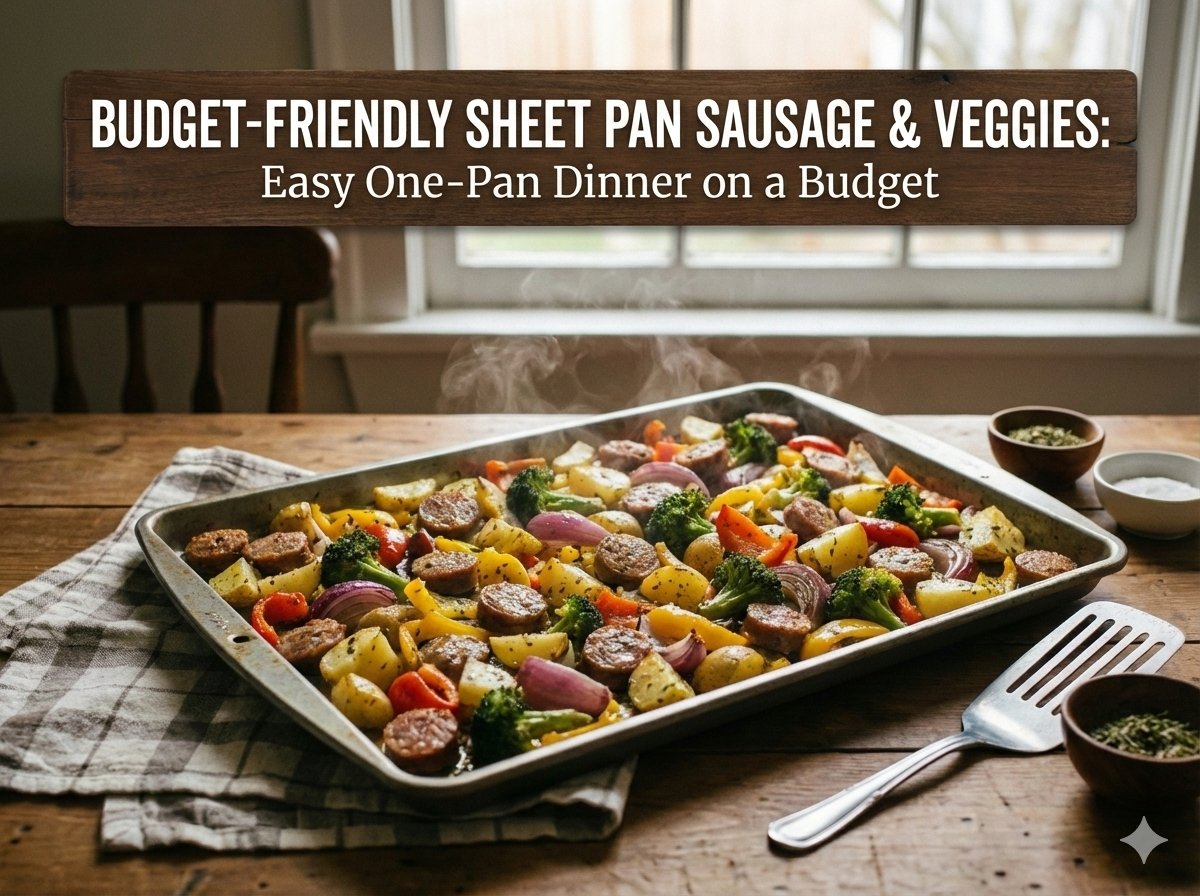
Budget-Friendly Sheet Pan Sausage & Veggies: Easy One-Pan Dinner on a Budget
When exhaustion hits and your wallet feels light, you need dinner solutions that deliver maximum flavor with minimum effort and expense. Enter the budget-friendly sheet pan sausage and veggies—a lifesaving meal that transforms humble ingredients into something your family actually wants to eat. This isn’t gourmet cooking requiring fancy techniques or exotic ingredients. It’s practical, affordable family meals that happen to taste fantastic while costing less than takeout and dirtying exactly one pan.
Why This Cheap Sheet Pan Dinner Works Brilliantly
Sheet pan cooking revolutionized weeknight dinners by eliminating the juggling act of timing multiple pots and pans. Everything roasts together at the same temperature, developing caramelized edges and concentrated flavors impossible to achieve through other methods. The high, dry heat transforms ordinary vegetables into sweet, crispy-edged deliciousness while rendering fat from sausages that bastes everything around them.
This one pan sausage recipe solves multiple problems simultaneously. Minimal prep means you’re eating within forty-five minutes of deciding what’s for dinner. Single-pan cooking translates to five-minute cleanup instead of a sinkful of dishes. The ingredient list stays short and flexible, letting you adapt based on what’s affordable at the store or lurking in your crisper drawer. Most importantly, it tastes like you cared—something busy weeknights often don’t allow.
Smart Shopping for Maximum Value
Sausages provide the protein foundation while keeping costs reasonable. Skip premium artisanal varieties and grab standard Italian sausage, kielbasa, or whatever’s on sale. Pre-cooked sausages like smoked Polish sausage cost less than fresh and work identically here since everything roasts together. Check the discount meat section for packages nearing their sell-by date—roasting high heat kills bacteria, making these safe bargains.
Calculate approximately one sausage link per person, though hungry teenagers might need more. Four links typically run three to five dollars depending on type and sales. That’s your entire protein cost for a family of four—hard to beat.
Vegetables matter less by specific type than by what’s economical right now. Root vegetables like potatoes, carrots, and onions cost pennies per pound year-round. Seasonal produce on sale—bell peppers in summer, Brussels sprouts in fall, butternut squash in winter—provides variety while maintaining budget consciousness. Frozen vegetables work fine too, particularly bell pepper strips or broccoli florets. Skip the exotic stuff; this easy budget dinner ideas framework thrives on ordinary ingredients treated well.
The Formula for Perfect Results
Understanding basic principles lets you improvise confidently rather than following recipes rigidly. Choose vegetables with similar density so everything finishes simultaneously. Pair potatoes with carrots and onions. Combine bell peppers with zucchini and mushrooms. Don’t mix quick-cooking peppers with slow-cooking potatoes unless you cut them drastically different sizes or add delicate items halfway through.
Cut everything roughly the same size—aim for one-inch pieces. Larger chunks take longer to soften, smaller bits burn before interiors cook. Consistent sizing ensures even cooking, meaning nothing’s simultaneously raw and burnt.
Oil everything generously. Vegetables need fat to caramelize properly—skimp here and you get steamed vegetables instead of roasted ones. Two to three tablespoons covers a full sheet pan. Cheap vegetable oil works fine, though olive oil adds flavor if budget permits.
Season aggressively. Roasted vegetables absorb seasoning differently than sautéed ones, requiring heavier application upfront. Salt, pepper, garlic powder, and Italian seasoning cover most bases. Smoked paprika adds depth. Red pepper flakes bring heat. Dried herbs withstand high temperatures better than fresh, which char and taste bitter.
Your Blueprint for Success
This roasted sausage and veggies template feeds four people generously while costing approximately eight to ten dollars total depending on ingredient choices and local prices.
What you need:
Protein base:
- One pound sausage (four to five links), cut into 1-inch rounds
- Options: Italian sausage, kielbasa, smoked sausage, bratwurst, chicken sausage
Vegetable foundation (choose 4-6 cups total):
- Two medium potatoes, cubed
- Three medium carrots, cut into thick coins
- One large onion, cut into wedges
- Two bell peppers (any color), cut into strips
- Two cups broccoli or cauliflower florets
- One zucchini, cut into half-moons
- Eight ounces mushrooms, halved
Seasoning mixture:
- Three tablespoons olive oil or vegetable oil
- One tablespoon Italian seasoning
- One teaspoon garlic powder
- One teaspoon smoked paprika
- Three-quarters teaspoon kosher salt
- Half teaspoon black pepper
- Optional: red pepper flakes, dried oregano, onion powder
Making it happen:
Position your oven rack in the center and crank heat to 425°F. This high temperature creates the caramelization that makes roasted vegetables irresistible. Line a large rimmed baking sheet with parchment paper or aluminum foil for easier cleanup—technically optional but highly recommended when you’re already exhausted.
Dump your chosen vegetables onto the sheet pan. If using potatoes or other dense vegetables, consider microwaving them for three minutes first—this head start ensures they finish simultaneously with quicker-cooking items. Drizzle with oil and sprinkle with all your seasonings. Use your hands to toss everything together, coating each piece thoroughly. Spread vegetables in a single layer, leaving space between pieces. Crowding creates steam instead of roasting, resulting in soggy disappointment.
Nestle sausage rounds among the vegetables, distributing them evenly across the pan. The sausage fat will render during cooking, flavoring everything it touches. Slide the pan into your preheated oven and roast for thirty to thirty-five minutes, stirring once at the twenty-minute mark. You’re looking for vegetables that are tender when pierced with a fork, with caramelized brown edges, and sausage that’s browned and sizzling.
If items seem done at different rates—common when mixing vegetable types—pull those pieces out and return the pan for remaining items to finish. Serve immediately while everything’s hot and crispy-edged.
Adapting to What You Actually Have
The beauty of weeknight sheet pan meals lies in their flexibility. Out of bell peppers? Substitute green beans or asparagus. No potatoes? Use sweet potatoes, butternut squash, or skip starch entirely and double other vegetables. This framework adapts to whatever’s affordable or available without sacrificing quality.
Different sausage varieties completely change the flavor profile while maintaining the technique. Italian sausage with fennel creates Mediterranean vibes. Kielbasa leans Eastern European. Andouille brings Cajun flair. Chicken sausage with apple works beautifully with Brussels sprouts and sweet potato. The one pan sausage recipe stays constant while flavors shift dramatically.
Try these variations once comfortable with basics:
Mediterranean style: Italian sausage, red onion, zucchini, cherry tomatoes, season with oregano and basil, finish with crumbled feta
German-inspired: Bratwurst, potatoes, red cabbage, onion, season with caraway seeds and mustard powder
Breakfast for dinner: Breakfast sausage links, diced potatoes, bell peppers, onions, crack eggs directly onto the pan for final five minutes
Southwest variation: Chorizo, sweet potatoes, bell peppers, black beans added last five minutes, finish with lime juice and cilantro
Meal Prep Magic
This meal prep sausage and vegetables approach excels at advance preparation. Chop all vegetables Sunday and store them in containers or bags refrigerated for up to three days. When dinnertime arrives, dump everything on your pan, season, and roast—start to finish in forty minutes with only five minutes of actual work.
Alternatively, roast the entire pan Sunday, divide into containers, and reheat throughout the week. The texture won’t match fresh-roasted but convenience often trumps perfection on hectic weeknights. Reheat in a 350°F oven for ten minutes or microwave individual portions.
Double batches work beautifully since you’re already doing the work. Use two sheet pans simultaneously, rotating their positions halfway through cooking for even results. Extra portions become next day’s lunch or freeze in portions for emergency dinners two weeks from now.
Stretching Your Budget Further
At roughly two dollars per serving, this already qualifies as frugal dinner recipes. Push savings further with these strategies:
Buy sausage in bulk when on sale and freeze individual packages. Sausage freezes beautifully for three months, letting you stock up during markdowns. Pre-cooked varieties like kielbasa often cost less than fresh sausage while requiring no additional cooking time.
Shop seasonally for vegetables. Summer brings cheap bell peppers and zucchini. Fall offers discounted squash and root vegetables. Winter features affordable Brussels sprouts and cabbage. Buying vegetables in their natural abundance slashes costs while guaranteeing peak flavor.
Grow your own if space permits. Potatoes, onions, and carrots store for months, providing winter supplies from summer gardens. Even apartment dwellers can grow bell peppers in containers on sunny balconies.
Use every scrap. Broccoli stems slice into coins that roast beautifully alongside florets. Carrot tops blend into pesto. Onion peels and vegetable scraps simmer into stock for other meals. This reduces waste while extracting maximum value from each purchase.
Why Kids Actually Eat This
Parents constantly battle vegetable resistance, but this simple one-pan meals approach succeeds where plain steamed vegetables fail. Roasting develops natural sweetness that even picky eaters find appealing. The caramelization creates flavor complexity that makes vegetables interesting rather than punishment.
Sausage provides familiar comfort that makes the vegetables more approachable. Many kids who refuse plain carrots happily eat them when they’ve absorbed sausage fat and seasoning. The interactive nature of roasting—watching things sizzle and brown—builds anticipation that plain boiled vegetables never generate.
Start skeptical eaters with vegetables you know they tolerate, gradually introducing new ones mixed with favorites. Let them help choose vegetables at the store and assist with preparation—investment increases willingness to taste. Cut vegetables into fun shapes occasionally for younger children who respond to presentation.
The Minimal Cleanup Advantage
After feeding your family and yourself, the last thing anyone wants is major kitchen cleanup. Sheet pan meals deliver here too. If you lined your pan with parchment or foil, disposal takes seconds. Even without lining, a single pan scrubs clean faster than the typical dinner’s worth of pots, pans, cutting boards, and utensils.
Soak your sheet pan immediately if bits stick—filling it with hot soapy water while you eat means effortless cleanup afterward. Burnt-on bits scrub away easily with baking soda paste for stubborn spots.
The cooking method itself is remarkably tidy. No splattering stovetop, no boiling-over pots, no grease everywhere. Chop vegetables directly into the pan if you want minimal cutting board cleanup. The efficiency extends beyond cooking into every aspect of the meal.
Scaling for Different Households
Solo diners can halve the recipe using a smaller pan, though full batches provide excellent leftovers worth the minimal extra effort. Couples might find the standard recipe yields two dinners plus lunch, maximizing efficiency.
Large families or entertaining scenarios call for multiple pans. Most ovens accommodate two sheet pans side by side on the same rack. Rotate positions halfway through cooking so both sides achieve even browning. When feeding eight or more people, this affordable family meals strategy costs dramatically less than any alternative while impressing guests with minimal effort.
Nutritional Benefits Without Trying
While budgets drive this meal’s creation, nutrition tags along almost accidentally. Vegetables dominate the pan, providing fiber, vitamins, and minerals. Roasting without heavy sauces or cheese keeps calories reasonable while allowing natural flavors to shine.
Sausage contributes protein and satisfaction—the fat content often criticized elsewhere actually benefits sheet pan cooking by preventing dryness. You can reduce fat by choosing chicken or turkey sausage, though traditional pork versions provide more flavor per dollar.
The variety of vegetables creates nutritional diversity impossible when eating the same steamed broccoli every night. Rotating through seasonal options ensures different nutrient profiles across weeks and months.
Building Your Confidence
Your first attempt might not achieve Instagram-perfect results—some vegetables may cook faster than others, or you might under-season. These minor issues resolve quickly as you learn your oven’s quirks and personal preferences. The forgiving nature of sheet pan sausage and vegetables means even imperfect execution yields edible, tasty results.
Take notes mentally about what worked and what you’d adjust. Did the potatoes need smaller pieces? Would you prefer more seasoning? Should you have stirred twice instead of once? These observations build intuition that transforms you from recipe-follower into confident improviser who adapts based on circumstances.
Beyond Dinner Possibilities
While this shines as a weeknight sheet pan meals solution, the technique works for other scenarios too. Breakfast-style versions with breakfast sausage and eggs feel indulgent while costing pennies. Appetizer portions served on toothpicks make party food when you’re hosting on a budget. Cold leftovers tossed with greens create substantial salads for next-day lunch.
The fundamental technique—protein plus vegetables roasted together—applies to countless combinations beyond sausage. Chicken thighs with root vegetables. Pork chops with apples and Brussels sprouts. Even tofu cubes with Asian-inspired vegetables for vegetarian variations. Master this foundation and you’ve unlocked dozens of meals.
Your Path to Easier Weeknights
Start this week with the basic version using whatever affordable vegetables your store offers. Follow the technique, trust the timing, and notice how simple it actually is compared to complicated recipes requiring constant attention. The satisfaction of serving something delicious that cost under ten dollars and required minimal effort becomes addictive.
Once comfortable, experiment with the variations suggested earlier or invent your own based on favorite flavor combinations. Track which versions your household loves most, making them regular rotation staples while continuing to try new combinations when inspiration strikes.
Welcome to cooking that fits real life—budget-conscious, time-efficient, cleanup-friendly, and actually delicious. This budget-friendly sheet pan sausage and veggies proves that limitations often breed creativity, and simple ingredients treated well beat complicated recipes using premium products. Your weeknight dinners just got significantly easier.