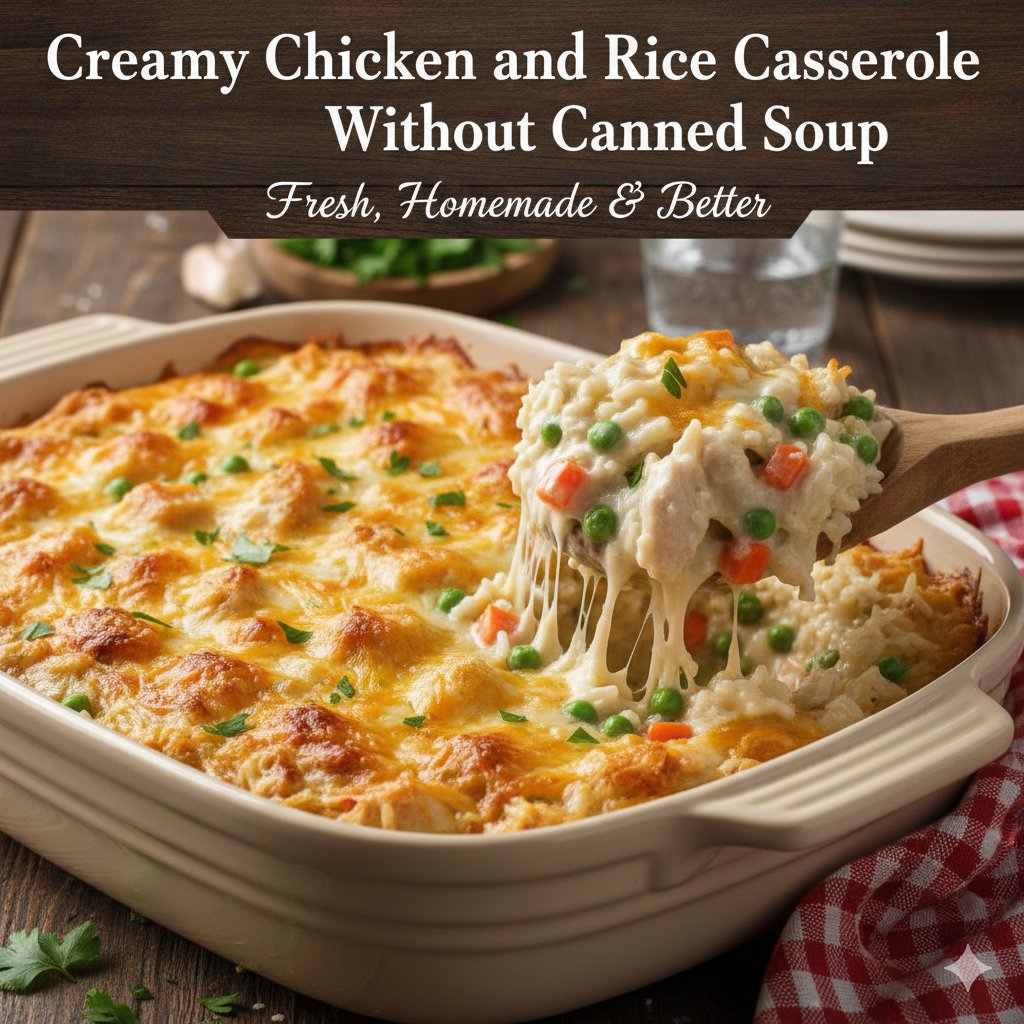
Creamy Chicken and Rice Casserole Without Canned Soup: Fresh, Homemade & Better
The moment you taste creamy chicken and rice casserole made completely from scratch, those canned cream of whatever soup versions become relics of a less enlightened past. This isn’t complicated cooking requiring culinary school training—it’s straightforward sauce-making that transforms basic ingredients into something genuinely delicious rather than merely convenient. The homemade cream sauce tastes clean and rich instead of gluey and artificial, while still delivering that comfort food satisfaction casseroles promise.
Why Ditch the Canned Soup
For decades, condensed cream soups served as shortcuts in American home cooking, their convenience overshadowing their mediocre flavor and questionable ingredients. These processed products contain excessive sodium, stabilizers, and that distinctive “canned” taste that masks rather than enhances other ingredients.
Making your own cream sauce requires maybe ten extra minutes versus opening a can, but the improvement in flavor, texture, and nutrition justifies that minimal investment completely. You control salt levels, avoid preservatives, and create sauce with actual cream rather than reconstituted powders. The casserole tastes like real food instead of processed convenience.
Building Your Creamy Foundation
The sauce makes or breaks any casserole. This version creates restaurant-quality cream sauce through classic French technique applied to everyday American comfort food.
Complete ingredient list:
For the cream sauce base:
- Four tablespoons butter
- Four tablespoons all-purpose flour
- Two cups chicken broth
- One and a half cups whole milk or half-and-half
- One teaspoon salt
- Half teaspoon black pepper
- Half teaspoon garlic powder
- Half teaspoon onion powder
- Quarter teaspoon dried thyme
For the casserole:
- Three cups cooked chicken, diced or shredded (rotisserie works perfectly)
- One and a half cups long-grain white rice, uncooked
- Two cups mixed frozen vegetables (peas, carrots, corn, green beans)
- One small onion, diced fine
- Two cups shredded cheddar cheese, divided
- Half cup panko breadcrumbs
- Two tablespoons melted butter
- Optional: quarter cup grated Parmesan
This formula serves six to eight people as a complete meal, needing only a simple side salad to round things out.
Creating the Perfect Cream Sauce
Melt butter in a large saucepan over medium heat. When foaming subsides, whisk in flour, stirring constantly for two minutes. This roux forms the thickening base for your sauce—cooking it removes raw flour taste while activating the starch’s thickening power. The mixture should smell nutty and turn slightly golden.
Gradually whisk in chicken broth, starting with half a cup and whisking vigorously until smooth before adding more liquid. This gradual incorporation prevents lumps that plague sauces when all liquid gets dumped in at once. Once all broth is incorporated, slowly add milk while continuing to whisk.
Bring the mixture to a gentle simmer, stirring frequently to prevent scorching on the bottom. The sauce will thicken noticeably—continue simmering for three to four minutes until it coats the back of a spoon heavily. Remove from heat and stir in salt, pepper, garlic powder, onion powder, and thyme.
Taste and adjust seasoning now, before combining with other ingredients. The sauce should be quite flavorful since rice and vegetables will dilute it significantly. If it seems too thick (shouldn’t drip readily from a spoon), thin with a bit more milk. Too thin means it needs more simmering to reduce and concentrate.
Assembling the Casserole
Preheat your oven to 375°F and grease a 9×13-inch baking dish generously. In a large bowl, combine diced chicken, uncooked rice, frozen vegetables, and diced onion. Pour the cream sauce over everything, stirring to coat thoroughly.
Add one and a half cups of the shredded cheddar, folding it into the mixture. The cheese melts during baking, adding richness and helping bind everything together. Transfer this mixture to your prepared baking dish, spreading evenly.
Pour one cup of water over the top, distributing it evenly across the surface. This additional liquid cooks the rice properly—without it, you’ll have crunchy, undercooked grains. Cover the dish tightly with aluminum foil.
Baking to Tender Perfection
Slide the covered casserole into your preheated oven and bake for fifty minutes without peeking. During this time, rice absorbs liquid while cooking, chicken heats through, and flavors meld into cohesive deliciousness. The sealed foil traps steam essential for cooking rice properly.
After fifty minutes, carefully remove the foil (watch for escaping steam). The rice should be tender and have absorbed most liquid, though some visible moisture is fine—it will continue absorbing during the final baking phase.
Mix panko breadcrumbs with melted butter and the remaining half cup of cheddar cheese (plus Parmesan if using). Sprinkle this mixture evenly over the casserole surface.
Return uncovered to the oven for fifteen to twenty minutes until the topping turns deeply golden and the edges bubble enthusiastically. If the topping browns too quickly, tent loosely with foil while the interior finishes cooking.
The Essential Resting Period
Remove the finished casserole from the oven and let it rest for ten minutes before serving. This cooling period allows sauce to thicken as it cools slightly, making serving much neater. The rice also firms up marginally, preventing the layers from turning soupy when scooped.
If you’re not serving immediately, the casserole stays warm in a turned-off oven for up to thirty minutes. Beyond that, texture starts degrading and edges can dry out.
Serving This Comfort Classic
Scoop generous portions ensuring each serving contains chicken, rice, vegetables, and that coveted crispy topping. The casserole is substantial enough to serve as a complete meal, though simple accompaniments enhance the experience.
A crisp green salad with vinaigrette provides textural contrast and cuts through the richness nicely. Steamed green beans or roasted asparagus add fresh vegetable elements. Dinner rolls or garlic bread complete the comfort food experience, though they’re hardly necessary given the casserole’s heartiness.
Garnish individual servings with fresh parsley or chives if you want color and herbal brightness, though honestly this homestyle dish needs minimal decoration.
Make-Ahead and Storage Strategies
The entire casserole can be assembled up to twenty-four hours before baking. Prepare through adding the cheese to the mixture, transfer to the baking dish, cover tightly, and refrigerate. When ready to bake, let it sit at room temperature for thirty minutes while the oven preheats, then proceed with baking, adding ten extra minutes to account for starting cold.
Leftover casserole refrigerates beautifully for four to five days. The rice continues absorbing liquid during storage, so the texture becomes more uniform and slightly drier—some people actually prefer this to the fresh-baked version. Reheat individual portions in the microwave or refresh in a 350°F oven for fifteen minutes.
Freezing works acceptably for up to two months, though rice texture changes slightly during freezing and thawing. Wrap thoroughly in plastic wrap then aluminum foil, or use disposable pans with tight-fitting lids. Thaw overnight in the refrigerator before reheating.
Creative Variations Worth Exploring
Once comfortable with the base recipe, variations prevent monotony while maintaining the technique. Broccoli-cheddar version uses broccoli florets instead of mixed vegetables and increases cheddar to three cups total.
Wild rice instead of white creates nuttier flavor and chewier texture, though it needs longer cooking—increase initial baking time to seventy-five minutes. Mushroom lovers can sauté sliced mushrooms and fold them into the mixture for earthy depth.
Mexican-inspired variations use pepper jack cheese, add cumin and chili powder to the sauce, include black beans and corn, and top with crushed tortilla chips instead of breadcrumbs. Italian versions incorporate Italian seasoning, use mozzarella and Parmesan, and add sun-dried tomatoes.
For extra vegetables, include chopped spinach, diced bell peppers, or grated zucchini. These additions increase nutrition without compromising comfort or adding significant cost.
Why This From-Scratch Version Wins
Beyond superior flavor, homemade cream sauce offers better nutrition. You’re eating real cream and butter rather than hydrogenated oils and stabilizers. The sodium content drops dramatically compared to canned soup versions that pack a day’s worth of salt into a single can.
The texture improvement matters tremendously too. Homemade sauce maintains silky consistency rather than gluey starchiness. The rice stays distinct rather than becoming indistinguishable from sauce. Everything tastes like actual food rather than processed convenience.
Perhaps most significantly, making sauce from scratch costs essentially the same as buying canned soup once you account for bulk ingredient purchases. Flour and butter last months, meaning the per-use cost is negligible while quality skyrockets.
Troubleshooting Common Problems
Crunchy rice indicates insufficient liquid or underbaking. Ensure you add that cup of water over the top before the initial baking, and don’t reduce the fifty-minute covered baking time even if you’re anxious. If rice seems undercooked at that point, add another quarter cup of hot water, re-cover, and bake fifteen more minutes.
Watery casserole suggests too much liquid initially or not letting it rest adequately before serving. Measure carefully and always allow the full ten-minute rest. If it still seems soupy, that’s actually fine—the liquid will be absorbed as leftovers sit.
Dry casserole means insufficient sauce or overbaking. Ensure your cream sauce coats a spoon thickly before mixing with other ingredients, and check the casserole promptly at fifty minutes rather than automatically extending time.
Bland flavor points to under-seasoning the cream sauce. Remember that sauce must taste quite assertive on its own since rice and vegetables dilute it significantly. Don’t be timid with salt and seasonings during sauce preparation.
Your Path to Casserole Excellence
Start with this recipe exactly as written to understand how homemade cream sauce works. Notice the transformation from roux to silky sauce. Observe how everything bakes together into unified deliciousness. Taste how real ingredients create results canned products can’t match.
After mastering the foundation, explore variations that suit your household preferences. Maybe you prefer different vegetables, more cheese, or alternative seasonings. These adjustments personalize the recipe while maintaining its essential character.
Welcome to comfort food that respects your palate enough to use real ingredients—where ten extra minutes of effort creates dramatically better results, and where homemade always beats convenience when quality matters. Your creamy, satisfying triumph awaits in the oven.