Easter Carrot Cake with Cream Cheese Frosting: Moist, Spiced & Perfect for Spring
When Easter Sunday calls for something more interesting than standard chocolate bunnies and marshmallow chicks, Easter carrot cake with cream cheese frosting answers beautifully. This isn’t health food masquerading as dessert—it’s genuinely indulgent cake that happens to contain vegetables, creating impossibly moist crumb and subtle sweetness that chocolate can’t replicate. The tangy cream cheese frosting provides perfect counterpoint to the spiced sweetness beneath, while spring sunshine makes everything taste even better than usual.
What Elevates This Beyond Ordinary Carrot Cake
Many classic carrot cake recipe attempts disappoint with dry texture, overwhelming spice, or gummy centers. This version avoids those pitfalls through careful ingredient balance and proper technique. The oil-based batter stays tender for days without drying out the way butter-based cakes sometimes do. Fresh carrots contribute moisture and natural sweetness while their fiber creates structure. Crushed pineapple adds another moisture layer plus subtle tropical notes that brighten the spice profile.
The real distinction shows in the carrot cake with cream cheese icing relationship. While some recipes treat frosting as afterthought, this formula recognizes it as essential component requiring equal attention. The slightly tangy, not-too-sweet frosting cuts through the cake’s richness while its luxurious texture makes every bite feel special. Together, cake and frosting create balance impossible when either element is mediocre.
Gathering Quality Ingredients
Success starts with choosing the right components. Carrots must be freshly grated—those sad, pre-shredded bags contain preservatives that affect moisture and texture. Buy whole carrots, peel them, and grate using the medium holes on a box grater or food processor. The effort takes maybe ten minutes and dramatically improves results.
For the moist carrot cake layers:
- Two and a half cups all-purpose flour
- Two teaspoons baking powder
- One and a half teaspoons baking soda
- One teaspoon salt
- Two teaspoons ground cinnamon
- One teaspoon ground ginger
- Half teaspoon ground nutmeg
- Quarter teaspoon ground cloves
- Four large eggs, room temperature
- One and a half cups granulated sugar
- Half cup packed light brown sugar
- One and a quarter cups vegetable oil
- One tablespoon vanilla extract
- Three cups finely grated carrots (about one pound whole carrots)
- One cup crushed pineapple, well drained
- One cup chopped walnuts or pecans (optional)
- Half cup sweetened shredded coconut (optional)
For the tangy cream cheese frosting:
- Sixteen ounces cream cheese (two packages), completely softened
- One cup unsalted butter, softened to room temperature
- Six cups powdered sugar, sifted
- Two teaspoons vanilla extract
- Pinch of salt
- Optional: one tablespoon fresh lemon juice for extra tang
The room temperature requirement for eggs, cream cheese, and butter isn’t suggestion—it’s necessity. Cold ingredients don’t emulsify properly, creating texture issues. Plan ahead by setting dairy on the counter at least two hours before baking.
Mixing the Perfect Batter
Unlike delicate cakes requiring careful folding, this homemade carrot cake actually benefits from thorough mixing. The oil-based formula doesn’t develop tough gluten the way butter cakes do, so you can mix confidently without fear of ruining texture.
Preheat your oven to 350°F and position racks in the center. Prepare two nine-inch round pans or one 9×13-inch pan by buttering thoroughly, lining with parchment, then buttering the parchment. This double insurance prevents sticking disasters that ruin presentation.
Whisk together flour, baking powder, baking soda, salt, cinnamon, ginger, nutmeg, and cloves in a large bowl. The spice measurements create warmly spiced profile without any single flavor dominating—adjust if you prefer more pronounced ginger or cinnamon.
In your mixer bowl, beat eggs on medium speed for about one minute until slightly foamy. Add both sugars and beat another two minutes until the mixture thickens and becomes pale. With the mixer running on medium-low, pour in oil in a slow, steady stream. Add vanilla and beat until completely incorporated.
Add dry ingredients in three additions, mixing on low speed just until flour disappears after each addition. Fold in grated carrots, drained pineapple, and nuts or coconut if using. The batter will be thick and heavily studded with carrots—this is correct.
Baking to Tender Perfection
Divide batter evenly between prepared pans if making layers, or spread into the single 9×13 pan. Tap pans firmly on the counter three times to release air bubbles. Bake round layers for thirty-five to forty minutes, the sheet cake for forty-five to fifty minutes.
The cakes are done when a toothpick inserted in the center emerges with just a few moist crumbs clinging, not wet batter. The tops should spring back when gently pressed, and edges will have pulled slightly away from pan sides. Internal temperature should reach between 200°F and 205°F.
Remove from oven and let cakes rest in pans on cooling racks for exactly twenty minutes. This allows structure to set properly. Run a knife around edges, then invert cakes onto racks. Peel off parchment and let cool completely—at least two hours—before frosting. Warm cake melts frosting disappointingly.
Creating Sublime Cream Cheese Frosting
This isn’t the moment to shortcut with already-soft cream cheese or margarine. Real cream cheese and butter at perfect room temperature create frosting that’s simultaneously fluffy and stable, sweet but not cloying, with enough body to support decorative swirls.
Beat softened cream cheese and butter together on medium speed for three full minutes. This extended beating incorporates air that creates light texture despite the frosting’s richness. Scrape bowl sides midway through to ensure even mixing. The mixture should become noticeably fluffy and very pale.
Add half the powdered sugar and beat on low speed until mostly incorporated—starting on high creates sugar clouds throughout your kitchen. Once the sugar mostly disappears, increase to medium-high and beat for one minute. Add remaining sugar, vanilla, salt, and lemon juice if using, then repeat the process—low speed first, then medium-high for final minute.
The finished frosting should be smooth, spreadable, and hold its shape when spooned. Too soft means either insufficient beating or ingredients that weren’t fully at room temperature. Refrigerate for fifteen minutes to firm slightly. Too stiff requires a tablespoon of heavy cream beaten in to loosen it.
Assembling Your Showpiece
For layer cakes, place your first layer on a serving plate or cake stand, top-side down so the flat bottom becomes your working surface. Spread approximately one and a half cups of frosting across this layer, extending it to the edges. The generous filling creates that impressive layer cake look everyone loves.
Place the second layer on top, also inverted so its flat bottom becomes the top surface. This creates a level cake without needing to trim domed tops—though if your layers domed significantly, leveling them with a serrated knife creates even more professional appearance.
Apply a thin layer of frosting all over the entire cake—this “crumb coat” seals in loose crumbs that would otherwise mar your final frosting. Don’t worry about appearance at this stage. Refrigerate the crumb-coated cake for thirty minutes to firm this layer.
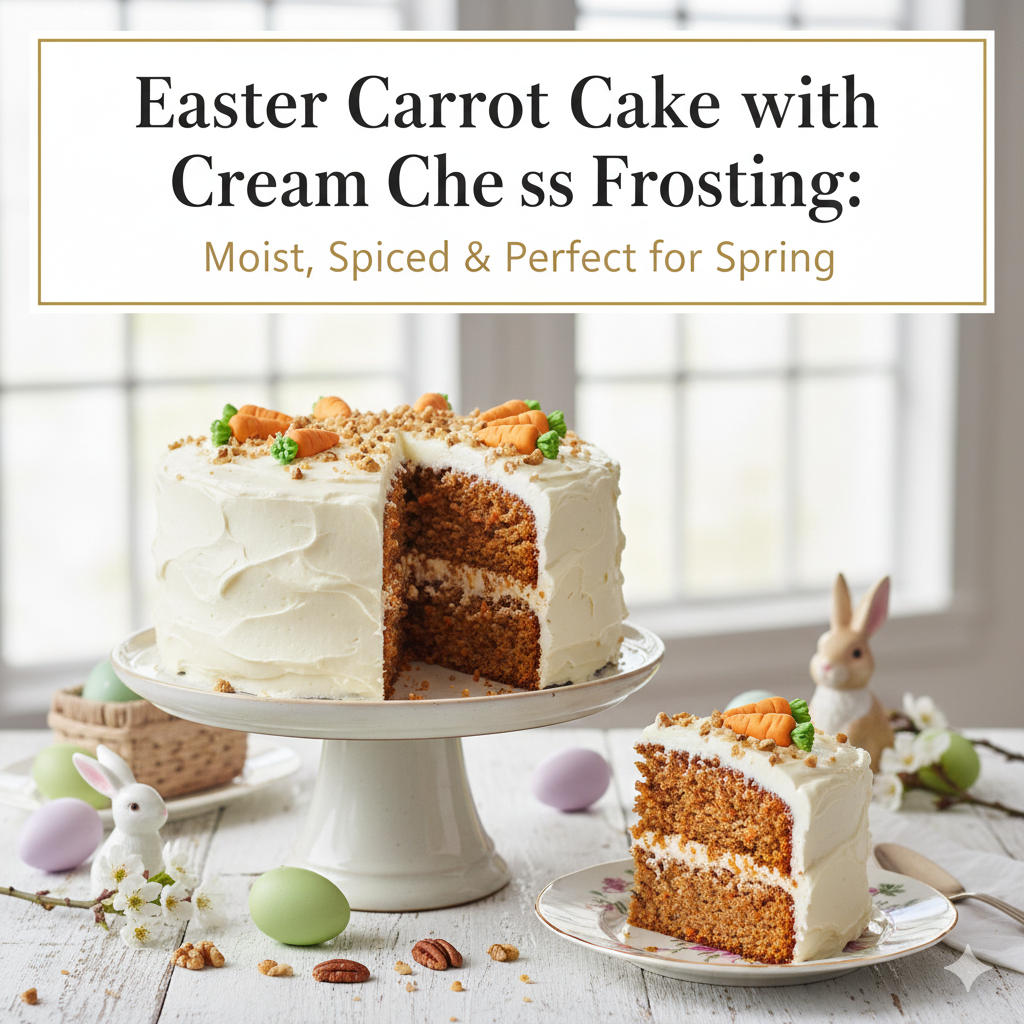
Now apply remaining frosting generously, using an offset spatula or butter knife to create swirls and swoops. For Easter dessert ideas presentation, keep the finish somewhat rustic—perfect smoothness feels too formal for this homey spring holiday desserts favorite.
Decorating for Easter Celebration
Simple decorations enhance without overwhelming. Chopped pecans or walnuts pressed into the frosting around the bottom edge create elegant border. Whole pecans arranged on top in a pattern provide visual interest and warn people about nut content.
Fresh carrot curls made by peeling thin ribbons with a vegetable peeler and rolling them tightly create whimsical toppers. Edible flowers like pansies or violets bring spring garden vibes. Candy carrots from the Easter candy aisle add playful touch that children appreciate.
Piped cream cheese frosting rosettes or borders elevate presentation for more formal gatherings. Use a large star tip for impressive results with minimal skill required. A light dusting of cinnamon over the finished frosting adds aromatic appeal and subtle color variation.
Storage and Make-Ahead Strategy
This traditional carrot cake improves with time as flavors meld and moisture distributes. Store covered at room temperature for up to two days, or refrigerate for up to five days. The cream cheese frosting requires refrigeration in warm weather but can sit at room temperature in cooler climates.
Bring refrigerated cake to room temperature about an hour before serving for best flavor and texture—cold mutes the spices and firms the frosting unpleasantly.
Unfrosted cake layers freeze beautifully for up to three months. Wrap each layer individually in plastic wrap then aluminum foil. Thaw overnight in the refrigerator before bringing to room temperature and frosting. This advance preparation means you can bake well before Easter week chaos hits.
The frosting also freezes successfully for up to one month. Thaw in the refrigerator overnight, then beat briefly to restore fluffy texture before spreading.
Troubleshooting Common Issues
Dense, heavy texture suggests overmixing after adding flour or measuring flour incorrectly. Spoon flour into measuring cups rather than scooping, which compacts it and adds too much. Mix only until ingredients combine, then stop immediately.
Dry crumb despite following instructions usually means overbaking or not draining pineapple thoroughly. Pull the cake when a toothpick shows moist crumbs rather than waiting for it to come out completely clean. Squeeze pineapple firmly in a strainer to remove excess juice.
Sunken center indicates underbaking or opening the oven door too early. Don’t peek before thirty minutes elapse, and ensure your oven temperature is accurate using an oven thermometer. The center should feel firm when gently pressed.
Frosting that won’t spread smoothly needs more liquid or wasn’t beaten long enough. Add cream gradually and beat thoroughly—proper cream cheese frosting takes time to develop silky texture. If it seems grainy, the cream cheese was too cold when mixed.
Variations on the Classic
Once comfortable with the base carrot cake from scratch formula, variations keep things interesting. Substitute half the carrots with grated zucchini for extra moisture and subtle flavor difference. Replace walnuts with macadamia nuts for tropical vibe that complements pineapple.
Raisin lovers can fold in three-quarters cup during mixing—golden raisins look prettier than dark ones. Crystallized ginger chopped finely adds spicy-sweet complexity. Orange zest in both cake and frosting creates citrus variation perfect for spring.
Sheet cake versions simplify serving at large gatherings—no layering or elaborate frosting required. Just frost the top generously and cut into squares. Cupcakes using the same batter bake in eighteen to twenty-two minutes, creating individual portions perfect for potlucks.
Cream cheese frosting alternatives include brown sugar frosting, maple cream cheese variation, or even mascarpone-based versions for Italian twist. Each changes the flavor profile while maintaining the essential cream cheese frosting cake character.
Why This Works as Easter Centerpiece
Beyond delicious flavor, this festive Easter baking project carries perfect symbolism. Carrots naturally evoke spring growth and Easter bunny associations. The warm spices recall comforting family traditions. The impressive presentation says you cared enough to make something from scratch rather than buying generic grocery store cake.
The cake’s staying power helps too—unlike delicate desserts requiring last-minute preparation, this can be completely finished the day before. This frees Easter morning for more important activities than frantically frosting while relatives wait.
Its crowd-pleasing nature means even picky eaters typically enjoy it. The sweetness appeals to kids while the complex spicing satisfies adult palates. Serve it to mixed-age gatherings without worrying about complaints.
Building Your Baking Confidence
Your first attempt might not achieve bakery perfection—perhaps the layers bake unevenly or you frost a bit messily. These minor issues resolve quickly as you learn your oven’s tendencies and develop frosting technique. The forgiving nature of this spring holiday desserts formula means even imperfect execution tastes wonderful.
Take notes about what worked and what you’d adjust. Did your household prefer more cinnamon? Should you increase walnuts? Would they like the cake sweeter or less so? These observations personalize the recipe while maintaining its essential character.
The Tradition-Building Potential
Making this Easter carrot cake with cream cheese frosting annually creates traditions that children remember into adulthood. The ritual of grating carrots together, licking frosting beaters, decorating with candy carrots—these small moments accumulate into cherished memories.
Consider letting kids help with age-appropriate tasks. Young children can measure ingredients and press nuts into frosting. Older kids can grate carrots and help with assembly. Teenagers might frost independently, developing skills they’ll use for years.
Photographing the finished cake each year creates visual timeline showing how decorating skills improve and family dynamics shift. These images become treasures documenting growth and continuity.
Your Path to Carrot Cake Mastery
Start with this recipe exactly as written to understand how components work together. Notice the batter’s thick, carrot-studded consistency. Observe how the cake bakes and cools. Taste how flavors develop and mellow as it sits.
Once you’ve succeeded with the original, explore variations mentioned or create your own. The framework handles creativity within structure—fundamental proportions matter, but specific flavors and add-ins offer flexibility.
Welcome to creating Easter dessert ideas that become anticipated traditions rather than obligatory offerings. This moist carrot cake proves that vegetables in dessert aren’t compromise—they’re the secret to texture and flavor that purely sweet treats can’t match. Your spring celebration masterpiece awaits.