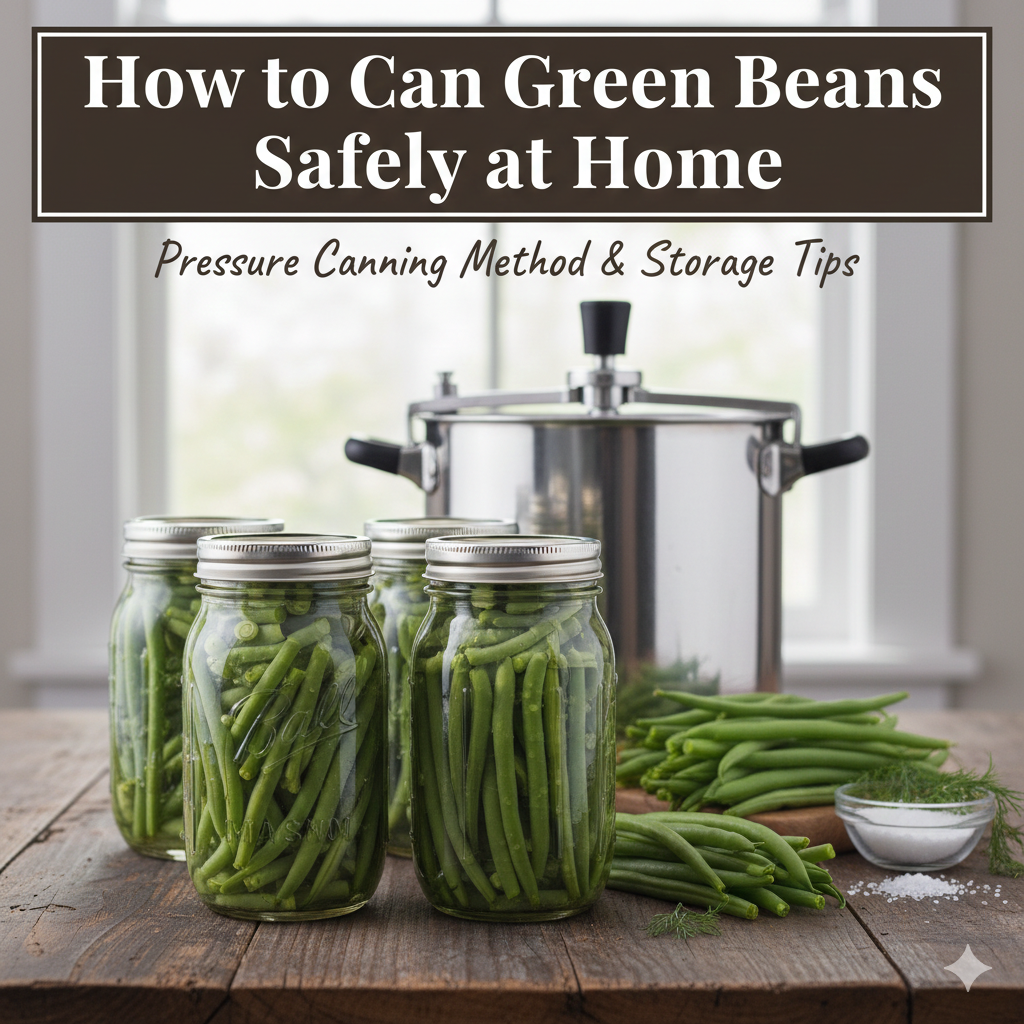
How to Can Green Beans Safely at Home: Pressure Canning Method & Storage Tips
Few pantry accomplishments rival the satisfaction of lining your shelves with rows of gleaming jars filled with green beans you grew, picked, and preserved yourself. Learning how to can green beans safely at home connects you to generations of food preservation wisdom while creating shelf-stable vegetables available anytime without electricity or freezer space. This isn’t casual kitchen experimentation—it’s serious food preservation requiring pressure canning equipment and strict adherence to tested methods that prevent potentially deadly botulism contamination.
Why Pressure Canning Is Absolutely Required
Green beans are low-acid vegetables with a pH above 4.6, creating perfect conditions for Clostridium botulinum spores to germinate and produce lethal toxins if not processed correctly. These spores survive boiling water temperatures and thrive in the sealed, oxygen-free environment inside canning jars. Only temperatures above 240°F destroy them completely—impossible to achieve without a pressure canner.
Never attempt to can green beans in a boiling water bath, instant pot, oven, or any method besides an actual pressure canner designed specifically for home canning. These alternative methods cannot reach safe temperatures, creating jars of potentially lethal food that show no visible signs of contamination. This isn’t fear-mongering—it’s food science that saves lives when respected.
Essential Equipment You Must Have
Cutting corners on equipment when pressure canning green beans compromises safety in ways that can kill people. This is not an area for improvisation or substitution.
Pressure canner: Different from pressure cookers, these are specifically designed for canning with proper pressure regulation and capacity for multiple jars. Weighted-gauge canners use jiggler weights to maintain pressure automatically. Dial-gauge canners require annual testing for accuracy but allow precise monitoring. Both types work safely when used correctly according to manufacturer instructions.
Canning jars: Only use jars manufactured for home canning—Ball, Kerr, or equivalent brands with tempered glass. Mason jars, canning jars, or preserving jars all refer to the same thing. Never reuse commercial food jars like those from pickles or pasta sauce—they’re not designed to withstand pressure canning and may shatter.
New lids and bands: Purchase new flat lids for each canning session since the sealing compound only works once. Bands (screw rings) can be reused indefinitely if they’re not rusted or damaged.
Additional tools: Jar lifter for safe handling of hot jars, canning funnel to prevent spills, bubble remover/headspace tool, clean towels, and timer for precise processing.
Selecting and Preparing Fresh Green Beans
Quality preservation begins with quality produce. Choose young, tender beans at peak freshness—approximately four to six inches long with bright green color and firm texture. Overmature beans with visible seeds or yellowing won’t improve through canning and create tough, inferior product.
Plan on needing approximately two pounds of fresh beans per quart jar, or one pound per pint. This seems like a lot of beans compared to what fits in the jar, but they cook down significantly during processing and must be packed firmly.
Wash beans thoroughly in cool water, then trim both ends. Some canners leave beans whole if they’re small enough to fit lengthwise in jars. Others prefer cutting them into one to two-inch pieces for easier eating later. Both approaches work equally well—choose based on personal preference.
Hot Pack vs. Raw Pack Methods
You can pack green beans into jars either raw or after brief cooking. Each method has advantages.
Raw pack method: Fill jars with clean, raw beans, packing firmly but not crushing. Cover with boiling water or boiling brine. This method is faster and maintains beans’ firm texture better, though beans sometimes float to the top of jars.
Hot pack method: Boil beans in water for five minutes, then pack hot beans into jars and cover with the hot cooking liquid. This shrinks beans slightly, allowing tighter packing and reducing floating. Many canners prefer this method since it removes some air from bean tissue, creating better vacuum seals.
Both methods are tested and approved as safe. Choose whichever suits your preferences and schedule.
Preparing Jars and Brine
Wash jars in hot, soapy water and rinse thoroughly, or run them through the dishwasher. Keep jars hot until filling time to prevent thermal shock when hot beans or liquid are added. The easiest method involves leaving them in the dishwasher with the door closed, or placing them in a low-temperature oven.
Prepare new lids according to current manufacturer instructions. Modern canning lids often don’t require the pre-heating older versions needed—check your specific brand’s directions.
For plain canned beans, boiling water works fine as packing liquid. For extra flavor, make a light brine: one teaspoon canning salt per quart of water. Bring the water or brine to a full boil before using. You’ll need approximately one cup of liquid per pint jar, two cups per quart.
Filling and Preparing Jars
Using your canning funnel, pack beans into hot jars. For raw pack, fill firmly to within one inch of the jar rim. For hot pack, fill to one inch headspace with the hot beans. Pour boiling water or brine over beans, maintaining that one-inch headspace.
This headspace measurement is critical. Too little space means expanding contents may push under seals during processing, causing seal failure. Too much space prevents proper vacuum development. One inch for green beans is the tested, approved measurement.
Slide your bubble remover tool or a plastic spatula around the inside of each jar to release trapped air pockets. Adjust liquid levels if needed after releasing bubbles. Wipe jar rims meticulously with a clean, damp cloth—even microscopic food particles can prevent proper sealing.
Center lids on jars and screw bands on fingertip-tight—snug but not forced. Over-tightening prevents air from escaping during processing.
Processing in the Pressure Canner
Follow your specific canner’s instructions for setup. Generally, this involves placing the rack in the bottom and adding two to three inches of water. Heat this water to simmering (180°F for raw pack, 140°F for hot pack) to reduce initial heating time.
Load filled jars onto the rack, ensuring they don’t touch each other or the canner walls. Lock the lid according to manufacturer directions, leaving the vent pipe (petcock) open.
Heat on high until steam flows steadily from the vent. Set a timer for ten minutes and maintain vigorous steam flow. This venting purges all air from the canner—trapped air prevents proper pressure development.
After ten minutes of venting, close the petcock or place the weighted gauge on the vent. Pressure will begin building. Adjust heat to reach the correct pressure for your altitude:
For dial-gauge canners:
- 0-2,000 feet elevation: 11 pounds pressure
- 2,001-4,000 feet: 12 pounds pressure
- 4,001-6,000 feet: 13 pounds pressure
- 6,001-8,000 feet: 14 pounds pressure
For weighted-gauge canners:
- 0-1,000 feet: 10 pounds pressure
- Above 1,000 feet: 15 pounds pressure
Once proper pressure is reached, begin timing. Process pints for twenty minutes, quarts for twenty-five minutes. Maintain steady pressure throughout—if it drops below required levels, return to pressure and restart the entire timing period.
Safe Cooling and Seal Testing
When processing time completes, turn off heat and let the canner cool naturally. Never force cooling by running water over the canner or opening vents—this causes liquid to be sucked from jars and may break seals or crack jars.
When pressure returns completely to zero (dial reads zero, weighted gauge moves freely), wait five more minutes. Then carefully open the vent. Wait another two minutes before removing the lid, tilting it away from you to avoid steam burns.
Let jars sit in the canner for ten minutes before using your jar lifter to transfer them to a towel-covered counter. Don’t retighten bands or disturb jars during the twelve to twenty-four hour cooling period.
As jars cool, you’ll hear the satisfying “ping” of lids sealing—one of home canning’s most rewarding sounds. After twenty-four hours, test seals by pressing the center of each lid. Properly sealed lids won’t flex or pop.
Storage and Shelf Life
Remove bands from sealed jars—leaving them on can allow rust to develop or hide seal failure. Wipe jars clean, label with contents and date, then store in a cool, dark, dry location. Ideal storage temperature is between 50°F and 70°F. Avoid areas near furnaces, water heaters, or direct sunlight.
Properly canned green beans maintain quality for twelve to eighteen months, though they remain safe indefinitely as long as seals stay intact. Quality gradually declines over time—color fades, texture softens, flavor diminishes. Use oldest jars first, rotating in newly canned beans.
Check stored jars monthly for problems. Any signs of seal failure, bulging lids, leaking, mold, or off odors indicate spoilage. Discard these immediately without tasting.
Absolute Safety Rules
Never taste, cook with, or even open canned goods showing these danger signs:
- Unsealed or bulging lids
- Liquid spurting when opened
- Mold anywhere in the jar
- Cloudy liquid (though slight cloudiness can be normal)
- Mushy beans or unusual texture
- Off odors of any kind
- Foaming when opened
When in doubt, throw it out. Botulism toxin can be invisible, odorless, and tasteless. No food is worth risking death.
Always boil home-canned green beans hard for ten minutes before tasting or serving. This destroys any potential toxins that might have developed, providing an additional safety margin.
Troubleshooting Common Issues
Seal failures occur occasionally due to various causes: food particles on jar rims, damaged lids, over- or under-tightened bands, or jar defects. Examine jars carefully before filling, wipe rims meticulously, and use quality, fresh lids.
Liquid loss (siphoning) happens when pressure drops too quickly or jars cool too fast. Always let the canner cool naturally without forcing it. Jars that lost liquid but sealed properly are safe—just use them first.
Floating beans are cosmetic rather than safety issues. Hot packing reduces floating, as does using young, fresh beans rather than overmature ones.
Discolored beans (turning olive drab instead of staying bright green) indicate overcooking or using overmature beans. This is normal for canned green beans and doesn’t affect safety, only appearance.
Your Path to Safe Food Preservation
Start with a small batch—four or five jars—to learn the process without overwhelming yourself. Follow these instructions exactly the first time, building confidence through successful completion.
Keep detailed notes about timing, what worked well, and any challenges you encountered. Each canning session teaches valuable lessons that improve future attempts.
Welcome to the deeply rewarding practice of home food preservation—where summer’s bounty becomes winter’s sustenance, where self-sufficiency meets delicious nutrition, and where proper technique creates complete peace of mind along with shelf-stable vegetables. Your gleaming jars of perfectly preserved green beans await in the pressure canner.