How to Dry and Store Herbs Without Mold: Simple, Safe Methods That Work
Opening a jar of herbs you dried months ago only to discover fuzzy mold covering what should be fragrant leaves ranks among the most disappointing kitchen failures. Learning to dry and store herbs without mold transforms this frustrating experience into consistent success, preserving summer’s bounty for winter cooking while maintaining flavor, color, and safety. This isn’t complicated food science requiring specialized equipment—it’s straightforward preservation based on understanding moisture, airflow, and proper storage that anyone can master.
Understanding Why Mold Develops
Mold spores exist everywhere in our environment, landing on surfaces constantly and waiting for conditions favorable to growth. They need three things: moisture, warmth, and organic material to consume. Fresh herbs provide the organic material unavoidably. Room temperature provides adequate warmth. The variable you control is moisture—keep it low enough and mold cannot establish itself.
The challenge lies in removing moisture completely and consistently. Herbs that seem dry on the outside might retain moisture in stem centers or thick leaf veins. This hidden dampness creates perfect conditions for mold that appears days or weeks after you’ve packed herbs away. Understanding this moisture distribution explains why certain drying methods work better than others and why patience during the process pays enormous dividends.
Harvesting Herbs for Optimal Drying
Success begins before drying even starts. Harvest herbs at peak potency—generally mid-morning after dew evaporates but before the hot sun diminishes essential oils. Choose healthy stems without disease spots or insect damage. Flowers indicate herbs past prime for many varieties as plants redirect energy to reproduction rather than leaf production.
Cut stems cleanly with sharp scissors or pruners rather than tearing, which damages tissue and creates entry points for bacteria. Take no more than one-third of the plant at once, allowing it to recover and continue producing. This sustainable approach extends your harvest season rather than exhausting plants through aggressive cutting.
Rinse herbs gently under cool water only if visibly dirty—unnecessary washing adds moisture that must be removed later. Shake off excess water thoroughly and pat with clean towels. Spread herbs on towels in a single layer and let them air-dry for several hours before beginning formal drying. This preliminary drying prevents water from dripping during the main process.
Air Drying: The Traditional Method
Air drying herbs remains the most accessible method, requiring no special equipment beyond string and a suitable location. It works particularly well for herbs with lower moisture content like oregano, thyme, rosemary, and sage. Higher-moisture herbs like basil and mint can air-dry successfully but require more attention to prevent mold.
The hanging bundle technique:
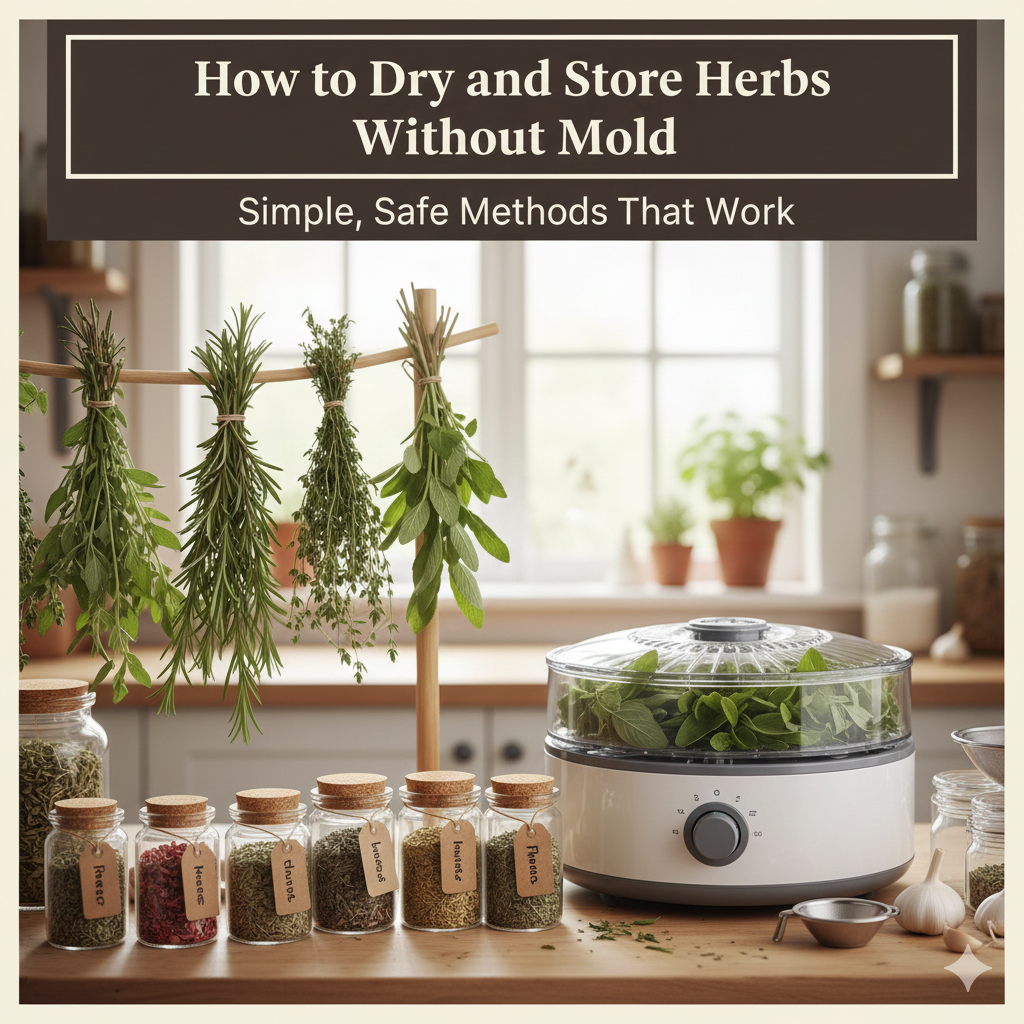
Gather four to six stems into small bundles—resist the temptation to create large bunches since dense arrangements trap moisture and inhibit airflow. Secure with twine or rubber bands, leaving a loop for hanging. Small bundles dry faster and more evenly than large ones, dramatically reducing mold risk.
Hang bundles upside down in a location that’s warm, dry, and has excellent air circulation. Attics, spare rooms, or covered porches work beautifully. Avoid basements (too damp), kitchens (humidity from cooking), or bathrooms (obvious moisture issues). Direct sunlight degrades flavor and color, so choose shaded areas.
Space bundles several inches apart to ensure air circulates completely around each one. If using a drying rack or screen, lay herbs in single layers rather than overlapping. This thorough air exposure prevents moisture pockets where mold loves to develop.
Check daily during the first week, especially if ambient humidity runs high. Herbs should feel papery and crumble easily when fully dry—typically seven to fourteen days depending on herb type, bundle size, and environmental conditions. Thick-stemmed herbs like basil take longer than delicate ones like dill.
Oven Drying for Faster Results
When air drying isn’t practical due to humidity or time constraints, oven drying provides reliable alternatives. This method concentrates weeks into hours but requires monitoring to prevent burning.
Set your oven to its lowest setting—ideally 95°F to 115°F. Many modern ovens don’t go this low, so you’ll work with whatever minimum your oven offers, usually around 170°F. At higher temperatures, check more frequently to prevent overdrying that destroys flavor.
Arrange herb leaves or small sprigs in single layers on baking sheets lined with parchment paper. Never overlap or pile herbs—every leaf needs direct heat exposure. Place sheets on oven racks, leaving the door slightly ajar (prop with a wooden spoon) to allow moisture to escape rather than recirculating.
Drying time varies from one to four hours depending on oven temperature and herb type. Check every thirty minutes, rotating sheets for even drying. Herbs are ready when they crumble easily and feel completely dry throughout—no hint of flexibility or dampness remains.
Let sheets cool completely before handling herbs. Warm herbs may feel dry but still contain residual heat that could introduce moisture when stored in sealed containers.
Dehydrating Herbs at Home
Food dehydrators offer the most controlled environment for herb drying, maintaining consistent temperature and airflow that prevent mold while preserving maximum flavor and color. If you dry herbs regularly, this equipment investment pays off through reliable results and time savings.
Set dehydrators to 95°F to 115°F for herbs—higher temperatures cook rather than dry, degrading quality. Arrange herbs in single layers on dehydrator trays with space between pieces. Avoid overcrowding just as with other methods.
Dehydrating time ranges from one to four hours depending on herb variety and moisture content. Tender-leaved herbs like basil and cilantro finish faster than woody ones like rosemary and thyme. Check periodically, removing herbs as they complete to prevent overdrying some while others finish.
The major advantage of dehydrators lies in their consistent, controlled environment. Temperature remains stable, airflow continues constantly, and you can set timers and walk away with confidence—unlike oven or air drying which require more monitoring.
Microwave Method for Small Batches
When you need dried herbs immediately and have only small quantities, microwaving works surprisingly well. This technique suits herb emergencies but isn’t ideal for preserving large harvests.
Place a single layer of herb leaves between two paper towels on a microwave-safe plate. Microwave on high for thirty seconds, then check. Continue in fifteen-second intervals, checking between each, until herbs feel completely dry and crumbly. Total time is usually one to three minutes depending on herb type and microwave wattage.
The major risk with microwaving is burning herbs in seconds if you lose focus. Stay present and attentive throughout the process. Once herbs scorch, there’s no recovery—they’re destined for compost rather than cooking.
Critical Post-Drying Steps
Herbs that feel completely dry might still contain hidden moisture in stem centers or thick veins. Conditioning eliminates this problem through a simple intermediate step before final storage.
Place dried herbs loosely in glass jars, filling containers only halfway. Seal jars and let them sit for one week, checking daily. Shake jars gently to redistribute herbs. If any condensation appears on jar walls, the herbs weren’t fully dry—remove them and continue drying before proceeding.
This conditioning period redistributes any remaining moisture evenly throughout the herbs. By the end of the week, you’ll know conclusively whether they’re truly storage-ready or need additional drying. This patience prevents discovering mold weeks later after you’ve invested effort and storage space.
Storing Dried Herbs Properly
Proper storage maintains herb quality for months while preventing mold growth. Light, heat, moisture, and air all degrade dried herbs over time, so your storage strategy must address each factor.
Container selection matters enormously:
Glass jars with tight-sealing lids provide ideal storage. Mason jars work perfectly, as do recycled jars from purchased products once thoroughly cleaned. Ensure lids seal completely—test by inverting jars and checking for air leaks.
Avoid plastic bags except for very short-term storage. They don’t seal as reliably as jars and can leach chemicals into herbs over time. Metal tins work if lined to prevent herb contact with metal, which can affect flavor.
Store jars in cool, dark locations—kitchen cupboards away from the stove, pantries, or dedicated storage areas. Avoid windows, above appliances, or anywhere heat and light reach. Temperature fluctuations encourage condensation that introduces moisture leading to mold.
Label everything meticulously with herb name and drying date. You won’t remember specifics months later when jars look similar. Use painter’s tape and permanent marker for easily removable, clear labeling.
Long-Term Herb Storage Best Practices
Whole leaves retain flavor longer than crushed or ground herbs since breaking releases essential oils that dissipate faster. Store herbs whole, crushing or grinding only when ready to use. This preserves maximum potency and extends useful life.
Properly dried and stored herbs maintain quality for one year, sometimes longer for hardier varieties like rosemary and oregano. Delicate herbs like basil and parsley lose flavor faster, ideally used within six months. Color fading indicates declining potency—when green herbs turn brownish, flavor has diminished significantly.
Check stored herbs monthly for any signs of problems. If you spot mold on even one herb piece, discard the entire jar contents. Mold you can see indicates extensive invisible contamination throughout. Don’t risk food safety by trying to salvage portions.
Keep different herb varieties separate rather than creating blends before storage. Mixed herbs are convenient but limit usage flexibility. Blend as needed for specific recipes, maintaining individual herbs’ maximum freshness.
Preventing Mold Through Environment Control
Beyond drying and storage techniques, environmental management prevents mold on dried herbs. Control ambient humidity in storage areas using dehumidifiers if necessary, especially in naturally humid climates or seasons. Aim for humidity levels below sixty percent ideally.
Avoid storing herbs near moisture sources—not under sinks, near dishwashers, or in steamy bathrooms. These locations introduce moisture that even sealed containers can’t entirely exclude over time.
Inspect storage areas periodically for any signs of moisture problems. Water stains, musty smells, or dampness on walls indicate conditions unsuitable for herb storage. Relocate your herbs immediately if you discover such issues.
Recognizing and Handling Mold
Despite best efforts, occasionally mold appears. Recognize it through fuzzy growth (white, green, or black), musty odors, or discoloration with fuzzy texture. Don’t confuse surface dust or powder (easily brushed away) with mold, which clings and grows.
If you find mold, discard affected herbs immediately in sealed bags so spores don’t spread. Clean the storage container thoroughly with hot, soapy water, then sanitize with dilute bleach solution or vinegar before reusing. Inspect nearby storage to ensure mold hasn’t spread to other jars.
Analyze what went wrong to prevent recurrence. Was the herb inadequately dried? Did storage location have humidity issues? Did the container seal poorly? Learning from failures prevents repeating mistakes.
Your Path to Mold-Free Herb Preservation
Start with small batches using the air-drying method to build confidence without overwhelming yourself. Choose hardy herbs like rosemary, thyme, or oregano that forgive beginners’ mistakes more readily than delicate varieties.
Notice how different herbs behave during drying—how long each takes, how texture changes, when they’re truly ready for storage. These observations build intuition that recipes can’t fully convey.
Once you’ve successfully dried and stored several batches without mold, expand to larger quantities and more challenging herbs. Invest in a dehydrator if you find yourself preserving herbs regularly—the consistent results justify the equipment cost.
Welcome to the satisfying practice of preserving fresh herbs that maintains their flavor, color, and safety through winter months and beyond. Learning to dry and store herbs without mold connects you to traditional food preservation skills while ensuring your cooking benefits from garden-fresh flavor year-round. Your pantry of perfectly preserved herbs awaits.