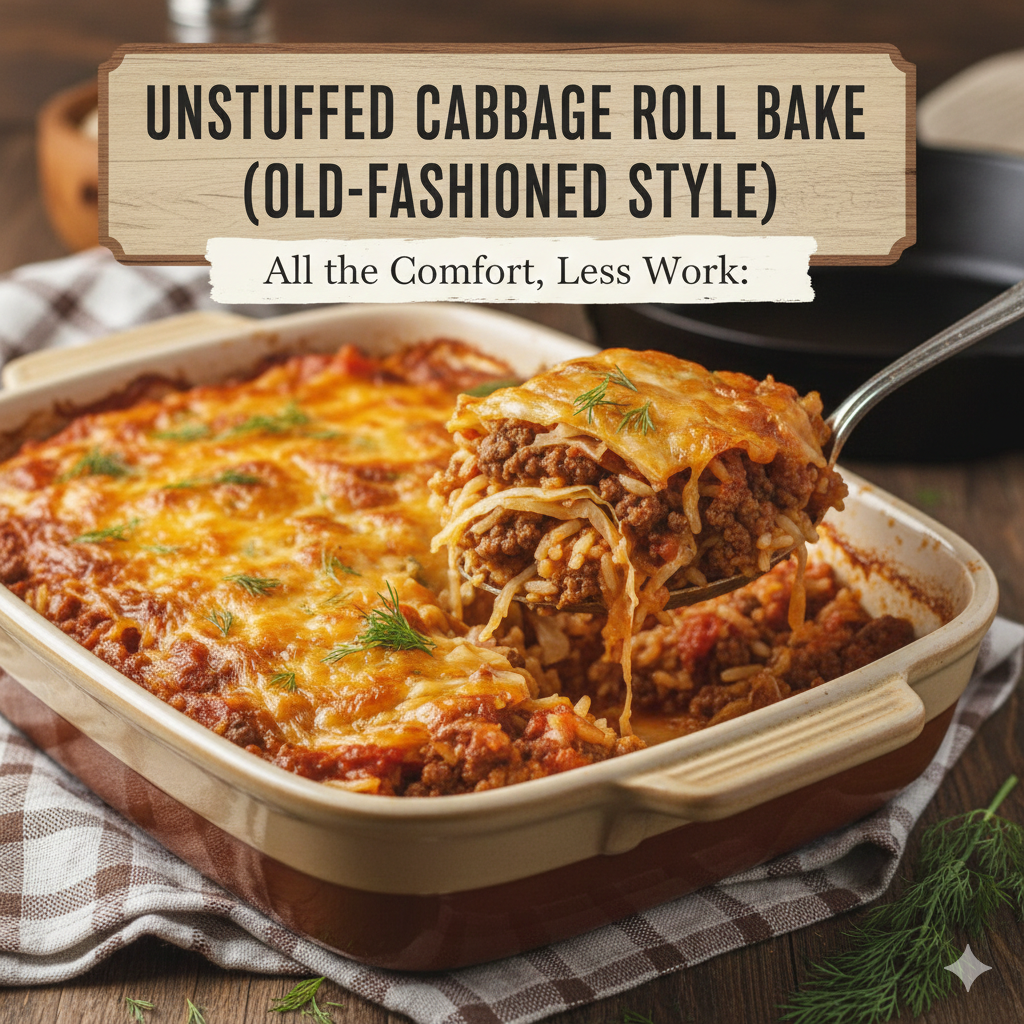
Unstuffed Cabbage Roll Bake (Old-Fashioned Style): All the Comfort, Less Work
Traditional stuffed cabbage rolls demand hours of blanching leaves, carefully wrapping bundles, and arranging them precisely in pans. This unstuffed cabbage roll bake delivers every bit of that beloved comfort with a fraction of the effort. Same flavors, same satisfaction, but you’re eating dinner in an hour instead of three. This isn’t laziness—it’s practical wisdom from home cooks who discovered that deconstructing the classic actually improves the eating experience while respecting their time.
Why This Cabbage Roll Casserole Method Wins
Traditional cabbage rolls look impressive but create frustration through tedious assembly. Leaves tear, filling escapes, rolling takes forever, and some people spend more time building than actually enjoying their meal. This old-fashioned cabbage bake approach layers the same ingredients—cabbage, seasoned ground meat, rice, and tomato sauce—into a casserole dish where they mingle and bake into unified deliciousness.
The flavors actually intensify this way. Instead of sealed individual rolls where filling stays separate from sauce, everything melds together. The cabbage absorbs meat juices and tomato flavor throughout rather than just on surfaces. Rice distributed evenly throughout means every bite contains all components rather than the composition varying by where you cut into a roll.
Plus, serving becomes infinitely easier. Scoop portions directly from the pan instead of carefully transferring fragile rolls that threaten to fall apart. Leftovers reheat beautifully without structural failure. It’s the kind of lazy cabbage rolls innovation that makes you wonder why anyone bothers with the traditional method.
Selecting and Preparing Your Cabbage
Cabbage forms the foundation of this stuffed cabbage casserole, so choosing and preparing it properly matters enormously. Green cabbage works perfectly—it’s available year-round, affordable, and has the right texture. Savoy cabbage with its crinkled leaves also functions well, offering slightly more delicate flavor. Skip red cabbage, which turns unappetizing colors during cooking and tastes too assertive.
One medium head weighing two to three pounds provides enough for this recipe. Look for dense, heavy heads with tightly packed leaves showing no brown spots or splitting. The outer leaves should feel crisp and show minimal damage.
Remove tough outer leaves and discard them. Quarter the cabbage through the core, then slice out the hard core sections. Cut quarters into roughly half-inch strips—not so thin they disintegrate during cooking, not so thick they stay crunchy. The pieces should be bite-sized, making eating easier without requiring knife work at the table.
Some recipes call for pre-cooking cabbage before assembly. This adds steps while offering minimal benefit. Raw cabbage releases moisture during baking that mingles with other ingredients to create natural sauce. It wilts to perfect tenderness without becoming mushy or losing its character entirely.
Building the Flavorful Base
The meat mixture provides protein and savory depth that makes this comfort food casserole satisfying rather than just vegetable-forward. Ground beef remains traditional, though ground pork, turkey, or combinations work beautifully based on preference and budget.
Core mixture components:
- Two pounds ground beef (80/20 works best for moisture)
- One large onion, diced
- Four garlic cloves, minced
- One cup uncooked white rice (long-grain or medium-grain)
- One can (28 ounces) crushed tomatoes
- One can (8 ounces) tomato sauce
- One cup beef broth
- Two tablespoons brown sugar
- Two teaspoons paprika
- One teaspoon dried thyme
- One teaspoon salt
- Half teaspoon black pepper
- Quarter teaspoon cayenne pepper (optional)
- Two bay leaves
Brown ground beef in a large skillet over medium-high heat, breaking it into crumbles as it cooks. This develops flavor through the Maillard reaction impossible to achieve in the oven. Once no pink remains, use a slotted spoon to transfer meat to a large bowl, leaving fat in the pan.
Add diced onion to the same pan with meat drippings. Cook until translucent and starting to caramelize around edges, roughly six to eight minutes. Add minced garlic during the final minute. Transfer onions and garlic to the bowl with beef.
Stir uncooked rice into the meat mixture along with half the crushed tomatoes, all the tomato sauce, beef broth, brown sugar, and all seasonings except bay leaves. Mix thoroughly to distribute ingredients evenly. The mixture will seem quite wet—this is correct since rice needs liquid to cook during baking.
Layering for Optimal Results
While you could simply mix everything together and bake, strategic layering creates better texture and appearance in this budget-friendly cabbage recipes masterpiece. Spray or butter a 9×13-inch baking dish generously.
Spread half the raw sliced cabbage across the bottom, creating an even layer. Season lightly with salt and pepper. Spoon the entire meat-rice mixture over the cabbage layer, spreading it evenly to the edges. Top with remaining cabbage, distributing it to cover the meat completely.
Pour remaining crushed tomatoes over the top cabbage layer, letting gravity spread it naturally. Use a spoon to ensure even distribution if needed. The tomatoes will seep down during baking while creating a saucy top. Tuck bay leaves into the tomatoes somewhere visible so you remember to remove them before serving.
Cover the entire dish tightly with aluminum foil. This traps steam essential for cooking rice and softening cabbage. Ensure the foil seals around edges to prevent moisture escape.
Baking to Tender Perfection
Slide your covered dish into a preheated 350°F oven. Bake for ninety minutes without peeking—every time you lift that foil, steam escapes and extends cooking time. During this phase, rice absorbs liquid, cabbage wilts and sweetens, flavors meld, and the whole thing transforms into unified deliciousness.
After ninety minutes, carefully remove foil (watch for escaping steam that can burn). Check that rice is completely tender and cabbage has collapsed significantly. If rice still seems firm or cabbage remains crunchy, re-cover and bake another fifteen to twenty minutes.
Once everything reaches tender doneness, remove foil entirely and return to the oven for ten to fifteen final minutes. This evaporates excess surface moisture and concentrates flavors slightly. The top should look rich and tomatoey without being dry or burnt.
Let the finished casserole rest for ten minutes before serving. This cooling period allows components to settle and makes portioning neater. The dish will still be plenty hot for serving, just not volcanic.
Serving This Homestyle Baked Dinner
Scoop generous squares directly from the pan, ensuring each portion contains all layers. The presentation won’t be pristine—this is rustic comfort food, not fine dining. The beauty lies in flavors and textures rather than Instagram-worthy appearance.
Sour cream dolloped on top adds cooling richness that complements the slight acidity from tomatoes. Chopped fresh parsley or dill provides bright color and fresh flavor that lifts the heavier elements. Crusty bread on the side soaks up the delicious sauce pooling around each serving.
For complete meals, pair with simple sides that don’t compete. A green salad with vinaigrette cuts through richness nicely. Buttered egg noodles or mashed potatoes work though they’re admittedly doubling down on carbs. Roasted root vegetables or steamed green beans add nutrition without overwhelming.
Why This Traditional Cabbage Roll Flavors Approach Succeeds
The appeal runs deeper than mere convenience. This method actually delivers superior eating experience in several ways. Even distribution of ingredients means no bites that are all cabbage or all meat—every forkful contains balanced flavors. The casserole format makes it naturally portion-controlled, whereas traditional rolls’ size varies making some people eat more than intended.
Cleanup becomes dramatically easier too. One baking dish versus the pot for blanching, the bowl for mixing, the pan for arranging, and the roasting dish for baking that traditional rolls require. Less time washing dishes means more time enjoying your meal or relaxing after dinner.
The dish scales effortlessly for crowds or meal prep. Double it in a larger pan for potlucks. Halve it for smaller households. Make multiple batches and freeze extras for future easy dinners. This flexibility makes it practical for real-life cooking rather than special-occasion-only fare.
Variations Worth Exploring
Once comfortable with the base unstuffed cabbage rolls recipe, creative variations prevent monotony. Italian-style uses Italian sausage instead of beef, adds oregano and basil, and finishes with mozzarella cheese melted on top during final baking.
Greek-inspired versions include cinnamon and allspice in the seasoning, use lamb instead of beef, and finish with crumbled feta. Eastern European traditional adds caraway seeds and substitutes sauerkraut for half the cabbage, creating tangier, more complex flavor.
Vegetarian adaptations replace meat with lentils or textured vegetable protein, increasing vegetables like mushrooms and bell peppers for substance. The cooking method remains identical—only protein sources change.
Some cooks add diced tomatoes with green chiles for Southwestern flair, or curry powder and coconut milk for fusion interpretation. These departures respect the technique while exploring different flavor territories.
Make-Ahead and Storage Strategies
This one-pan comfort meals hero makes excellent advance-preparation candidate. Assemble completely up to twenty-four hours before baking, cover tightly, and refrigerate. When ready to cook, let it sit at room temperature for thirty minutes while the oven preheats, then bake as directed, possibly adding ten extra minutes to account for starting cold.
Fully cooked casserole refrigerates beautifully for four to five days. Reheat individual portions in the microwave or warm the whole dish covered at 325°F until heated through. The flavors actually improve overnight as components continue mingling.
Freeze unbaked or baked versions for up to three months. Unbaked freezes slightly better texture-wise. Thaw overnight in refrigerator before baking or reheating. The convenience of pulling complete meals from the freezer makes occasional cooking marathons worthwhile.
Budget Analysis: Maximum Value
Calculate the economics and this budget-friendly cabbage recipes becomes even more impressive. One head of cabbage costs maybe two dollars. Two pounds of ground beef runs eight to ten dollars on sale. Rice, canned tomatoes, and aromatics add another three dollars. For fifteen dollars total, you’ve created a massive casserole feeding eight to ten people—roughly $1.50 per generous serving.
Compare that to restaurant equivalents or even budget-conscious alternatives like frozen dinners, and savings become obvious. Plus, this provides superior nutrition with vegetables, protein, and whole grains all represented. The budget-friendliness doesn’t sacrifice quality—it’s genuinely delicious while being economical.
Troubleshooting Common Issues
Undercooked rice indicates insufficient liquid or not enough baking time. Ensure you’re measuring liquids accurately and that foil seals tightly during initial baking. If discovered after removing from oven, add a half cup of hot broth or water, re-cover, and return to oven for twenty minutes.
Mushy cabbage suggests overbaking or using pre-cooked cabbage. Raw cabbage wilts to tender-crisp perfection during the ninety-minute bake. Cooking it beforehand means it turns to mush during the extended oven time.
Watery casserole results from not allowing proper resting time before serving, or from using cabbage that wasn’t well-drained if you did pre-cook it. Let the dish rest ten to fifteen minutes after baking so excess moisture can be reabsorbed.
Bland flavor points to under-seasoning the meat mixture. Taste it before assembling—it should be quite flavorful since cabbage and rice will dilute it somewhat. Don’t be shy with salt, pepper, and the brown sugar that balances tomato acidity.
Your Path to Comfort Food Mastery
Start with this classic formula to understand how components work together. Notice the transformation as raw ingredients become unified comfort food. Observe how rice absorbs liquid, cabbage wilts, and flavors develop.
Once you’ve mastered the foundation, explore variations that match your household preferences. Maybe you prefer more garlic, or want to add bell peppers. Perhaps Italian seasoning appeals more than traditional paprika. These adjustments personalize the dish while maintaining its essential soul.
Welcome to cooking that honors tradition while respecting modern reality—where comfort doesn’t require hours of tedious work, where delicious food fits busy schedules, and where one-pan simplicity delivers restaurant-quality satisfaction. This unstuffed cabbage roll bake proves that sometimes deconstructing classics improves them, creating versions that actually get made and enjoyed rather than remaining aspirational recipes bookmarked but never attempted. Your weeknight comfort food revolution starts now.