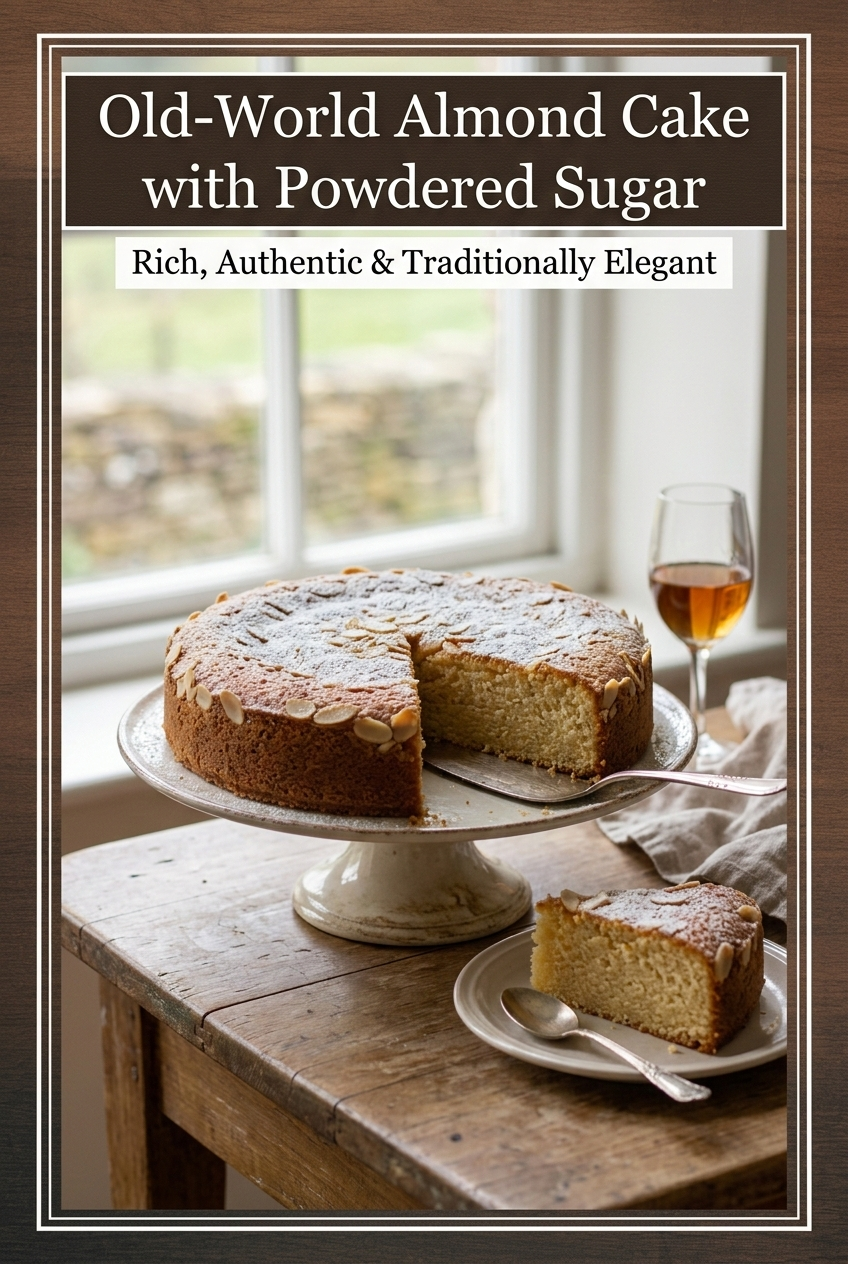
Old-World Almond Cake with Powdered Sugar
Some cakes don’t announce themselves. They don’t come layered with frosting or dressed in decorations. They sit quietly on the table, lightly dusted with powdered sugar, waiting for someone who understands that simplicity can be enough.
Old-World almond cake belongs to that kind of baking tradition. It’s the sort of cake that would have been made when ingredients were precious, when sweetness was measured carefully, and when flavor came from nuts, butter, and patience rather than excess sugar.
This is not a celebration cake meant to impress from across the room. It’s a cake meant to be sliced thin, served with coffee, and eaten slowly.
A Cake Rooted in Restraint
Older European-style cakes were often built around ground nuts rather than flour-heavy batters. Almonds added richness, moisture, and depth without needing heavy icing or fillings. Powdered sugar, used sparingly, finished the cake without overwhelming it.
This approach created desserts that felt complete without being heavy—cakes that satisfied without exhausting the palate.
That philosophy is exactly what defines this almond cake.
Why Almonds Are the Heart of This Cake
Almonds bring more than flavor. They add structure, softness, and a natural richness that butter alone can’t provide.
When finely ground, almonds:
- Hold moisture
- Create a tender crumb
- Add subtle sweetness
- Age well, improving texture over time
This cake doesn’t rely on strong flavorings. Instead, it lets the almonds do the work quietly.
Texture Over Sweetness
One of the most noticeable things about Old-World almond cake is what it isn’t. It’s not overly sweet. It’s not fluffy in a modern sense. And it doesn’t crumble into dryness.
Instead, it’s:
- Soft but substantial
- Moist without being dense
- Gently sweet rather than sugary
The powdered sugar on top isn’t decoration—it’s balance.
Choosing the Right Almonds
Blanched almonds are traditionally used because they offer a clean flavor and smooth texture. Finely ground almonds or almond meal should be soft and uniform, not coarse.
If the almonds are too rough, the cake will feel grainy. If they’re too oily, the crumb can become heavy. The goal is a gentle, even grind.
This step matters more than most people realize.
Butter Still Matters
Even with almonds doing much of the work, butter plays a supporting role. It brings warmth, richness, and structure to the cake.
Old recipes didn’t rely on large amounts of butter. Instead, they used just enough to carry flavor without weighing the cake down. When creamed carefully, butter gives the cake its smooth base.
This is not a recipe to rush.
A Batter That Doesn’t Need Fussing
The batter for almond cake is usually thick but smooth. It shouldn’t be beaten aggressively. Overmixing introduces air that doesn’t belong here.
Gentle folding and steady hands produce a batter that bakes evenly and settles into its final shape without collapsing.
This is baking that rewards patience.
Baking Low and Slow
Old-World cakes are rarely rushed through hot ovens. A moderate temperature allows the cake to cook through evenly, keeping the center tender while the edges remain soft.
The top should stay pale, with only the slightest hint of color. Browning too much distracts from the delicate flavor inside.
When done, the cake feels set but forgiving to the touch.
Why Powdered Sugar Is Enough
Powdered sugar does something frosting can’t. It finishes the cake without hiding it.
A light dusting:
- Adds sweetness where needed
- Highlights the cake’s surface
- Keeps the flavor honest
In older kitchens, decoration was subtle. The beauty was in the baking itself.
How This Cake Is Traditionally Served
This cake isn’t sliced thick or piled high.
It’s usually served:
- In small portions
- Alongside coffee or tea
- At room temperature
- Without embellishment
Sometimes it appears at breakfast. Sometimes in the afternoon. Sometimes simply because someone wanted something sweet but not heavy.
A Cake That Improves with Time
One of the quiet strengths of almond cake is how well it keeps.
After a day, the crumb softens further. The almond flavor deepens. The cake becomes more unified, less fresh-baked and more settled.
Stored properly, it remains enjoyable for several days—something older bakers valued deeply.
Common Baking Mistakes to Avoid
Overbaking
This dries the cake and dulls the almond flavor. Check early.
Too Much Sugar
This overwhelms the almonds and removes the cake’s character.
Heavy Toppings
Glazes and frostings distract from what makes the cake special.
Why This Cake Still Belongs on Modern Tables
Old-World almond cake fits into today’s kitchens because it doesn’t demand attention. It fits alongside busy days, quiet evenings, and simple meals.
It’s the kind of cake that feels appropriate almost anywhere:
- After dinner
- With guests
- Wrapped for gifting
- Sliced thin and enjoyed alone
It doesn’t try to compete with modern desserts. It simply holds its ground.
A Final Thought
Old-World almond cake with powdered sugar reminds us that baking doesn’t need to be loud to be memorable. With just a few good ingredients and careful hands, something quietly satisfying comes together.
It’s a cake for people who notice texture, appreciate balance, and understand that sometimes the most comforting desserts are the ones that don’t try too hard.
And once you’ve had a slice, lightly dusted, gently sweet, you’ll understand why this style of cake has endured.