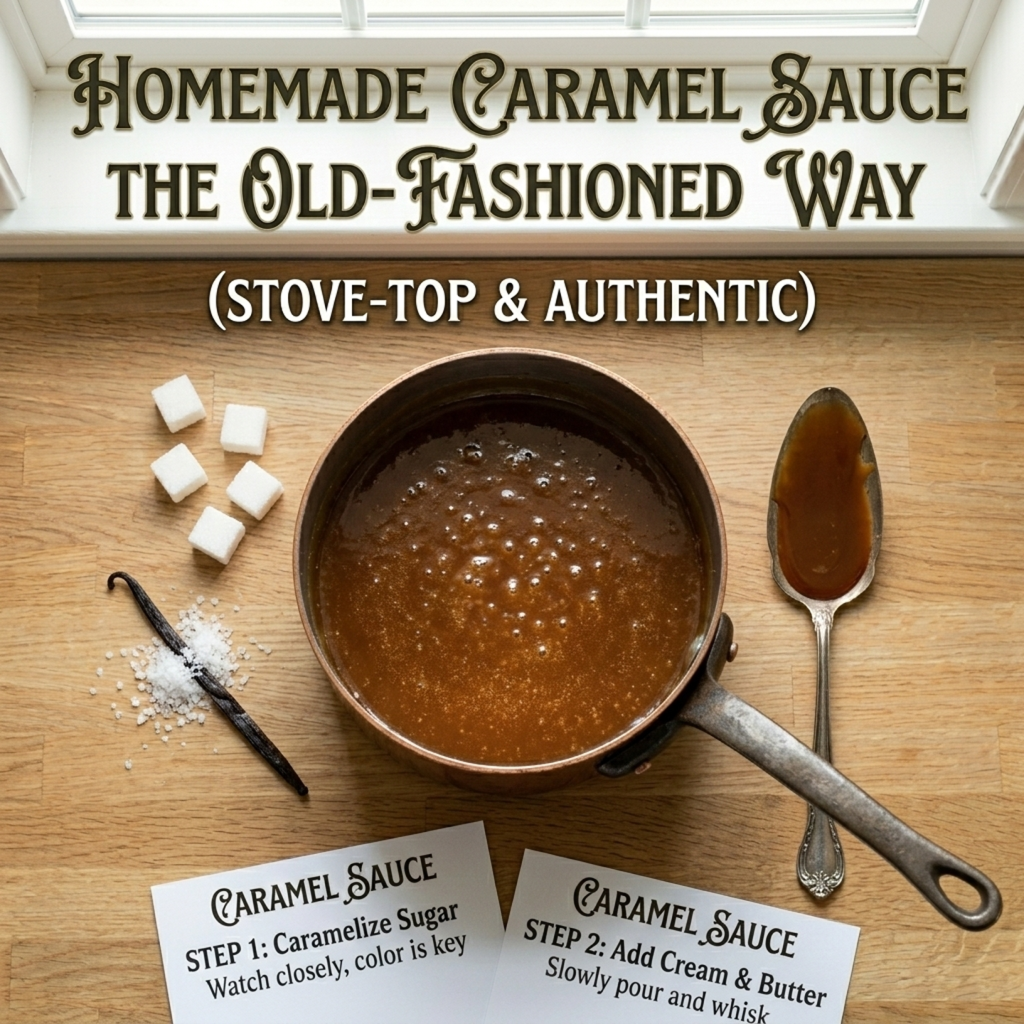
Homemade Caramel Sauce the Old-Fashioned Way
There’s a certain magic in turning a few simple ingredients into something rich, golden, and deeply flavorful. Old-fashioned caramel sauce is one of those small kitchen wonders that feels almost timeless. Long before store shelves carried bottled dessert toppings, cooks made caramel at home with nothing more than sugar, butter, and cream.
The process is simple, but it asks for patience and attention. Sugar slowly melts and darkens, developing a deep flavor that can’t be rushed. When the butter and cream are added, the mixture transforms into a smooth sauce that tastes warm, slightly nutty, and perfectly sweet.
Homemade caramel isn’t meant to be complicated. It’s meant to be real — something made slowly, stirred carefully, and shared generously.
Why the Old-Fashioned Method Still Works
Modern recipes often rely on shortcuts or pre-made ingredients, but the traditional way of making caramel has remained popular for good reason. It produces a flavor that’s far deeper than anything that comes from a jar.
When sugar cooks slowly in a pan, it develops layers of flavor as it caramelizes. The color deepens from pale gold to a rich amber, and with it comes that unmistakable caramel taste — slightly toasted, slightly buttery, and wonderfully complex.
The old-fashioned method also gives you control. You decide how dark the caramel becomes and how thick the final sauce should be. Each batch can be adjusted slightly depending on taste.
It’s a small act of cooking that rewards patience.
Understanding the Ingredients
Classic caramel sauce uses only a few ingredients, but each one plays an important role.
Sugar forms the base of the sauce. As it melts and cooks, it transforms into caramel, creating both the color and the signature flavor.
Butter adds richness and helps smooth the texture. It gives caramel its soft, silky body.
Cream lightens the mixture and turns the thick caramel into a pourable sauce. It also balances the sweetness with a mellow richness.
Salt, though optional, can sharpen the flavor and bring out the depth of the caramel.
Because the ingredient list is short, quality matters. Fresh butter and cream will always produce a better sauce.
The Transformation of Sugar
One of the most fascinating parts of making caramel is watching plain sugar change in the pan. At first it simply melts, forming clear liquid patches. Soon it begins to bubble and take on a pale golden color.
As the heat continues, the color deepens into amber and the aroma becomes warm and slightly nutty. This stage is where caramel flavor truly forms.
Timing is important. Too little cooking and the flavor stays mild. Too much heat and the sugar turns bitter. The goal is a deep amber color that smells rich but not burnt.
Learning this balance is part of the charm of making caramel at home.
Preparing the Pan
A heavy-bottomed saucepan is the best tool for caramel. Thin pans tend to heat unevenly, which can cause parts of the sugar to burn while others remain pale.
A sturdy pan distributes heat slowly and evenly, giving you more control over the process.
It’s also helpful to use a pan that allows room for bubbling once the cream is added. Caramel becomes very active at that stage, and extra space prevents spills.
Cooking the Sugar
Making caramel begins with gently heating sugar in the pan. Some cooks prefer the dry method, where sugar melts on its own. Others add a small amount of water to help it dissolve evenly.
Either approach works. The important part is allowing the sugar to melt gradually rather than stirring aggressively.
As the sugar liquefies, swirling the pan occasionally helps distribute heat without causing crystals to form. Soon the mixture will begin to darken and develop that familiar caramel aroma.
At this stage, careful attention matters most.
Adding Butter and Cream
Once the sugar reaches a rich amber color, the butter is added first. It melts quickly into the caramel, softening the texture and deepening the flavor.
The cream comes next, and this is where things become dramatic. When the cool cream meets the hot caramel, the mixture bubbles vigorously. This is normal and expected.
Stirring gently brings everything together, transforming the caramel into a smooth, glossy sauce.
Within a few minutes, the mixture settles into its final form.
Adjusting the Texture
Caramel sauce thickens as it cools, so its texture in the pan won’t be the same once it rests.
If a thinner sauce is desired, a small splash of warm cream can be stirred in while the caramel is still hot. If a thicker sauce is preferred, allowing it to cook slightly longer before adding cream will deepen both flavor and body.
These small adjustments give homemade caramel its flexibility.
Letting the Sauce Cool
After the sauce is finished, it should be allowed to cool gradually. As the temperature drops, the caramel becomes smoother and thicker.
Pouring it into a clean jar while still warm makes storage easier and prevents it from hardening in the pan.
The color at this stage is usually a deep golden brown — a visual reminder of how far simple sugar has traveled during cooking.
Storing Homemade Caramel
Caramel sauce keeps well when stored properly. Once cooled, it can be kept in a sealed container in the refrigerator.
When chilled, the sauce becomes quite thick, but gentle warming restores its smooth, pourable texture. A short time in the microwave or a warm-water bath is usually enough.
Homemade caramel often tastes even better the next day as the flavors settle.
Ways to Use Caramel Sauce
Few sauces are as versatile as caramel. A small drizzle can transform simple desserts into something memorable.
Caramel pairs beautifully with:
- Ice cream
- Apple desserts
- Cakes and brownies
- Pancakes and waffles
- Coffee drinks
- Bread pudding
It can also be stirred into whipped cream, used as a filling for pastries, or layered into desserts for extra richness.
Even a spoonful on its own can feel like a small treat.
Avoiding Common Mistakes
Caramel is simple but sensitive to heat. A few small habits help ensure success.
Cooking sugar too quickly can cause burning, so moderate heat is best. Stirring constantly may lead to crystallization, which creates a grainy texture. Gentle swirling works better.
Adding cream slowly also helps maintain smoothness and prevents splattering.
With a little care, the process becomes reliable and even relaxing.
Why Homemade Caramel Feels Special
Part of the joy of making caramel is the transformation itself. Watching sugar melt, darken, and develop flavor reminds us how powerful simple ingredients can be when treated with patience.
There’s also something deeply satisfying about creating a sauce from scratch that tastes richer and more authentic than anything store-bought.
Old-fashioned caramel doesn’t rely on shortcuts or artificial flavors. It depends only on time, attention, and a few good ingredients.
That simplicity is what keeps the tradition alive.
A Small Kitchen Tradition
Homemade caramel sauce the old-fashioned way is more than a dessert topping. It’s a small piece of kitchen tradition that has survived for generations because it works.
It teaches patience, rewards care, and produces something delicious from the most basic ingredients. Once you’ve made caramel this way, the process becomes familiar — almost comforting.
And every time the sugar melts and turns golden in the pan, it reminds you that some of the best flavors still come from the simplest beginnings.