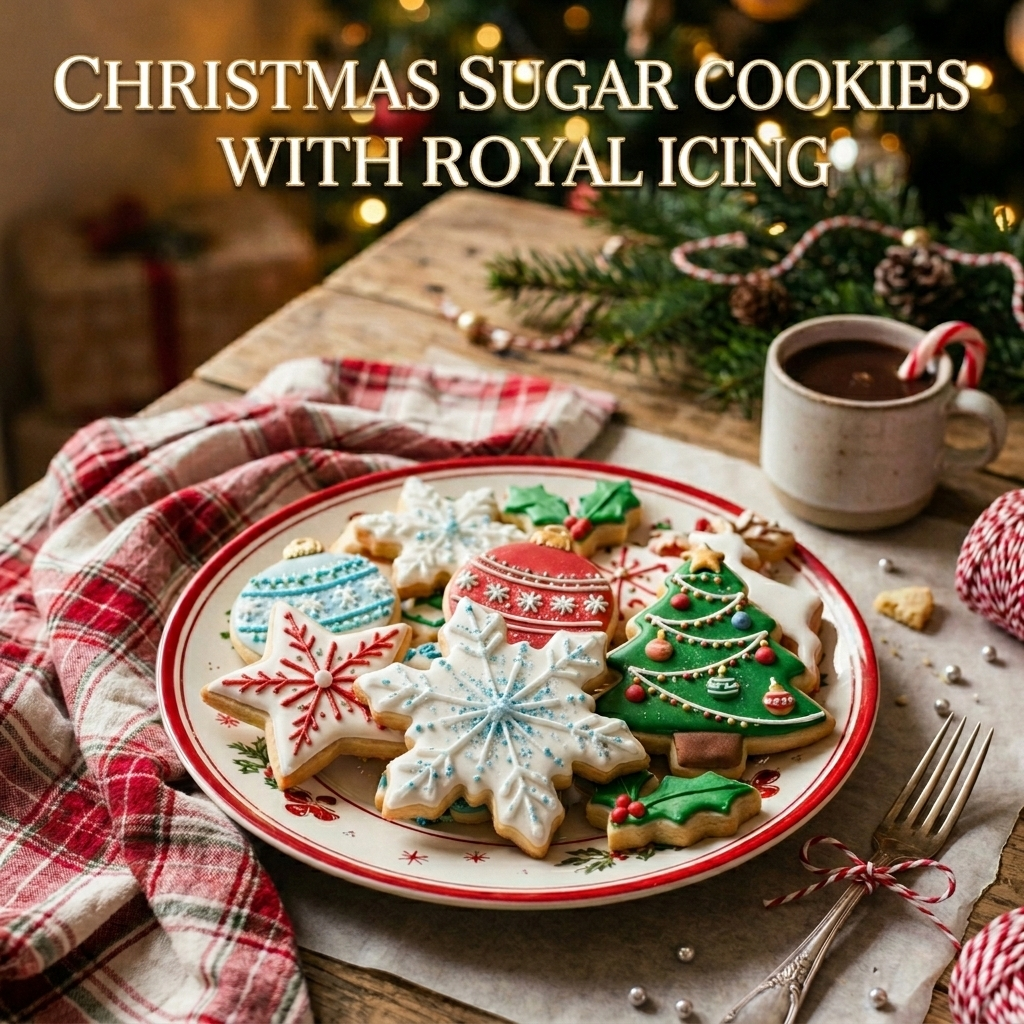
Christmas Sugar Cookies with Royal Icing
There’s a certain quiet magic to Christmas sugar cookies that goes beyond the recipe itself. It’s in the rolling of the dough when the kitchen is warm and the windows are cold. It’s in the careful cutting of shapes that never quite come out the same size. And it’s in the moment the icing finally sets, glossy and smooth, turning a simple cookie into something that feels finished.
These cookies aren’t rushed. They’re meant to take an afternoon, maybe an evening, and often a little patience. That’s part of what makes them special.
Why Sugar Cookies Became a Holiday Tradition
Sugar cookies earned their place in Christmas kitchens because they were practical. The dough was inexpensive, dependable, and easy to work with. It could be made ahead, rolled thin, and shaped into whatever the season called for.
Royal icing came later as a way to decorate without relying on buttercream, which melts easily and doesn’t travel well. Once dry, royal icing protects the cookie and keeps it fresh longer, making these cookies perfect for gifting, sharing, and storing.
They weren’t designed to be eaten warm from the oven. They were designed to last.
What Makes a Good Christmas Sugar Cookie
A proper sugar cookie for decorating is not soft and cakey. It’s firm enough to hold shape, but tender when bitten. It doesn’t spread too much, and it doesn’t puff up and lose detail.
Good sugar cookies:
- Hold sharp edges after baking
- Stay flat and even
- Taste buttery without being overly sweet
- Support icing without breaking
They’re a canvas, but one that should still taste good on its own.
The Role of Butter and Sugar
Butter provides structure as much as flavor. Too soft, and the cookies spread. Too cold, and the dough cracks.
Sugar sweetens, but it also affects texture. Granulated sugar gives crisp edges, while a small amount of powdered sugar can soften the bite. The balance matters.
Old recipes were careful about this. They weren’t guessing—they were repeating what worked.
Dough That Needs Rest
Chilling the dough isn’t optional. It allows the butter to firm up and the flour to hydrate fully. This rest makes rolling easier and keeps shapes clean in the oven.
Rushed dough:
- Sticks
- Tears
- Loses definition
Rested dough behaves. It listens.
Rolling and Cutting Without Frustration
Rolling sugar cookie dough should feel steady, not sticky. A lightly floured surface and patience go further than force.
Press cutters straight down. Don’t twist. Twisting seals the edges and can cause uneven rising.
Lift shapes gently. If they stretch, chill them again before baking.
This isn’t fast baking—it’s careful baking.
Baking for Shape, Not Color
Christmas sugar cookies should remain pale. Browning means they’ve gone too far.
You’re looking for:
- Set tops
- Just-firm edges
- Minimal color
They finish setting as they cool. Pulling them early protects both flavor and structure.
Cooling Before Decorating Matters
Warm cookies and royal icing don’t mix. Steam trapped beneath icing leads to cracks, bubbles, and dull finish.
Cookies should be completely cool—room temperature and dry—before icing touches them.
This pause is frustrating, but necessary.
Understanding Royal Icing
Royal icing is simple but unforgiving. It’s made from sugar, liquid, and structure. When mixed correctly, it spreads smoothly and dries hard without losing its shine.
It’s not meant to taste rich. It’s meant to create contrast—sweet, clean, and crisp against a buttery cookie.
Consistency is everything.
Icing in Layers, Not All at Once
Traditional decorating happens in stages.
First comes outlining, which creates a barrier. Then flooding fills the center. Details come last, once the base has settled.
Rushing layers causes bleeding, uneven surfaces, and dull color. Letting each step rest creates clean lines and polished cookies.
Letting the Icing Set Properly
Royal icing doesn’t dry instantly. It needs time and stillness.
Avoid stacking cookies until the icing is fully firm. Even if the surface feels dry, the underside may still be soft.
Most mistakes happen here—not during mixing, but during impatience.
Why These Cookies Are Meant to Be Shared
Christmas sugar cookies are rarely made just for the baker. They’re packed into tins, slipped into bags, stacked on trays, and passed hand to hand.
They travel well. They last. And they carry effort in a way few desserts do.
Each cookie says someone took the time.
Storing Decorated Sugar Cookies
Once the icing is completely set:
- Store cookies in airtight containers
- Layer with parchment, not plastic wrap
- Keep at room temperature
Moisture dulls icing and softens cookies. Cool, dry storage preserves both.
Common Problems and Gentle Fixes
Cookies spread too much
Dough was too warm. Chill longer next time.
Icing cracks
Layer was too thick or dried too quickly.
Colors bleed
Icing was too thin or layers weren’t set.
None of these ruin the cookies. They just teach you something for next time.
Why This Recipe Endures
Christmas sugar cookies with royal icing endure because they combine structure with creativity. The base stays the same, but the shapes, colors, and designs change every year.
They’re familiar, but never boring.
They invite hands into the kitchen—children, friends, anyone willing to decorate slightly crooked stars and trees that somehow feel perfect anyway.
A Final Thought
These cookies aren’t about perfection. They’re about time, care, and repetition. About doing something the same way year after year because it still brings comfort.
When the icing finally sets and the cookies are stacked and ready, there’s a quiet satisfaction in knowing you made something meant to be shared.
And that, more than decoration or shine, is what makes Christmas sugar cookies special.