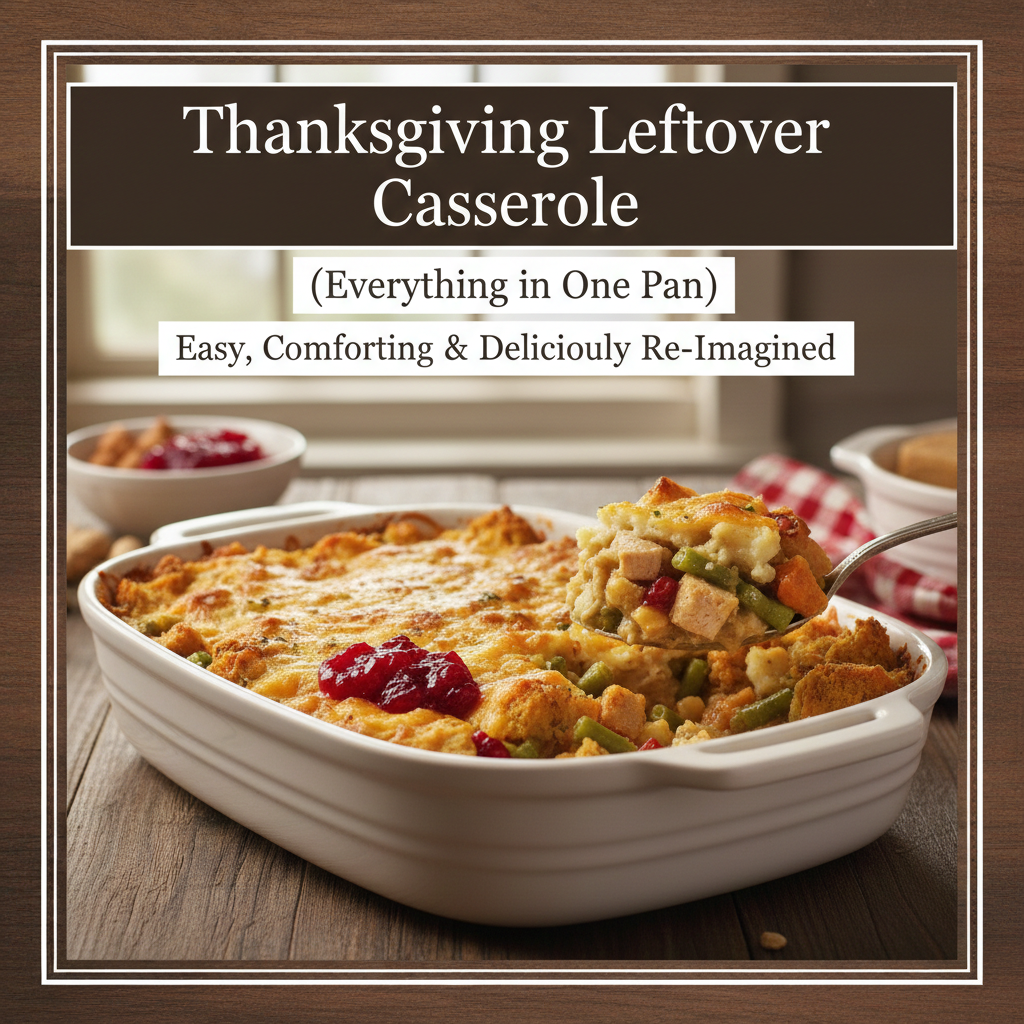
Thanksgiving Leftover Casserole (Everything in One Pan)
The quiet days after Thanksgiving have their own kind of comfort. The table is cleared, the house is calmer, and the refrigerator is full of small containers holding a little bit of everything. Not enough turkey for a full meal. Just a scoop of mashed potatoes. A ladle of gravy. A corner of stuffing that’s still too good to throw away.
This casserole was born for that moment.
Thanksgiving leftover casserole isn’t about precision or presentation. It’s about gathering all the good parts of the holiday and letting them come together in one pan—no rules, no stress, and no extra shopping.
Why This Casserole Works So Well
Every Thanksgiving plate already has balance built into it. Savory turkey, creamy potatoes, rich gravy, seasoned stuffing, and something green on the side. When layered together and baked gently, those flavors deepen instead of competing.
What makes this dish special is that it:
- Uses what you already have
- Turns scattered leftovers into a full meal
- Reheats evenly instead of drying out
- Feeds a crowd without extra work
It’s comfort food made from comfort food.
There’s No One “Correct” Version
Old kitchens didn’t measure leftovers. They worked with what was there.
This casserole changes slightly every year depending on:
- How much turkey is left
- Whether the stuffing was bread-based or cornbread
- If gravy is thick or thin
- What vegetables survived the holiday
And that’s exactly how it should be.
The Basic Building Blocks
Think of this dish in layers rather than steps.
Protein
Leftover roasted turkey, chopped or shredded. Dark meat works especially well because it stays moist.
Soft Layer
Mashed potatoes or sweet potatoes. They act as insulation, keeping everything underneath tender.
Flavor Binder
Gravy. This is what turns leftovers into something cohesive instead of dry.
Texture
Stuffing or dressing. It absorbs moisture and adds seasoning.
Vegetables
Green beans, corn, carrots, peas, or even roasted Brussels sprouts. Anything already cooked is fair game.
How to Assemble the Casserole
- Lightly butter a baking dish
- Spread a layer of mashed potatoes across the bottom
- Add turkey evenly over the potatoes
- Spoon gravy over the turkey, enough to moisten but not flood
- Scatter vegetables across the top
- Finish with stuffing as the final layer
If you like a crisp top, lightly dot the stuffing with butter.
That’s it.
No mixing bowl. No extra pans.
Baking It Just Right
Cover the dish loosely with foil and bake until everything is heated through. Remove the foil near the end if you want the top to brown.
You’re not cooking raw ingredients—you’re warming and marrying flavors.
If it smells like Thanksgiving all over again, you’re doing it right.
Why One-Pan Meals Matter After the Holidays
After hosting, cooking, and cleaning for days, no one wants another complicated recipe. This casserole respects your time.
One pan means:
- Less cleanup
- Less thinking
- More rest
And somehow, food tastes better when it doesn’t demand much from you.
Common Mistakes (and How to Avoid Them)
Dry Casserole
This happens when there’s not enough gravy. Add more than you think you need—stuffing will soak it up.
Soggy Texture
Too much gravy without enough structure. Balance soft layers with stuffing or firmer vegetables.
Uneven Heating
Let the casserole sit at room temperature for a few minutes before baking.
Variations People Actually Make
- Add a thin layer of cranberry sauce for sweetness
- Sprinkle shredded cheese between layers
- Mix herbs into the potatoes
- Use leftover rolls torn into chunks instead of stuffing
None of these are wrong. They’re just different kitchens telling the same story.
How This Dish Was Traditionally Served
This wasn’t a “special” meal. It was often eaten:
- Standing at the counter
- On mismatched plates
- While watching football reruns
- With everyone helping themselves
It wasn’t fancy, but it was satisfying.
Storing and Reheating
- Store covered in the refrigerator
- Reheat portions gently to avoid drying out
- Add a spoon of gravy before reheating if needed
This casserole often tastes better the next day.
Why People Love This Dish
Because it:
- Honors the work that went into Thanksgiving
- Reduces waste
- Feeds a family without effort
- Feels familiar and forgiving
It doesn’t pretend to be new. It just makes sense.
A Final Thought
Thanksgiving leftover casserole isn’t about stretching food—it’s about stretching the feeling of the holiday just a little longer.
It’s proof that good meals don’t need fresh ingredients, perfect planning, or a clean slate. Sometimes they come from what’s already there, layered together, warmed slowly, and shared without ceremony.
And that’s a tradition worth keeping.